

Taxpayers warned of new criminal tactic to hit their bank accounts in South Africa


South Africans are being warned about a new criminal tactic aimed at emptying bank accounts, in which scammers impersonate the South African Revenue Service (SARS).
According to Tax Consulting South Africa, fraudulent emails and SMSes are circulating under subject lines such as “Settlement Notification” and “Final Demand”, falsely claiming taxpayers owe money to SARS and demanding immediate payment.
The scam is particularly dangerous because it exploits South Africa’s current tax environment, as SARS is becoming more aggressive in collecting unpaid taxes.
“SARS has significantly strengthened its enforcement and collection capabilities,” Tax Consulting SA said.
This is evident in its enhanced data analytics, artificial intelligence-driven verification systems, improved banking integration, and wider access to third-party financial data.
This has created what the firm described as a more assertive collection environment, where unpaid taxes, verification audits, penalties, and debt collection are becoming increasingly common for both individuals and businesses.
As pressure on the country’s finances intensifies, SARS has made revenue collection a strategic priority.
However, Tax Consulting SA warned that criminals are taking advantage of this heightened enforcement climate.
“Scammers understand that many taxpayers are already anxious about unresolved compliance issues or outstanding liabilities,” the firm said.
“A fake ‘settlement notification’ therefore becomes far more believable in an environment where SARS itself is taking a stronger approach to enforcement.”
The firm warned that the scams are designed to trigger emotional reactions, often prompting taxpayers to make rushed decisions before verifying the legitimacy of the communication.
“The greatest danger with these scams is that they rely on emotional decision making,” Tax Consulting SA said.
“Taxpayers who receive threatening correspondence referencing legal action or ‘immediate’ payment demands may react before properly verifying the communication. In many cases, fear unfortunately overrides caution.”
Additionally, the firm warned that repeated exposure to scams has created a separate risk, with some taxpayers now ignoring legitimate SARS correspondence altogether.
“Every SARS communication should therefore be treated seriously but independently verified before any action is taken,” it said.
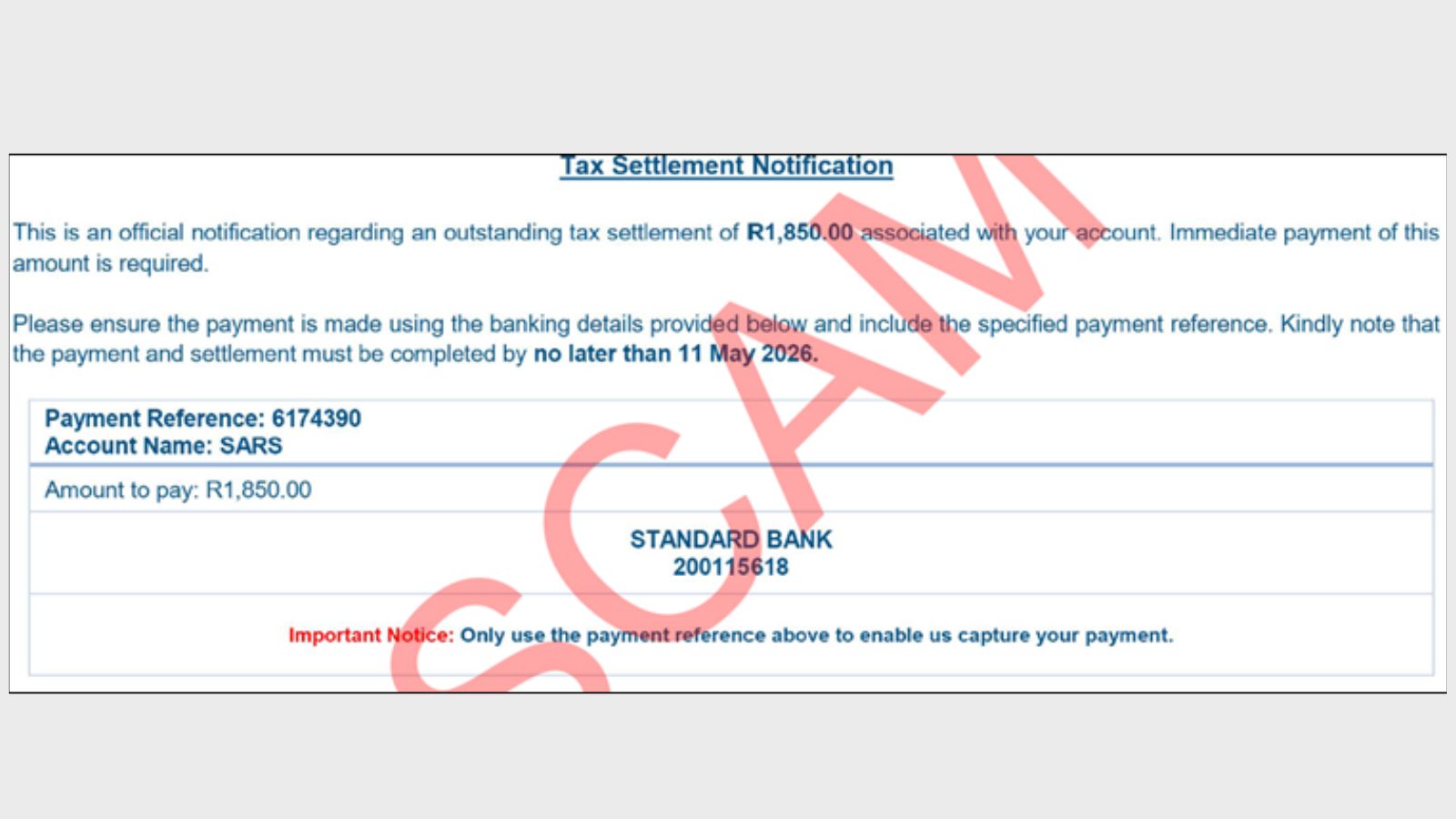
Look for clear warning signs
Tax Consulting SA noted that fraudulent communications often contain clear warning signs, including suspicious links, urgent payment deadlines, and requests for banking information.
Other warning signs include unofficial payment methods and email domains that imitate SARS branding.
Scammers also often fail to include legitimate taxpayer information such as ID numbers, tax reference numbers, or the taxpayer’s name, details that genuine SARS communications would normally contain.
“For the more perceptive taxpayer, the wording of these communications does indicate possible fraud, including but not limited to grammatical errors, spelling errors, and incorrect citations of law,” the firm added.
SARS has repeatedly urged taxpayers to verify all communication through official channels such as SARS eFiling or directly with recognised SARS officials and registered tax practitioners.
The warning also comes as SARS ramps up its ability to recover unpaid taxes. Tax Consulting SA cautioned that taxpayers who continue to ignore legitimate debt face growing risks.
It warned that SARS can issue third-party appointments to banks, resulting in money being deducted directly from taxpayers’ accounts.
Directors and trustees of non-compliant entities may also face personal liability, while civil and criminal action remains possible in severe cases.
The firm said many taxpayers delay dealing with outstanding tax issues because they fear the financial consequences, but warned that avoidance usually worsens the situation over time.
“In practice, avoidance often worsens the liability substantially, as opposed to a proactive and voluntary approach which engages with legal tax debt relief mechanisms to achieve compliance,” it said.
Tax Consulting SA said the rise in fake SARS settlement notifications reflects both increasing cybercrime and growing taxpayer anxiety in a tougher enforcement environment.


















 Loading ...