

Big storm brewing for the rand


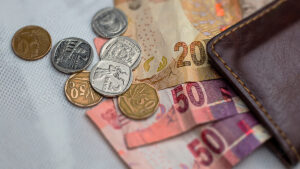
The South African rand will likely weaken further if the conflict involving Iran and the disruption around the Strait of Hormuz continue to drag on.
This is the feedback from ETM Analytics co-founder and head of research George Glynos, who has warned that the South African rand is sitting in an increasingly vulnerable position.
Speaking in an interview with BizNews, Glynos said the risks facing the rand have become “asymmetrical”, with the balance of probabilities now tilted toward further weakness if the geopolitical shock persists.
“South Africa’s rand is sitting on the fault line, and the longer the US-Iran war drags on, the harder the ground shakes underneath it,” he said.
Glynos compared the current oil market disruption to the oil shocks of the 1970s, including the 1973 oil embargo and the 1979 Iranian Revolution.
In both cases, the impact removed somewhere between 6% and 7% of the world’s oil supply. “You compare that to this time around, and you’re talking about a hit in excess of 20% of the world’s oil supply.”
According to Glynos, the scale of the disruption means the impact extends far beyond oil prices alone.
At the same time, he said the global environment has become increasingly risk-averse, creating further pressure for emerging markets such as South Africa.
He warned that a weakening of investor appetite for risk could lead to capital outflows from emerging markets, placing additional pressure on the rand.
“Nothing specific that South Africa has done wrong. It’s more of an external shock once again impacting,” he said.
However, he cautioned that South Africa’s own policy position still matters. “If we’re not careful and if we’re a little bit too complacent in the way that we run our monetary and fiscal policy, the impact on the rand could obviously be negative,” Glynos said.
“That spills over into a number of South Africa’s asset prices, things like inflation, the cost-of-living crisis, and that naturally impacts negatively on South Africa’s ability to grow and supply jobs.”
South Africa is being squeezed from both sides

A major concern highlighted by Glynos is the sharp deterioration in South Africa’s terms of trade, which measures the relationship between export prices and import prices.
Historically, the rand and the country’s terms of trade have tended to move together. However, Glynos said this relationship has recently broken down.
“This time, we’ve seen a big hit to the terms of trade, but the rand hasn’t yet responded,” he said. He argued there are only two possible explanations.
“Investors are looking right through this and believe that this is going to be short-lived. Or it tells us that the rand is likely to feel increasing quantities of pressure as this war rolls on.”
He explained that South Africa is being squeezed from both sides. Oil and refined fuel imports have become more expensive, while prices for key exports such as gold and platinum have weakened.
“The rand hasn’t responded strongly to it yet, which ultimately means that it is a little vulnerable should the shock extend.”
He added that if the conflict drags on long enough to damage South Africa’s trade and current account balances, the currency may have to weaken significantly to absorb the pressure.
“The greater likelihood, and that’s why we speak about this asymmetry, [is] the greater the likelihood that the rand will come under some pressure,” he said.
Glynos also warned that the situation could worsen materially if global oil inventories continue to decline through July and beyond.
While countries such as Saudi Arabia and the UAE have used pipelines to offset some of the lost supply through the Strait of Hormuz, Glynos noted that a substantial shortfall is still being covered by strategic reserves.
For South Africa, the risks are particularly acute because the country imports large amounts of refined fuel due to declining domestic refining capacity.
He warned that prolonged disruptions to Gulf fuel supplies could eventually create local scarcity risks.
“That’s where I think you get a different kind of shock, which then potentially has vast implications for the economy, how mines run, how high-energy sectors run, etc.”














 Loading ...