

Another blow for anyone earning a salary in South Africa


South African salary earners saw a slight increase in nominal net salaries during June 2026, but rising inflation continued to erode purchasing power.
This is according to the latest PayInc Net Salary Index, which tracks the average nominal net salaries of approximately 2.1 million salary earners in South Africa.
It said real take-home pay has fallen to its lowest level in about two years, placing increasing pressure on consumer spending and economic growth.
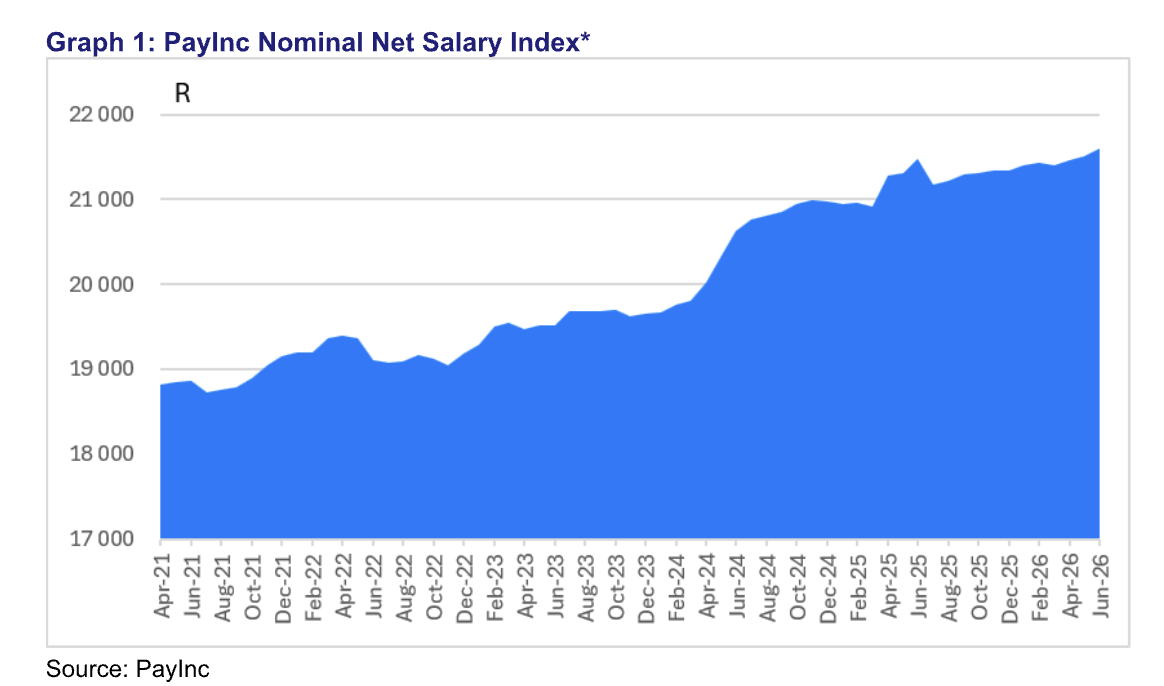
“The average nominal net salary increased to R21,598 in June 2026, up 0.4% from May,” said Shergeran Naidoo, Head of Stakeholder Engagement at PayInc.
“However, salaries were only 0.5% higher than a year ago, highlighting the subdued pace of earnings growth.”
PayInc noted that the small increase in nominal salaries masks the reality facing many South African households.
The first half of 2026 has been notably tough for salary earners, with nominal net salaries increasing by 1.5% over the six-month period, while real net salaries declined by 2.1%.
“Although salary earners are taking home marginally more in rand terms, inflation continues to outpace wage growth, steadily reducing their purchasing power,” said Elize Kruger, Independent Economist.
In June, the PayInc Net Salary Index dropped by 0.3% in real terms from May and by 3.6% year-on-year, bringing the average real net salary to R20,198, the lowest level recorded in roughly two years.
“The continued decline in real earnings is likely to place increasing pressure on household budgets and consumer spending during the remainder of the year,” added Kruger.
“As disposable income comes under strain, households are becoming more cautious with discretionary spending, which could weigh on broader economic activity.”
It’s not just fuel

Although high fuel prices have driven inflation in recent months, administered price increases are emerging as an equally significant source of financial pressure.
“Many salary earners will soon begin to feel the impact of annual increases in electricity, water and other municipal tariffs,” said Kruger.
“These administered prices have consistently increased faster than headline inflation, placing additional pressure on household finances even as salary growth remains subdued.”
Items in the Administered Price Index account for 12.9% of the consumer price basket and include electricity, water supply, refuse collection, sewerage, assessment rates and education costs.
After the fuel price increases, administered price inflation accelerated to 13.7% in May, while administered price inflation excluding fuel also increased to 7.6%.
“Electricity remains one of the largest contributors to administered price inflation, with many municipalities implementing tariff increases well above the inflation rate,” said Kruger.
“These increases not only reduce household purchasing power but also raise operating costs for businesses, affecting economic competitiveness, investment and employment.”
The latest inflation figure from Stats SA stood at 5.0%, with the Reserve Bank now expected to hike interest rates by 25 basis points.
Administered prices remained elevated, and international oil prices are again coming under pressure from renewed geopolitical tensions, with the economic outlook remaining uncertain.
“After two years of relatively healthy salary growth, 2026 has marked a turning point for salary earners,” said Kruger.
“Until wage growth begins to outpace inflation again, many South Africans are likely to remain under financial pressure despite modest increases in nominal salaries.”


















 Loading ...