

Are SA state-owned companies making a profit?


As part of the plan to save the South African economy from junk status, business leaders have suggested that the private sector get more involved in state-run companies.
While the suggestion was for SOE boards to hire professionals from the private sector, President Jacob Zuma has said that partial privatisation of some parastatals is also being considered.
The current state of the country’s state-owned enterprises is is patchy, with many in financial ruin.
BusinessTech previously investigated how the private sector has banked on the failure of government companies, to take advantage of the market that parastatals simply cannot cater to.
Read: Private companies cashing in on government failure in SA
In July 2015, the ANC acknowledged that it had a crisis on its hands with state-owned entities – but blamed individuals within the companies, and not the companies or their functions as a whole.
ANC secretary general Gwede Mantashe noted that SOEs were not about making a profit, but about delivering public goods.
However, with the possible sale or partial sale of SOEs on the cards, the current state of revenue vs profits or losses at these companies bears further scrutiny.
BusinessTech looks at the financial performances of some of the country’s largest parastatals using figures from the 2014/15 period.
The profit makers
Eskom
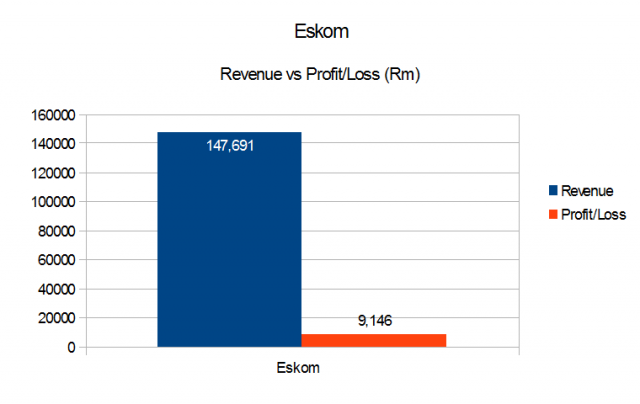 Despite Eskom’s title as the biggest profit-spinner among the companies listed here, the power utility remains in dire straits financially.
Transnet
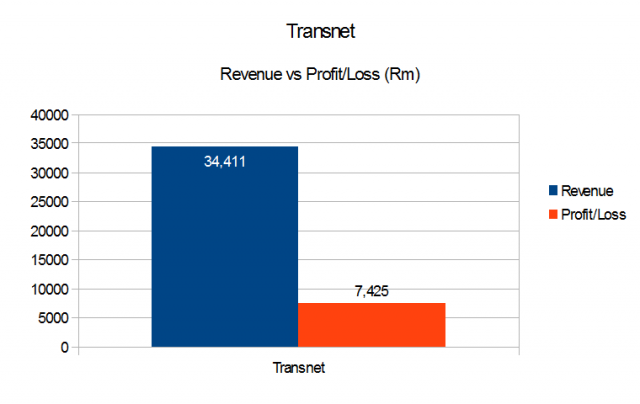 Transnet posted the second biggest profit of the companies listed, with over R7.4 billion in operating profit in 2015 – up from R5.2 billion in 2014.
The company has reversed its troubled past – particularly in the mid-90s when the entity was on the brink of collapse.
Telkom
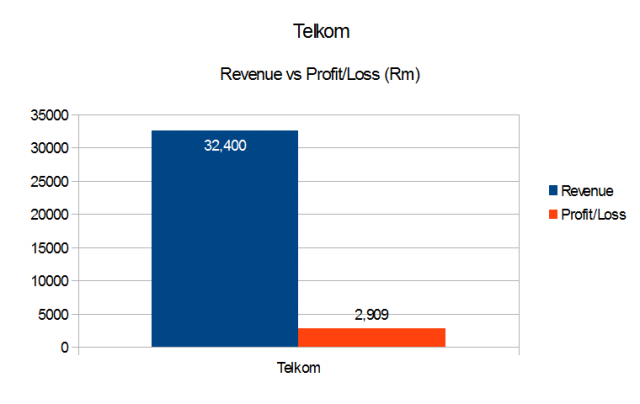
Under the leadership of Sipho Maseko, Telkom has implemented a tough turn-around strategy which will please shareholders, but not the thousands of jobless former employees.
In 2015, the telco posted a R2.9 billion operating profit – down from the R4 billion profit in 2014, but an improvement on previous years.
Telkom is a listed entity on the JSE, boasting a market capitalisation of approximately R30 billion.
Rand Water
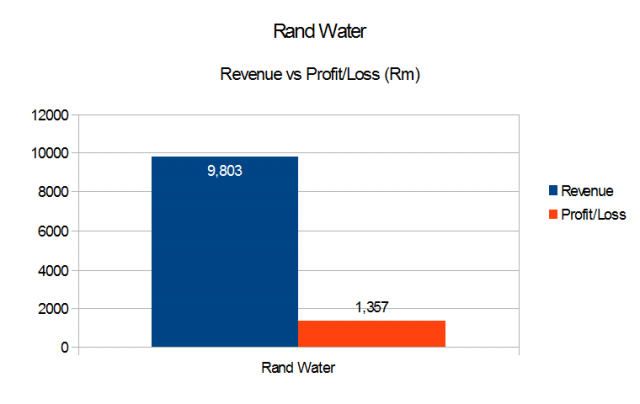 Despite a looming water crisis in many parts of South Africa, Rand Water remains a profitable company.
It posted a R1.3 billion operating profit (up from R1 billion in 2014), on R9.8 billion in revenue.
Sentech
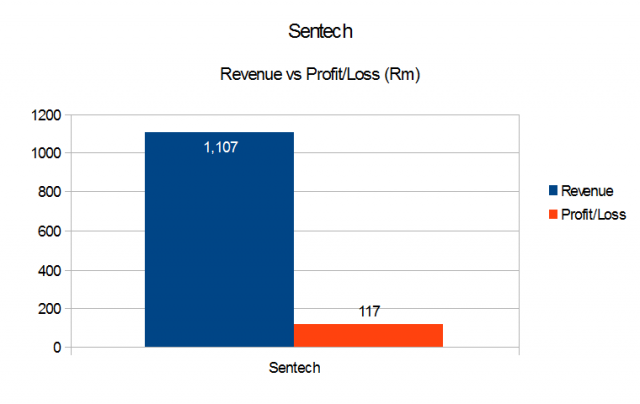 State owned signal distributor, Sentech has flown largely under the radar in recent times, but the company still manages to be profitable.
The group posted a profit of R117 million in 2015 – down from R177 million in 2014 – but revenues were up to R1.1 billion.
Those at a loss
Broadband Infraco
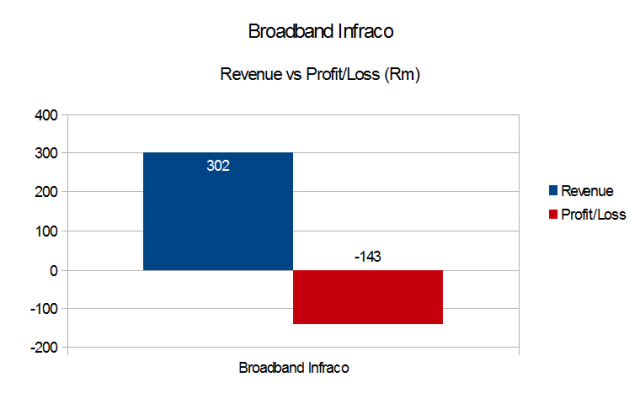 Fibre cable network company Broadband Infraco is another group that has flown under the radar over the past year.
The group’s absence from budget allocation led the Democratic Alliance to peg it as a prime asset to be sold into the private sector.
Recent speculation puts the group in talks with Telkom to collaborate and remove duplication among state owned enterprises.
The group is a well-documented loss-machine: in 2015 it posted a R143 million loss on revenues of only R302 million.
SABC
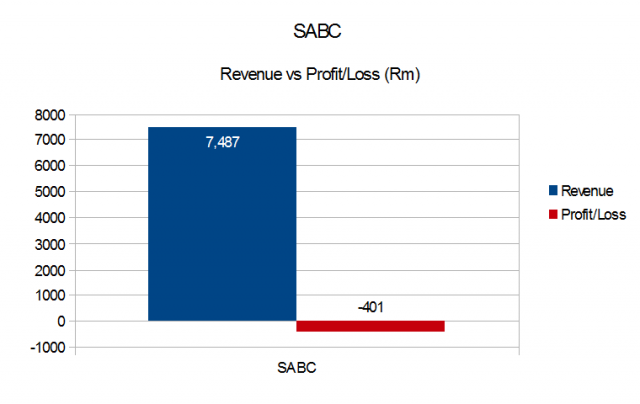 The controversial broadcast group the SABC is another company with well-documented financial troubles. The group has been mired in claims of corruption and maladministration for years.
COO Hlaudi Motsoeneng has not helped group finances by boosting salaries and dishing out massive bonuses – in 2015, the broadcaster posted a R401 million loss or revenues of R7.5 billion.
SAPO
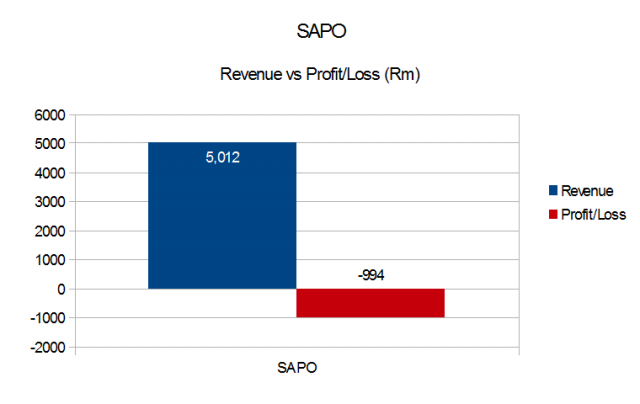 Crisis-struck South African Post Office (SAPO) has not been able to claw its way out of a financial sinkhole.
The group has been unable to combat the rise of technology and its impact on its main business, and it hasn’t been able to fill the holes left by labour strikes and operational hiccups from previous years.
In 2015, the group posted a loss of R994 million (way up from 2014’s R178 million loss), despite revenue climbing to R5 billion (2014: R2.1 billion).
Prasa
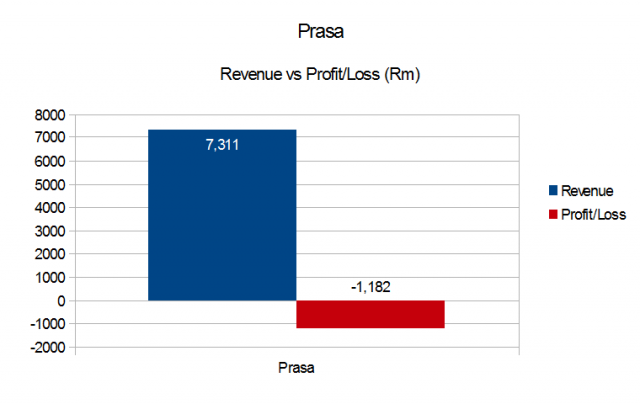 Prasa has not had a great time over the past 12 months – with its CEO and former chief engineer embroiled in the Afro 4000 train saga.
The group continues to feel the effect of purchasing trains which are not suited to local rail systems, for as much as R3.6 billion.
Despite revenue amounting to R7.3 billion in 2015, the group posted an operational loss of R1.2 billion.
SAA
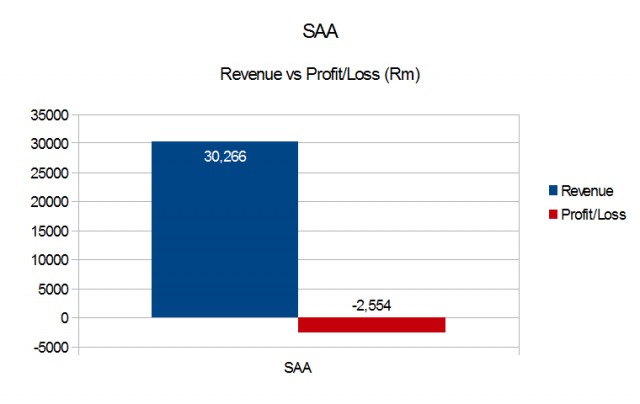
The financial troubles at SAA have been well-documented, with government being forced to step in on a few occasions to bail out the airline.
In 2015, the company posted a R2.5 billion loss, despite revenues of R30.2 billion rand. Controversially, in late 2015 the group wanted to alter an agreement with airline companies that would have seen SAA pay millions more for aircraft.
It was speculated that the group’s chair, Dudu Myeni butting heads with former finance minister Nhlanhla Nene over his tight grip on the parastatals finances ultimately lead to his axing.
Summary of Revenue and Profits/(Losses) (Rmillion)
| Company | Revenue | Profit/Loss |
|---|---|---|
| Eskom | 147 691 | 9 146 |
| Transnet | 34 411 | 7 425 |
| Telkom | 32 400 | 2 909 |
| Rand Water | 9 803 | 1 357 |
| Sentech | 1 107 | 117 |
| Broadband Infraco | 302 | (143) |
| SABC | 7 487 | (401) |
| South African Post Office | 5 012 | (994) |
| Prasa | 7 311 | (1 182) |
| South African Airways | 30 266 | (2 554) |
More on business
State-owned entities will not dictate to government: Gordhan
One big problem state-owned companies can’t seem to shake








 Loading ...