

Legal challenges stack up against Dlamini-Zuma on lockdown rules


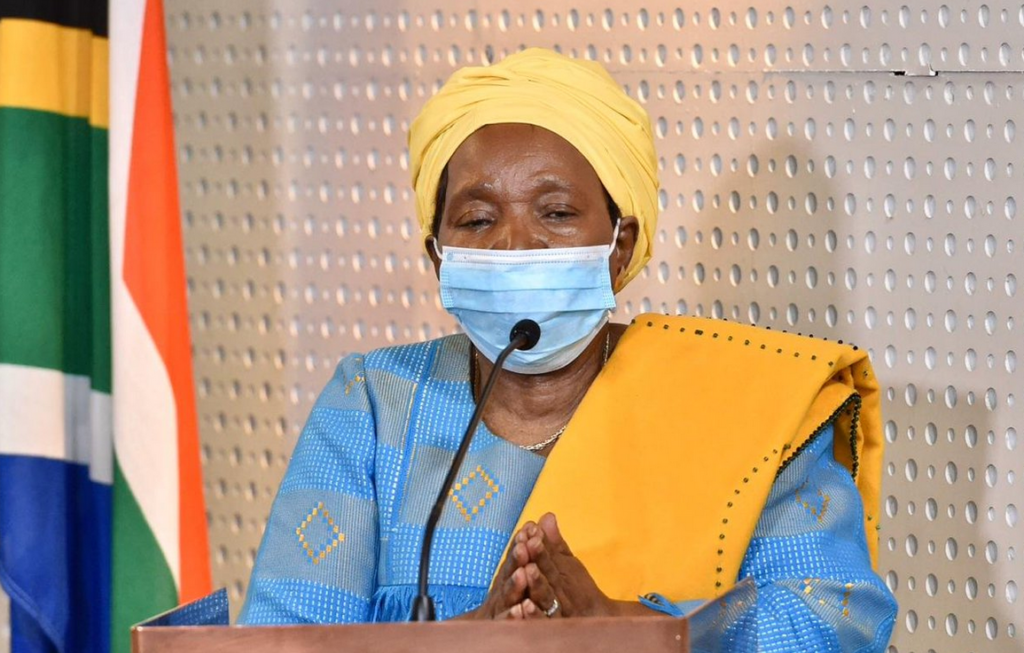
A group of private citizens have applied to the Constitutional Court for direct access to argue against the county’s ongoing prohibition on the sale of tobacco products.
Beeld reports that the case is being brought by a new non-profit organisation called Justice for RSA. The group is arguing that the ban is unconstitutional as it infringes on smoker’s rights to dignity – effectively making them criminals as they are forced to buy tobacco products illicitly.
The group argues that the ban has also had a significant impact on the mental health of smokers and very few actually quit due to the sales ban. The group says that it has over 57,000 supporters and is crowdfunding its legal fees.
At the same time, Cooperative governance & traditional affairs (Cogta) minister Nkosazana Dlamini-Zuma is facing a challenge by the Fair-Trade Independent Tobacco Association (Fita).
Fita, which previously lost a case in the North Gauteng High Court in June, has now applied for leave to appeal. The group is arguing that the high court ought to declare tobacco an essential item, TimesLive reports.
In a responding affidavit, Dlamini-Zuma said that tobacco is not a vital, priority or indispensable commodity.
“Cigarettes and tobacco do not, by their nature, fall into the same category as goods which are life-sustaining or necessary for basic functionality,” she said.
“On the contrary, tobacco products kill 115 South Africans daily. It, therefore, cannot be considered a ‘basic good’ akin to electricity and airtime.
“Simply because a good is addictive (it) does not necessarily follow that it is therefore necessary for human survival or required for basic human functionality.”
Batsa case
British American Tobacco South Africa (Batsa) says it is hopeful of a swift end to what it says is a ‘failed tobacco ban’.
The group’s application to set aside the ban on the sale of tobacco products was heard in the Western Cape High Court last week, with judgement reserved.
One of the key arguments presented by Dlamini-Zuma is that the ban on tobacco product sales will help free up needed hospital beds during the coronavirus pandemic.
However, Batsa head of external affairs Johnny Moloto said that tobacco company has demonstrated that the government’s ban is not justified in either law or science, and would result in freeing up only 16 ICU beds – less than 0.5% of a national total of more than 3,300 – based on the government’s own “best case” scenario.
Meanwhile, the ban, which is in its fifth month, has cost more than R4.5 billion in lost excise tax revenue, put 300,000 jobs at risk, and forced smokers to buy unregulated products from the underground market at exorbitant prices, he said.
Alcohol ban
A group of 10 restaurateurs have also brought a case against Dlamini-Zuma and government around the ongoing prohibition on alcohol sales.
The case was set to be heard on Tuesday but was delayed by two weeks to 25 and 26 August, TimesLive reported.
One of the applicants, Liam Tomlin, said that that apart from challenging the countrywide ban, the group are also pursuing an order to have the ban lifted in more limited areas – such as only the Western Cape.
“This must have frightened the hell out of them,” he said. “They immediately clambered for the postponement to take this up with Dr Dlamini-Zuma.”
“This notwithstanding the fact that the minister has already considered that option and came out strongly in her affidavit before court, stating brazenly that it against government policy to lift the ban in any province without also lifting it throughout South Africa, which is absolutely astonishing and unconstitutional.”
No signs of lifting bans yet
The sale of tobacco products, including cigarettes, has been prohibited since the country first introduced a lockdown on 27 March.
The ban has been in place to protect the health of South Africans, according to submissions from the government, and cigarette producers have failed to convince the country’s courts that the sale of tobacco products is a necessity.
Government reintroduced the ban on alcohol sales on 17 July in an effort to relieve the stress of alcohol-related trauma cases on the country’s hospitals.
On Thursday (7 August), health minister Dr Zweli MKhize confirmed that government’s prohibition on the sale of alcohol and tobacco products will continue for as long as Covid-19 infection numbers remain high.
Mkhize said that there were clear health benefits to introducing and continuing with the bans – including the freeing up of hospital beds.
“Everything else will open up when the numbers settle down. We shouldn’t really be dealing with it as though there is a contest. We are not contesting anything.
“We just want to make it clear that if something is going to disturb the ease with which we are managing beds, patient numbers, and improving care, we will actually stand up and say that these things should be avoided until we are over the hump.”
On Tuesday evening, Dr Mkhize reported just 2,511 new cases, taking the total confirmed cases to 566,109, with deaths at 10,751.


















 Loading ...