

Major South African city clamping down on foreigners and where they live


Johannesburg’s MMC for Human Settlements, Mlungisi Mabaso, has said city officials will move decisively to dismantle and demolish informal settlements, especially those overrun by illegal immigrants.
He warned that Johannesburg cannot continue to absorb the rapid growth of illegal settlements, many of which are mushrooming on land earmarked for formal housing developments.
“To those contributing to the spread of illegal informal settlements, we’ve identified about 300 of them in Gauteng, and we are going to take them down by force if necessary,” Mabaso said.
He noted that the city will not take the taxpayers’ money to provide services to illegal immigrants.
Mabaso said the city’s decision to demolish shacks that belong to undocumented immigrants is not xenophobic.
“There is nothing xenophobic about dealing with lawlessness and anarchy. Illegal foreign nationals in the country are tantamount to lawlessness and point to a government that is failing to protect its citizens,” he said.
Speaking to 702, Mabaso doubled down on his comments and the city’s hard-line stance on informal settlements.
He said some informal settlements date back before 1994 and remain unformalised, new ones are appearing at an alarming rate.
“Johannesburg, before 2016, had 181 informal settlements. From 2016 to 2019, it mushroomed to 312. To date, we’ve got 352 that we have recognised, and the number is growing very fast,” Mabaso explained.
Recognition of a settlement, he said, is not an endorsement of its permanence, but rather a legal requirement to allow the city to provide interim services while matters such as ownership disputes and evictions are handled.
“Before we provide services, we need to audit, enumerate and profile the people that are there. Recognition means that we can use taxpayers’ money to provide interim services so that we are able to account for the money spent,” he said.
South Africans are taking advantage
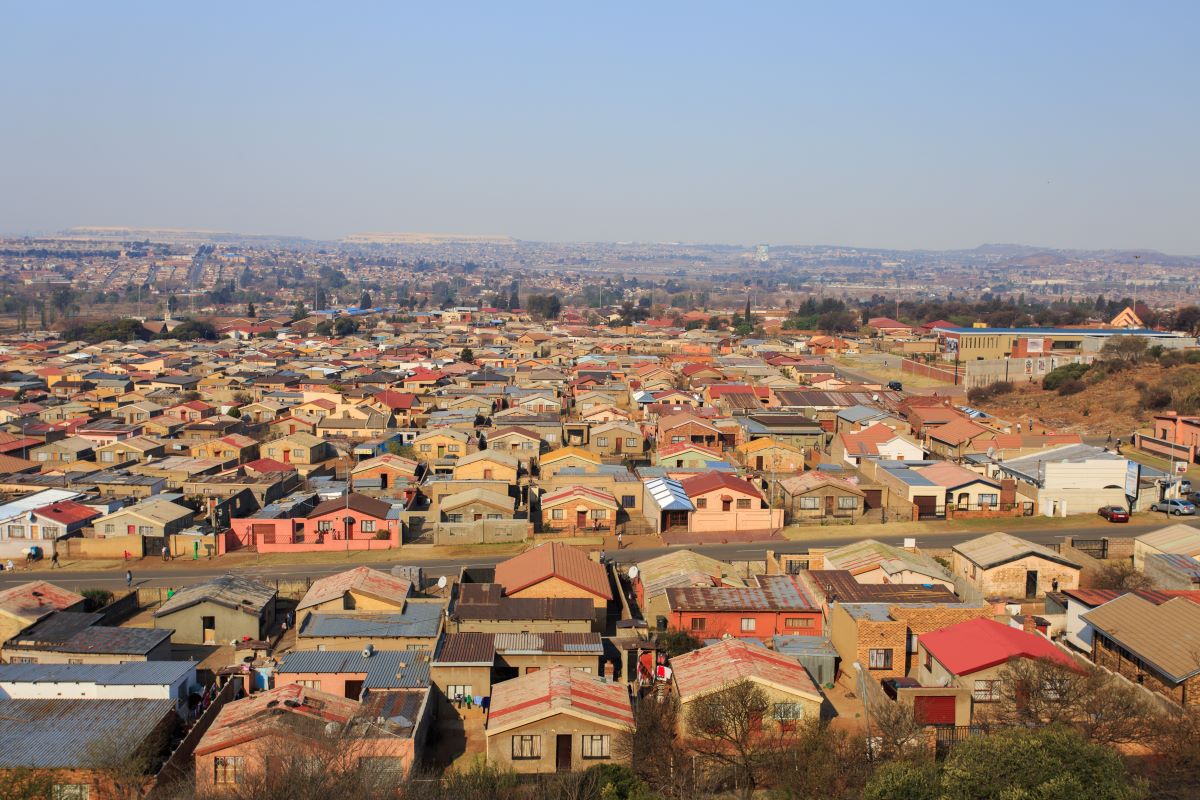
Mabaso said many of these settlements are not simply the result of desperate families seeking shelter but are often driven by organised invasions and illegal land trading.
“Most of the people invading the land come from neighbouring areas and have prior knowledge of vacant sites. They even check who owns the land before moving in,” he said.
“You go to informal settlements where there’s been an invasion, and they will tell you they’ve paid a certain amount of money. People are buying stands in these informal settlements; this is not just a normal invasion.”
He added that in some cases, South Africans are acting as landlords, renting out shacks to foreign nationals.
“There are many foreign nationals there that are tenants of South Africans in these spaces, and that’s why we are pushing them out,” said Mabaso.
“We go there with Home Affairs. We do a verification and an assessment, and if you are found to be a foreign national, then we will take you out, dismantle your shack, and deal with the landlord. That’s the only way to enforce the law and deal with this anarchy.”
The MMC dismissed criticism from the South African Human Rights Commission (SAHRC), which has also condemned the demolitions as unconstitutional and a violation of people’s rights.
“I’ve got a serious problem with the Human Rights Commission. What we are doing is trying to bring law and order in the country,” Mabaso said.
He rejected the idea that the city is carrying out blanket evictions. “This is not a demolition and eviction. If you get into a space and find people who should not be there, you need to take them out. If the shack has no one in occupation, the shack must be dismantled,” he explained.
The MMC added that the city cannot allow the anarchy to continue. “Land earmarked for development is being hijacked, taxpayers are losing out, and rightful beneficiaries are being denied housing. We must restore law and order,” Mabaso said.

















 Loading ...