

Lesson to Ramaphosa on what happened when Zimbabwe took white farms


Last month, President Cyril Ramaphosa praised Zimbabwe for its land reform. However, the effect of taking farms from white farmers was devastating.
On Friday, 29 August 2025, Ramaphosa discussed Zimbabwe’s land reform during the official opening of the Zimbabwe Agricultural Show.
He said the Zimbabwe Agricultural Show was a sign of the country’s commitment to using agriculture as a catalyst for economic growth, sustainable development, and historical redress.
“On independence in 1980, the new democratic government of Zimbabwe had to take on the momentous task of dismantling colonial-era patterns of land ownership,” he said.
“Most of the country’s commercially productive land and large-scale commercial farms were owned by whites.”
Ramaphosa added that the black majority in Zimbabwe was confined to communal lands and all but entirely excluded from commercial farming.
“This mirrored our own experience in South Africa,” he said, where white farmers own most productive farmland.
He argued that it was essential for Zimbabwe to embark on ambitious reforms to facilitate the entry of black Zimbabweans into productive agriculture.
These reforms, he said, were needed for both historical redress and to ensure food security, as well as development and economic growth.
The South African president noted that agriculture is a cornerstone of the Zimbabwean economy.
“We congratulate the government of Zimbabwe for the measures it is taking to revive the country’s agricultural sector,” he said.
This was done through policy reforms, investment in irrigation and mechanisation, and empowering large- and small-scale farmers.
Criticism of Ramaphosa’s comments

DA national spokesperson Willie Aucamp said Ramaphosa wrongfully praised Zimbabwe’s land confiscation process in the early 2000s as essential and ambitious.
He said this process left Zimbabwe in tatters, destroying its economy, harming its foreign relations, and creating famine for its people.
“Because land was not legally transferred, the failed Zimbabwe model praised by Ramaphosa led to crippling financial reparations being due to former farmers and land owners,” he said.
“Ramaphosa is attempting to whitewash the disaster in Zimbabwe, to create momentum for the ANC’s land expropriation agenda in terms of the Expropriation Act of 2025.”
Christo van der Rheede and Ismail Joosub from the FW de Klerk Foundation also criticised Ramaphosa’s comments.
“As a foundation dedicated to constitutionalism and human rights, we find it incomprehensible that Ramaphosa would celebrate a policy that inflicted such harm on Zimbabwe,” they said.
“President Ramaphosa’s remarks appear to reflect a blind political allegiance to Zimbabwe’s ruling party, placing solidarity above the lessons of history.”
Rather than glorifying Zimbabwe’s tragic example, South Africa should confront its own underutilised alternatives.
“The state remains one of the largest landowners in the country, yet much of this land lies idle or is poorly managed,” van der Rheede said.
“Before undermining private property rights, the government should release state-owned land and equip emerging farmers with the skills, capital and support needed to thrive.”
“Land reform without productivity condemns people to poverty. Reform with integrity and resources offers real dignity.”
What happened when Zimbabwe took white-owned farms
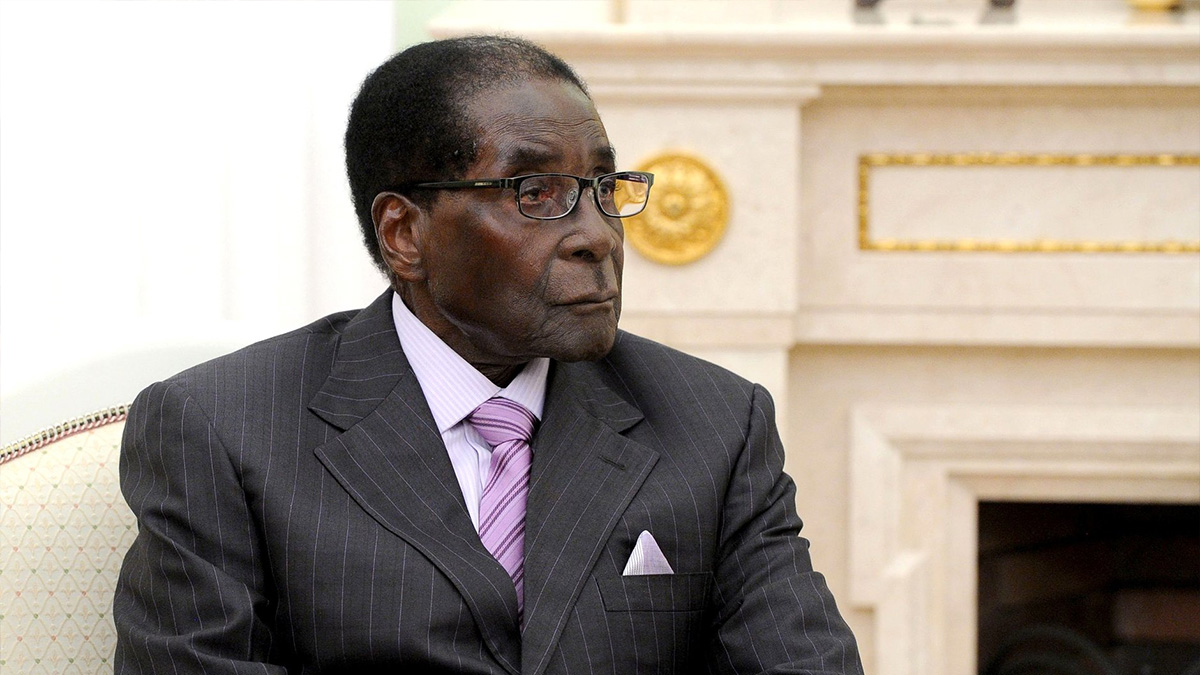
Zimbabwe launched land reform after independence in 1980. The Lancaster House Agreement redistributed farmland from white citizens to black Zimbabweans to empower them.
The agreement prohibited the forced transfer of land, and for the next 20 years, the Zimbabwean economy and agricultural sector did well.
However, this changed in 2000 after President Robert Mugabe began a more aggressive policy, which resulted in the taking of land without compensation.
What followed was expropriations marred by violence and intimidation, with farmers fleeing their land or facing being killed.
The domestic banks, which held billions of dollars’ worth of bonds on liquidated properties, collapsed, and the country faced hyperinflation.
Agricultural output plummeted, resulting in widespread instances of starvation and famine among Zimbabwe’s population.
The government responded by printing excessive amounts of money to cover budget deficits, triggering hyperinflation.
By 2008, inflation reached an estimated 89.7 sextillion per cent, rendering the Zimbabwean dollar worthless.
Citizens resorted to bartering and using foreign currencies, such as the US dollar, which remains the case today.
Unemployment in Zimbabwe reached 94%, prompting many citizens to migrate to South Africa in search of employment and a better life.
By 2009, Zimbabwe no longer had a functioning modern economy. Its once excellent education system collapsed, and having electricity became the exception instead of the norm.
The country never recovered from the economic disaster, which began when the government condoned the taking of land without compensation.
Today, there is essentially no currency in circulation in the country, and many Zimbabweans struggle to obtain or afford necessities.
Most Zimbabwean shops trade in rand or US dollars, but customers cannot get change and must buy products for the exact amount.
Simply put, Zimbabwe is a failed state. It went from a fantastic country and the breadbasket of Africa to a place where people struggle to survive.
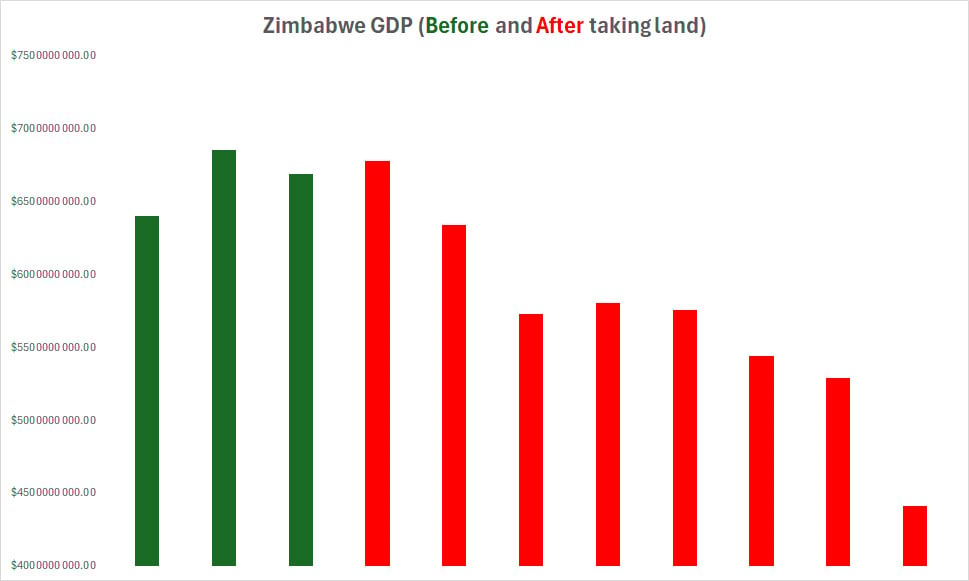
The chart below shows Zimbabwe’s Gross Domestic Product (GDP) before and after taking land from white farmers.

















 Loading ...