

Private universities launching in South Africa for the very first time


The Department of Higher Education and Training has promulgated a new policy for the recognition of higher education and institutional types in South Africa, allowing the classification of private universities for the first time.
While South Africa has many private groups, including listed companies, operating in the tertiary education space in the country, these institutions are not universities.
Under previous government policy, only public universities could be classified as such, with 26 tertiary education institutions currently carrying the title.
However, under the new policy, the government is opening the door for private institutions to be officially classified as universities or university colleges in the country.
For a private institution to become classified as a university, it needs only to meet the relevant criteria and apply for the moniker through the registrar.
For universities, the main criterion is that they offer high-level Higher Education Qualifications Sub-Framework (HEQSF) and Occupational Qualifications Sub-Framework (OQSF) courses.
However, they will also have to meet various research and community standards, which require significant investment.
Overall, this marks the end of a long journey for private education groups like Stadio and ADvTECH in particular, who have been pushing for their colleges to gain the title of university.
A draft Policy for the Recognition of South African Higher Education Institutional Types was first published in September 2022, setting out the criteria to be recognised as a university.
Following the submission of comments, a second draft was published in April 2024.
Along with setting the criteria for becoming a university, the policy also outlines new categorisations, such as a university college, and higher education colleges, and the criteria for both.
The department noted that the existing institutional statutes and rules for public higher institutions will remain in force until they are amended to meet the new rules.
However, private institutions looking to reclassify as private universities or private university colleges can submit their applications, including evidence of “institutional progression” to this status.
The criteria and scope of the new classifications are outlined below:
Higher Education College

Scope: Higher Education Colleges are what many private insitutions have been classified as untul now. Under the new system, these insitutes are labelled as such based on their scope, offerings and governance structures. They primarily focus on undergraduate education and skill development in specialised and niche fields.
Criteria for classification
- The institution operates in a specialised or niche field, offering programmes for very specific disciplines or across a limited number of connected fields or domains.
- Focused on undergraduate teaching, including both ‘hard’ and ‘soft’ skill development.
- Qualifications typically begin at higher certificate level, with diplomas (occupational, academic, advanced) and Bachelor’s Degrees also in the mix.
- 80% of programmes must be on the HEQFS
- Institutions may offer short skill courses without formal qualifications that support continuous professional development.
- A limited number of programmes (20%) can fall under OQSF, and NQF levels 3 to 8 (national, higher, advanced occupational certificates and occupational diplomas).
- These colleges may also offer courses in specialised fields like nursing, emergency care, etc, but need to establish a track record of graduating professionals before moving to postgraduate levels.
- Postgraduate qualifications can be offered, provided they already offer Bachelor’s degrees in the same field and have the resources to manage these.
- Public and private colleges will have different governance structures, with the latter being registered as companies in terms of the Companies Act, which needs to be aligned with the registrar.
University College

Scope: University colleges are a new classification in South Africa, for insitutions offering higher education with a limited scope and range, focusing on undergraduate, continuing skills and professional programmes. These institutions have a niche or targetted focus. They are designed to develop into a full university over time, though it may also remain a higher education or university college.
Notably, a public University College may be incorporated as a subdivision of a university. This can be used to strengthen pathways and opportunities for graduates to study further.
Criteria for classification
- A public university college must be established as a new institution, or declared as such by the minister. They must demonstrate an evolution or developmental trajectory from a Higher Education College.
- Private university colleges may be established as independent entities and must register with the registrar.
- These institutions offer a select range of undergraduate qualifications, aligned with its mandate or scope.
- The focus is on undergraduate teaching and learning, including certificates (higher, advanced), diplomas (occupational, academic, advanced, postgraduate) and degrees (Bachelor’s, Honours). It may offer short skills courses.
- If research-led or research-intensive, it would be expected to focus on degrees.
- At least 85% of qualifications must be on the HEQSF. Over time, the insitution should develop postgraduate programmes as part of its evolution to a full university.
University
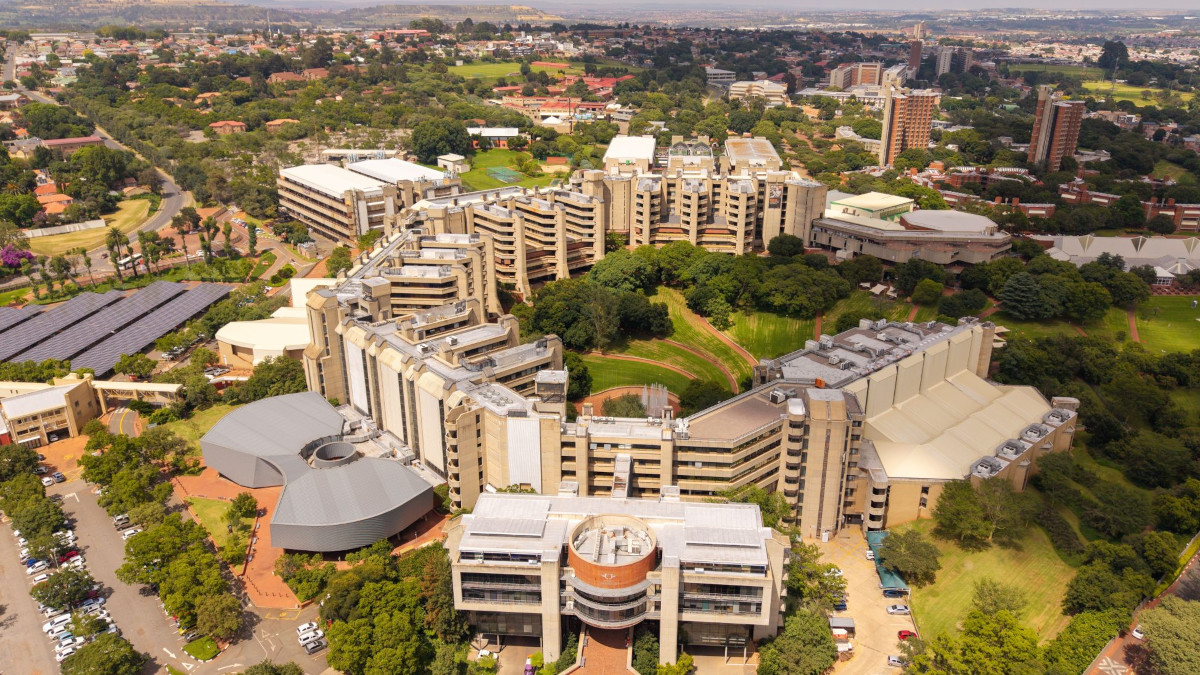
Scope: Universities are generally large-scale institutions with a significant student population, faculty, staff and infrastructure. They’re split among traditional (formative and professional degrees), comprehensive (all kinds of degrees) and technology (career, vocational and technical degrees) universities.
They are active in research, knowledge production, innovation and engaged with local, national and international communities.
Criteria for classification
- To be classified as a university, an institution must offer a range of HEQSF qualifications from levels 5 (Higher Certificate) to 10 (Doctoral Degree).
- Traditional universities have a higher bar at HEQSF 7 (Bachelor’s Degree) to 10 (Doctoral Degree)
- Universities of Technology have to have HEQSF 5 to 10, plus vocational and career-related programmes.
- Comprehensive Universities can offer a broad range of HEQSF 5 to 10, alongside OQSF qualifications.
- 95% of formal qualifications must be on the HEQSF. The remaining 5% may be qualifications or part-qualifications on the OWQSF.
- A “fair number” of HEQSF qualifications must be at Doctoral level.
- At least 5% of enrolments in HEQSF qualifications must be at postgraduate level.
- Universities must undertake research and produce knowledge that contributes to national development needs and international scholarship.
- They must also address wider community needs.
The full policy can be read below:


















 Loading ...