

United States tables new bill to punish South Africa


United States senator John Kennedy has introduced a new bill to extend the African Growth and Opportunity Act (AGOA) for two years that would explicitly exclude South Africa.
The bill was introduced to the US senate at the end of September when AGOA officially lapsed, bringing an end to the 25-year-old programme.
The bill was tabled and sent to the Committee on Finance, with no further action yet taken. The US government was in shutdown for 43 days after it was tabled, and only recently got back to business.
The existence of the bill was revealed by the Department of Trade, Industry and Competition during a presentation to the portfolio committee on Tuesday, 25 November.
The department noted that trade negotiations with the US were ongoing, and there was hope that AGOA would be revived.
It said that there is bipartisan support for renewal of AGOA among both republicans and democrats, and the White House itself has expressed support for a one-year renewal.
“It is expected that AGOA renewal will be a roll-over of current AGOA benefits with existing members – meaning that SA may be retained in the programme,” it said.
The DTIC mentioned that Kennedy had introduced a new bill to renew AGOA for two years, “which signals interest to renew the program”.
However, the department neglected to mention that this bill explicitly excludes South Africa.
According to Kennedy, the bill, called the AGOA Extension and Bilateral Engagement Act or “AGOA 2.0”, would extend the programme for two years, but only for countries that support US interests.
The senator said that the programme is necessary to “counter China’s growing influence in Africa”, but said that South Africa’s participation in the Act would be under review.
“China is using Africa to expand its influence at America’s expense. We need to rethink our relationships in the region while strengthening trade with African countries that share our values,” he said.
“This bill makes sure AGOA works for America’s interests—not against them.”
South Africa not invited
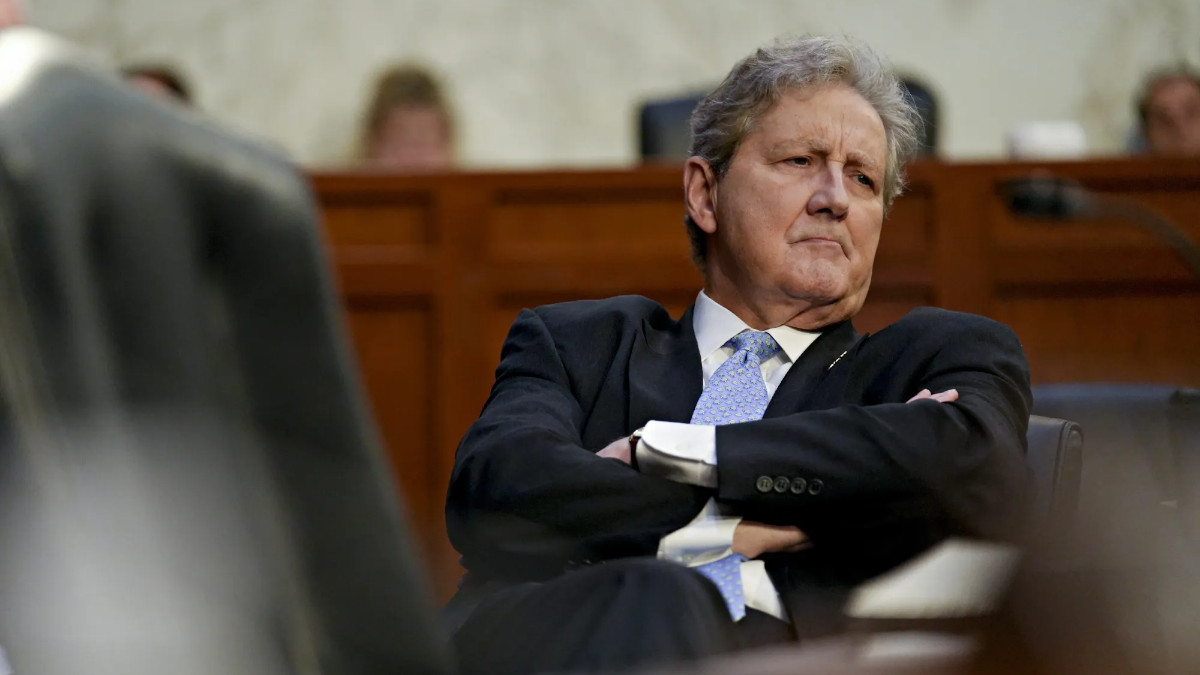
The Kennedy bill would renew AGOA for two years and ensure participating countries support US interests, rather than adversaries like Beijing and Moscow.
However, he said that South Africa needs to be held accountable for aligning with Beijing, Moscow and other US adversaries.
The AGOA 2.0 Act would:
- Extend AGOA for two years.
- Require a US strategy to negotiate bilateral trade agreements with select AGOA countries.
- Emphasise clear eligibility criteria for participating nations, including democratic governance, rule of law, human rights, combating corruption and open markets.
- Incorporate Kennedy’s US-South Africa Bilateral Relations Review Act to hold South Africa accountable for aligning with Beijing, Moscow and other adversaries.
- Ensure AGOA is used to strengthen US partnerships in Africa while combating Chinese influence in the region.
As stated, the legislation also incorporates Kennedy’s US-South Africa Bilateral Relations Review Act to ensure that South Africa is not part of the new framework.
This specific bill from Kennedy was introduced to the senate earlier in September, complementing a similar bill introduced into the House of Representatives in April.
The key difference between the House and Senate bills is that the latter explicitly calls for South Africa to be removed from AGOA.
If passed into law, the bill requires a comprehensive review of the bilateral US-South Africa relationship and a certification from US President Donald Trump on whether South Africa undermines US national security interests.
The bill also requires a classified list of South African government officials and members of South Africa’s ruling party, the African National Congress, eligible for sanctions under the Global Magnitsky Act.
Notably, the bill explicitly ends South Africa’s eligibility to benefit from AGOA.
While introducing a bill is only the first in a long process in setting a new law, this is effectively the third push from US republicans to punish South Africa for its geopolitical positioning.
Tensions between the two countries have been running hot ever since the Trump Administration took office in February, hitting a fresh crescendo at the weekend’s G20 Leaders’ Summit.
The US boycotted the summit and attempted to apply pressure on South Africa not to issue a leaders’ declaration from the meeting.
South Africa and other attending G20 leaders adopted a leaders’ declaration on the first day of the summit, delivering an embarrassing blow to the world’s largest economy and the Trump presidency.
In a further embarrassment to the US, South Africa rejected the request for President Cyril Ramaphosa to hand over the G20 gavel to the US charge d’affaires.
The gavel will reportedly be handed over to the US in a low-level diplomatic affair on Tuesday (25 November).
The bill can be read below:

















 Loading ...