

240-year-old small town in South Africa where war is brewing


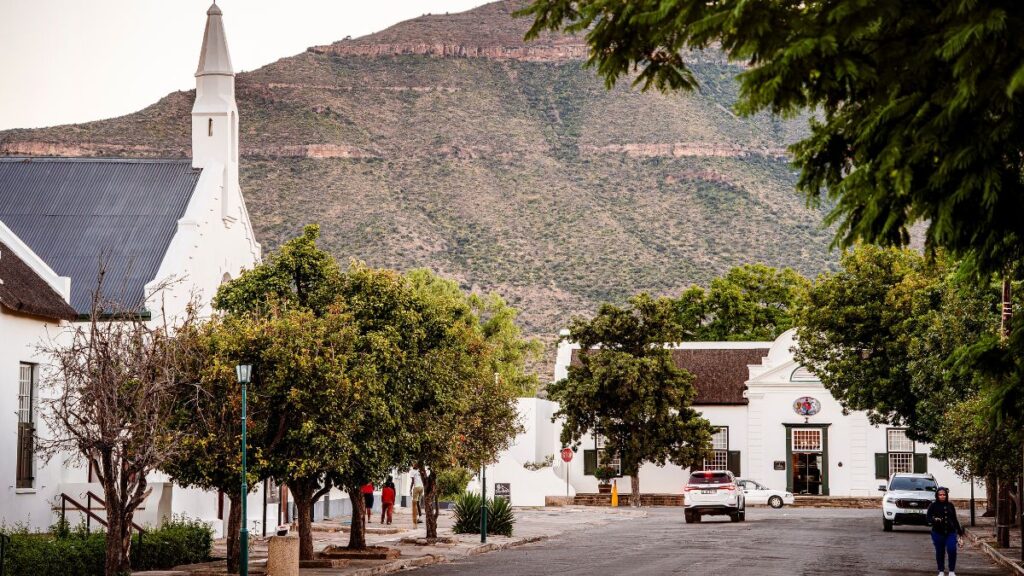
Legal war is brewing in the small town of Graaff-Reinet, as residents and other stakeholders refuse to accept the government’s move to rename the 240-year-old town.
Graaff-Reinet has been renamed to Robert Sobukwe Town, after Minister of Sports, Arts and Culture Gayton McKenzie signed off on the renaming of 21 places across South Africa.
Among them were Graaff-Reinet and East London, the latter of which has been renamed Kugompo City. Aberdeen also changed to Xamdeboo, Adendorp to KwaMseki, and Bishop Limba to KwaNoheleni.
The changes followed recommendations from the South African Geographical Names Council (SAGNC).
According to the Ministry, the renamings form part of efforts to transform South Africa’s naming landscape, promote social cohesion, and recognise diverse heritage by moving away from colonial-era names.
However, in Graaff-Reinet, the move has been met with strong resistance from longtime residents.
Local attorney Derek Light, acting on behalf of the Graaff-Reinet Economic Development Forum, has formally challenged the government gazette notice that confirmed the name change.
The notice, published last week, is the final step in a contentious process that began when the proposal surfaced in 2024.
However, Light argued that the notice is legally defective. “The Minister’s notice is defective. It fails to inform the public that they have 30 days to object and also where they can object,” he said.
“This process has to be procedurally fair, and this standard was not met. This year, the town is 240 years old. The vast majority of people living here do not want a name change.”
“The origin of the name has become opaque and is no longer offensive to anybody,” Light added.
Graaff-Reinet was established in 1786 and named after Dutch governor Cornelis Jacob van der Graaff and his wife, Cornelia Reinet.
The proposed new name honours Robert Mangaliso Sobukwe, a political activist and founder of the Pan-Africanist Congress (PAC), who was born in the town in 1924.
An overwhelming number of residents didn’t want the name change

While Sobukwe’s legacy is widely respected, opponents of the change argue that recognition does not require erasing the town’s existing name.
The chair of the Graaff-Reinet Ratepayers Association, Liz Buisman, said residents are mobilising to oppose the decision.
“We are determined, and we are rallying,” Buisman said, adding that scores of objections are being compiled and submitted.
The town is set to host a major Heritage Society Conference in December, and organisers have already taken a stance against the name change.
“We had a meeting on Monday, and it was decided that this will not be called the Robert Sobukwe Heritage Society Conference. It will be called the Graaff-Reinet Heritage Society Conference,” Buisman said.
A 2024 quantitative study conducted by Stellenbosch University Professor Ronnie Donaldson surveyed 367 residents to gauge opinion on the proposed change.
The study, ‘If you name a child then change the name, it is someone else’; opinions of Graaff-Reinet residents on the proposed name change of their town to Robert Mangaliso Sobukwe, from 2024, shows that the Minister acted without town support.
A statistically representative random sample of 367 respondents was used, achieving a 95% confidence level with a 5% margin of error. Of those surveyed, 18.8% identified as white, 27.2% as black, and 54% as coloured.
A significant majority (83.6%) said the name should not change. This opposition held even when responses were cross-tabulated across different demographic groups.
However, the research showed that black respondents were the most undecided, with 13% indicating uncertainty.
In the township area, 32% supported the name change—the highest level of support among the surveyed groups, though still far from a majority.


















 Loading ...