

Ramaphosa responds to plan to open the floodgates for American companies to enter South Africa


South African President Cyril Ramaphosa signalled a push to reset strained ties with the US, backing plans by Washington’s new envoy to boost America’s corporate presence in the country.
He has also welcomed “positive signals” on trade relations.
The remarks, made at the American Chamber of Commerce in South Africa on Thursday (9 April), come a day after Ramaphosa accepted the credentials of US Ambassador Leo Brent Bozell.
This is a move that may help steady relations between Pretoria and Washington after a period of diplomatic friction.
“I understand that the Ambassador wants to double the number of US companies operating in South Africa,” he said.
“This is an ambition that we wholeheartedly support and that we hope to work together to achieve.”
Bozell stated in an address at the BizNews Conference in March that the United States wants to invest and double the number of US companies and employees in South Africa.
There are more than 600 American companies operating in South Africa and employing more than 250,000 people.
“The United States values partners in South Africa. This country is Africa’s largest economy, and it’s the largest US trade and investment partner in sub-Saharan Africa,” Bozell said at the time.
He pointed to several recent investments by major US technology companies as examples of the strong commercial relationship already in place.
He cited investments by companies such as Visa, Google Cloud, Microsoft, and Amazon.
Visa recently launched its first data centre in Johannesburg, with a R1 billion investment planned over three years.
Google Cloud has also established its first African cloud region in Johannesburg as part of a major investment in the country’s digital transformation.
Meanwhile, Microsoft is expanding its cloud and artificial intelligence infrastructure.
“Microsoft is investing an additional R5 billion by 2027 to expand cloud and AI infrastructure here, building on more than R16 billion already invested,” Bozell said.
“They’re proof that American companies bring capital, high standards, cutting-edge technology, workforce development, and long-term commitment.”
However, Bozell also stressed that “partnerships must be rooted in reciprocity,” flagging concerns about issues affecting investor confidence.
These include matters such as the business environment, rural safety, the country’s expropriation policies, and South Africa’s geopolitical alignments.
According to Bozell, such factors directly influence how companies evaluate investment decisions.
Mending bridges
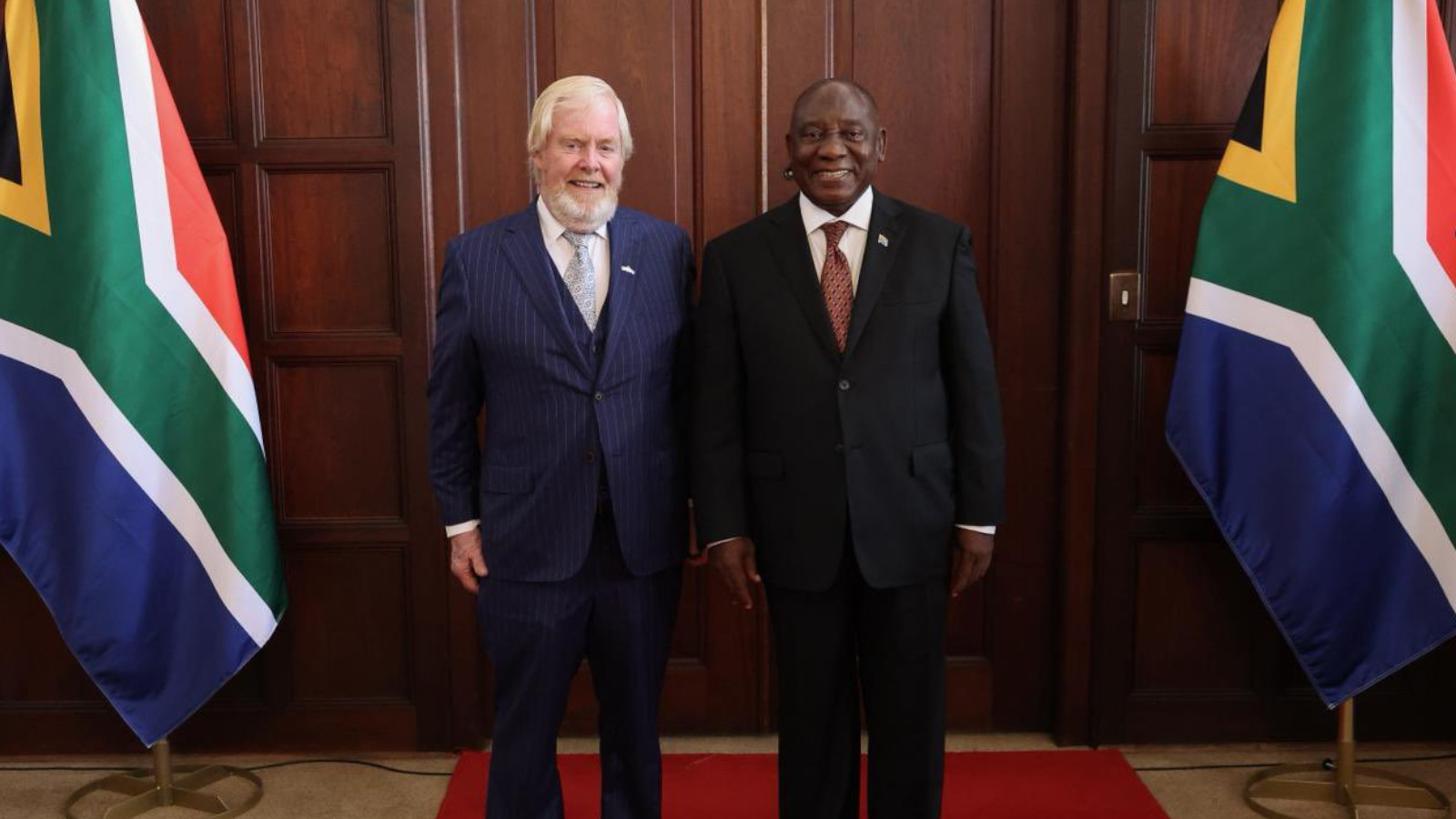
Ramaphosa’s conciliatory tone signalled renewed efforts to rebuild both economic and diplomatic ties with one of South Africa’s largest trading partners and sources of foreign direct investment.
“Recently we have had several positive signals from the United States,” the president said.
He added that South Africa was speaking with US lawmakers and trade officials, including discussions around the renewal of the African Growth and Opportunity Act, a key preferential trade program.
Relations between Pretoria and Washington have been chilly since President Donald Trump returned to office in January 2025.
Tensions have been flaring over false claims that South Africa was subjecting white farmers to a genocide and seizing their land.
The lack of a South African ambassador to Washington, following the expulsion of its previous envoy, has added to the uncertainty around bilateral ties.
“As we continue the work to strengthen economic ties, we are committed to rebuilding political and diplomatic relations between our two countries,” Ramaphosa said.
He also pointed to growing cooperation in strategic sectors such as critical minerals, which are increasingly central to global supply chains and US industrial policy.
He also highlighted domestic reforms aimed at improving South Africa’s investment appeal.
By S’thembile Cele for Bloomberg News, additional reporting by BusinessTech















 Loading ...