

The city in South Africa with the best service delivery on record


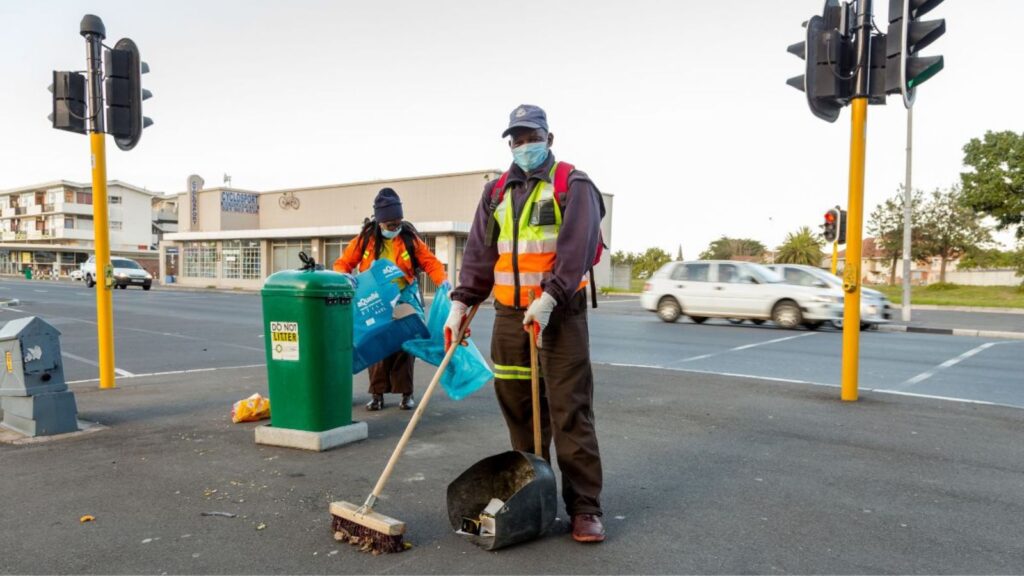
Cape Town is becoming South Africa’s leading metro for service delivery, with a clean audit outcome for three years running and now a record infrastructure investment that outpaces all Gauteng metros combined.
Presenting the report in parliament last year, AG Tsakani Maluleke slammed the widespread poor financial performance of local governments.
The latest report showed that only 41 of South Africa’s 257 municipalities received clean audits from the AG’s office.
Despite the AG’s repeated appeals to national and provincial governments to step in, Maluleke said that audit outcomes continued to reflect systemic failure at the local level.
However, the AG noted that out of the eight metropolitan municipalities, only the City of Cape Town received a clean audit.
The record highlighted that this means that the city has maintained the rating for a third year straight.
Now this year, presenting the city’s draft Budget for 2026/27, Mayor Geordin Hill-Lewis said the metro’s latest financial plan reflects years of sustained investment, improved governance, and employment growth.
Hill-Lewis highlighted that the budget delivers outcomes that, in his view, are unmatched by other major cities.
“This draft budget achieves several things at once that simply wouldn’t be possible in other cities,” he said.
This included a South African record infrastructure investment that outpaces all Gauteng metros combined.
Others were what he described as the most comprehensive relief for struggling households and pensioners, and the lowest property rates and total monthly bills of any metro.
“Cape Town is SA’s one city that works, and with these investments we are building a city of hope for all, in line with our long-term vision.”
A key part of the plan is infrastructure spending, which the city said will drive both economic activity and job creation.
The budget highlighted around 130,000 construction-related jobs are expected to flow from capital investment over the current term of office.
Massive focus on service delivery

Over the next three years, the city has outlined major allocations across essential services. Water and sanitation projects account for R16.7 billion, or roughly 40% of total infrastructure spending.
This includes significant upgrades to wastewater treatment works, a major expansion of water supply sources, and a fourfold increase in pipe replacement, supported by a R2 billion programme.
Electricity infrastructure is another major focus, with R6 billion earmarked for grid upgrades and maintenance.
These investments are aimed at preparing the metro for a more decentralised energy future with reduced reliance on Eskom.
Transport and mobility upgrades are also a big part of the plan. The city has allocated R3.7 billion for road maintenance, pothole repairs, and improvements to roads and stormwater systems.
Public transport expansion is set to receive a further R3.3 billion, funding the continued rollout of the MyCiTi bus service into the Cape Flats, described as the largest expansion of its kind in South Africa.
Spending on human settlements and community infrastructure is also substantial, with R3.3 billion set aside for informal settlement upgrading and state-subsidised housing.
The city has also proposed a record R6.8 billion allocation for 2026/27, alongside a significant expansion of its policing capacity.
Over the current term, the number of policing personnel has increased by more than 50%, with 1,340 officers added.
The budget also introduced wide-ranging relief measures for residents. Around 60% of households are expected to see either a decrease or no change in property rates, despite rising property values.
This is partly due to a proposed 10.2% reduction in the “rate-in-rand” and an increase in the rates-free threshold, with the first R500,000 of property value now exempt.
Further relief includes expanded indigent support, with higher rebate thresholds for water, sanitation, refuse collection, and other services.
Pensioners and social grant recipients will also benefit from an increased qualifying income threshold of R27,000 per month—regardless of property value—marking the highest level of support of its kind in South Africa.
The city argued that these measures taken together reinforce its position as the best-performing metro in the country.









 Loading ...