

End of the green ID book in South Africa is coming after five decades


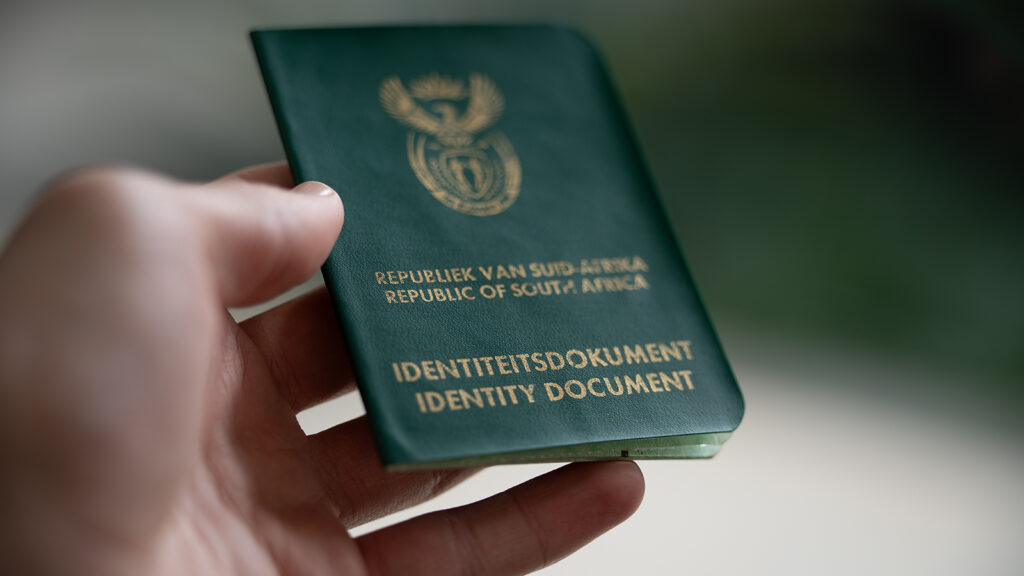
Minister of Home Affairs Dr Leon Schreiber said the government is rapidly moving to phase out South Africa’s green barcoded ID books after nearly five decades in circulation.
Speaking after a major drug bust at the Beitbridge Border Post, Schreiber said the government must phase out the green ID book as quickly as possible, because it has become increasingly vulnerable to fraud and identity theft.
The announcement comes as South Africa pushes ahead with a broader digital transformation programme aimed at strengthening border security, cleaning up the national population register and improving immigration controls.
The green ID book has served as South Africa’s primary identity document since 1980.
However, despite a few security upgrades over the years, the document has become increasingly susceptible to modification and forgery.
According to Schreiber, this vulnerability has linked the document to a range of crimes, including identity theft, illegal migration and smuggling.
“The green ID book is intricately linked to issues of illegal migration, smuggling, and other offences because it is the core pathway that is used to commit identity theft, and we are rapidly moving to replace those green IDs,” he said.
The minister said the replacement of green ID books forms part of a broader effort to modernise South Africa’s identity and immigration systems. Draft regulations for a new digital identity system are currently open for public comment until 6 June 2026.
He explained that the Electronic Travel Authorisation system, the phasing out of green ID books and the introduction of digital IDs all work together to strengthen security.
“All three of these biometrically powered systems, the ETA, the eradication of the green ID book, and the introduction of digital ID, are methodically cleaning up South Africa’s population register and securing South Africa’s immigration processes,” Schreiber said.
The move is also part of the Department of Home Affairs’ 2025–2030 strategic plan, which includes developing a fully digital identity platform in partnership with the South African Reserve Bank.
The department said the future system will use facial recognition as the primary biometric identifier, supported by fingerprints as a secondary verification method.
“A critical aspect of securing citizenship and civil registration is the move to digital identity. The department aims to issue a digital identity by 2029,” it said.
The transition follows growing concerns about identity fraud. Identity verification platform VerifyNow recently warned that the green ID book remains one of South Africa’s largest security vulnerabilities.
In its 2026 Identity Fraud Report, the company said impersonation fraud involving green ID books has surged by 400% year-on-year as criminals increasingly use artificial intelligence and other tools to exploit weaknesses in the legacy system.
An estimated 16 million South Africans still rely on the green ID book, despite the ongoing rollout of Smart ID cards.
To speed up the transition, Home Affairs has expanded its partnership with banks, allowing citizens to apply for Smart IDs and passports at participating branches.
By the end of the current financial year, the department aims to have Smart ID services available at 200 bank branches nationwide.
“The department will continue to expand access to smart ID and soon passport services through its digital partnership model with the banking sector,” Schreiber said.
“These partnerships will support the long-term objective of replacing the green barcoded ID book with the more secure smart ID card.”
The green ID book itself has a notable history. South Africa’s first formal identification documents emerged during the apartheid era.
This began with the green plastic ID cards in the 1950s and the infamous “dompas” reference books imposed on Black South Africans.
After an unsuccessful attempt to introduce the bulky “Book of Life” in the 1970s, the government launched the smaller green barcoded ID book in 1980.
The document survived the transition to democracy and was revised in 1996 to remove racial classifications and introduce barcodes linked to the National Population Register. The last major security update came in 2000.


















 Loading ...