

R1.45 billion spent on temporary classrooms and toilets in South Africa instead of building schools


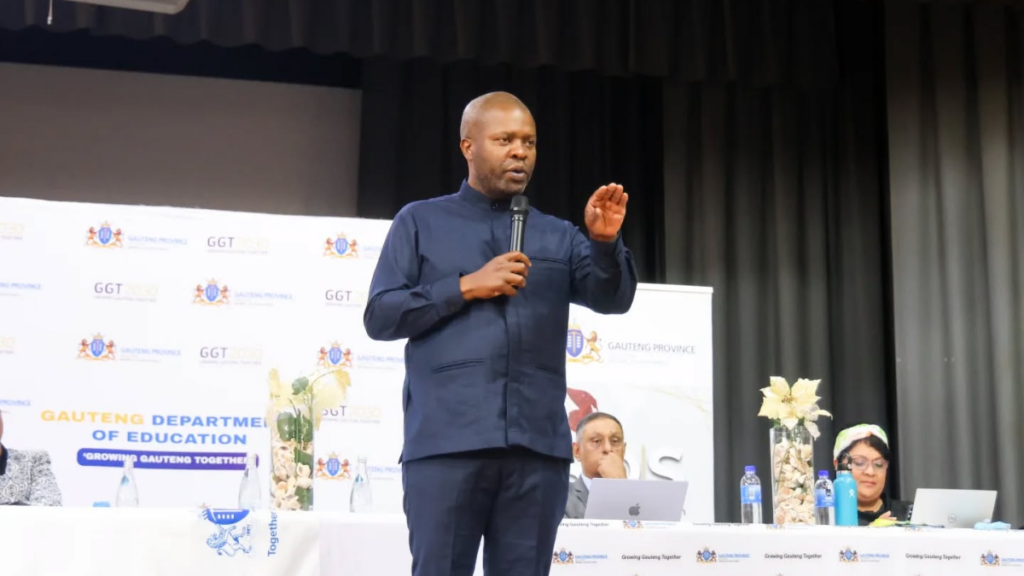
The Gauteng Department of Education (GDE) has spent R1.45 billion on temporary mobile classrooms and ablution facilities rather than constructing permanent school infrastructure.
This amount is the accumulated value over five years, from 2020 to 2025.
The Gauteng Department of Education (GDE) acknowledged that the R1.452 billion spent on temporary facilities could have funded around eight to ten permanent schools, based on its benchmark of R175 million per new school.
Currently, the GDE owns 3,336 mobile classrooms. Over the last three financial years, a total of 3,136 mobile classrooms were delivered, with 2,399 (over 76%) delivered in the last two financial years, 1,262 in 2023/24 and 1,137 in 2024/25.
In some instances, a large number of mobile units have been allocated to individual schools in an attempt to turn temporary solutions into permanent substitutes.
For example, Tshepong Secondary School received 45 mobile classrooms, Obed Nkosi Secondary School received 42, and Kutmela Molefe Satellite School received 31.
The GDE has disclosed information about its major service providers, which include Thobilem Building Construction (paid R227.2 million), Singo Investment Holdings (paid R103.5 million), and Africabin Building Systems (paid R97.5 million).
However, the GDE has not provided details on the individual cost per classroom or broken down the expenses for classrooms and ablution facilities.
This lack of information makes it difficult to assess the value for money. There are gaps in the department’s disclosure.
The total expenditure spans five financial years, but the detailed classroom delivery schedule accounts for only three (from 2022/2023 to 2024/2025).
The GDE’s R175 million benchmark for building a new school is frequently not met. The Democratic Alliance (DA) tabled questions to the Gauteng Education MEC, Lebogang Maile.
The party said that it demanded that Maile disclose the unit price paid for each type of mobile classroom, the specifications of the units supplied, and the number and cost of ablution units purchased.
It said that this would be necessary to determine whether the department is implementing a coherent long-term infrastructure strategy or draining public resources on temporary solutions.
Gauteng schools have a violence problem

A recent report from the Department of Education has identified 245 schools in Gauteng as high-risk for violence.
This announcement follows an overview by Gauteng’s MEC for Education, Sport, Arts, Culture, and Recreation, Lebogang Maile, on school safety, crime, and violence, as well as an evaluation of current interventions aimed at protecting both learners and educators.
A provincial study involving over 1,300 schools pinpointed these 245 high-risk schools in Gauteng that require targeted intervention.
The findings indicate a strong connection between issues of school safety and broader community problems, such as gang activity, drug use, and violence.
“School safety has emerged as a critical and urgent concern that directly affects teaching and learning outcomes,” said Maile.
Maile said that while the education system continues to grapple with challenges such as overcrowding, infrastructure backlogs, and service delivery pressures, school safety has emerged as a critical priority.
He highlighted key concerns, including bullying, substance abuse, violence, vandalism, and criminal activity both in and around schools.
Maile said the Department actively involves parents, educators, and communities throughout Gauteng.
These engagements reportedly highlight issues related to unsafe travel routes for learners, damaged infrastructure, and general insecurity in school environments.
He said partnership programs, including SADAG, Childline Gauteng, and the Teddy Bear Foundation, provide psychosocial support to many learners and educators, with the aim of addressing trauma, mental health, and child protection needs.
“Partnerships with organisations like the South African Depression and Anxiety Group (SADAG) reached over 11,000 learners and 150 educators by April 2026, with mental health and suicide prevention,” he said.
He reported that the Teddy Bear Foundation provided direct psychosocial support to over 100 schools.
Childline Gauteng and the Isibindi Ezikoleni Programme, which operates in 30 schools, reached over 35,000 learners.
These organisations help vulnerable learners cope with trauma, abuse, and behavioural challenges.















 Loading ...