

Taxpayers handed over R17.2 billion to fix roads in South Africa – but they just got worse


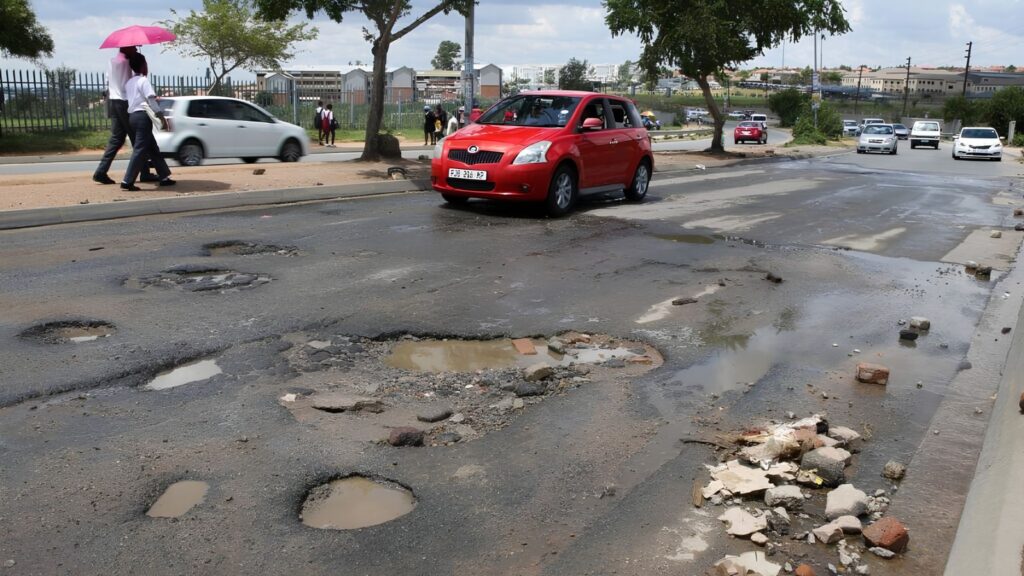
Transport Minister Barbara Creecy announced that South Africa’s funding for road maintenance and infrastructure has grown from R6.5 billion in 2012 to R17.2 billion in 2026.
Despite this 167% increase in funding, the quality of South Africa’s roads has significantly deteriorated.
Creecy provided this information in response to a question from National Assembly member Glynnis Breytenbach.
Breytenbach asked for a breakdown of the annual budget allocated for road maintenance and infrastructure in each province since 1994.
Creecy explained that she could only provide data on road maintenance funding across all provinces starting from 2011.
This is because the Provincial Road Maintenance Grant (PRMG), which tracks this information, was only established in 2011.
“Any other historical budget data, such as Provincial Equitable Share Allocation, should be obtained from the Provincial Treasuries or Provincial Road Authorities,” she said.
In the 2012 financial year, funding for road maintenance and infrastructure across all South African provinces was R6.5 billion.
By the 2022 financial year, this amount had increased to R11.9 billion, representing an 85% rise in funding over the decade.
Over the following four years, road maintenance and infrastructure funding rose by an additional 45%, reaching R17.2 billion.
Despite a R10.8 billion boost in road maintenance and infrastructure funding, the quality of South African roads has significantly deteriorated since 2011.
The best measure of the quality of the country’s roads is derived from the Infrastructure Report Cards (IRC), which are published every five years by the South African Institution of Civil Engineering (SAICE).
These reports include technical assessments from the South African National Roads Agency (SANRAL) and the Council for Scientific and Industrial Research (CSIR).
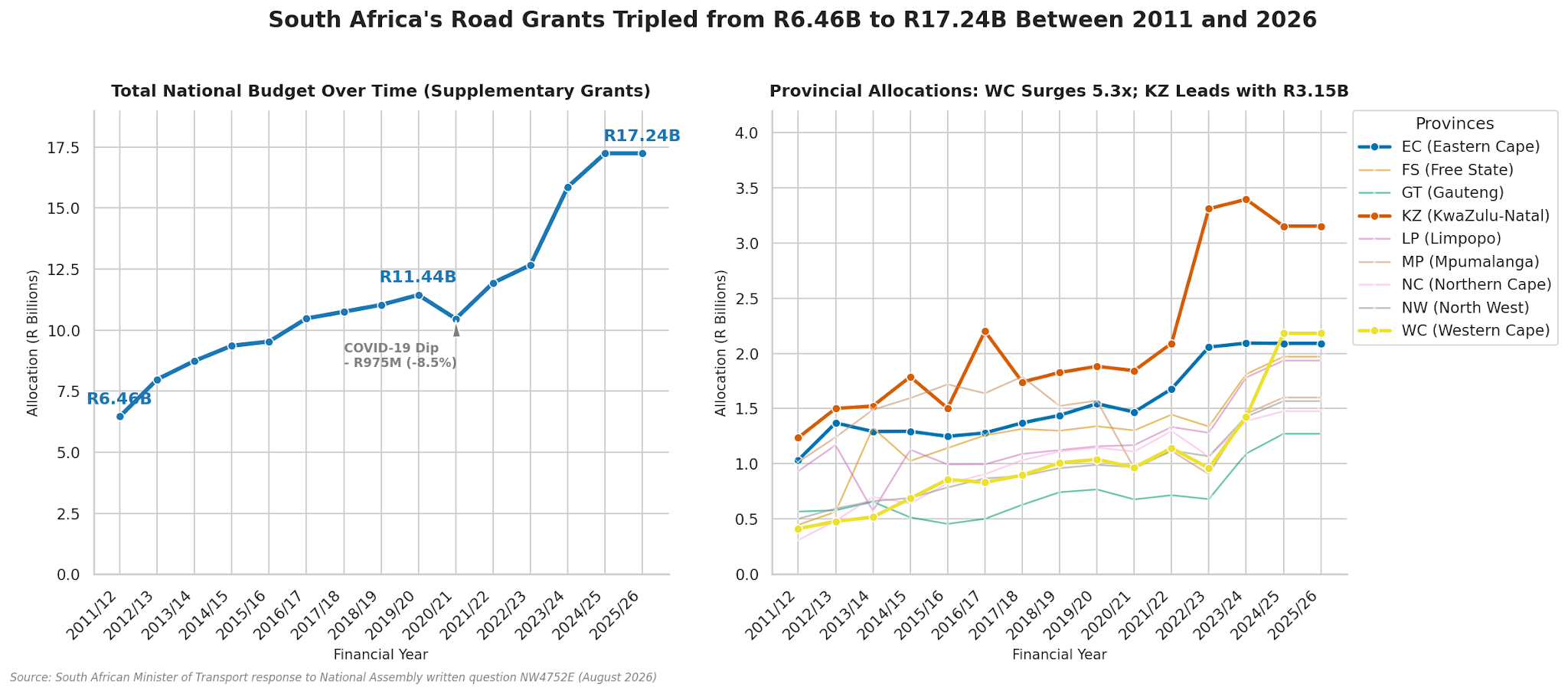
South Africa’s roads have deteriorated, but its budget nearly tripled
The data from the SAICE reports indicate that over the past 15 years, the condition of South African roads has deteriorated.
This deterioration is driven by severe declines in South Africa’s provincial and municipal secondary road networks.
SAICE has graded South Africa’s paved provincial roads as a D (“at risk of failure”), and municipal paved roads as a D-.
Provincial and municipal unpaved roads, which represent 80%, are classified as an E (“unfit for purpose”).
The report highlights that the primary issue is that provincial and local authorities manage their roads reactively rather than proactively.
Instead of conducting regular, scheduled maintenance to prevent deterioration, the report highlighted that the authorities wait for roads to fail and then attempt to repair them.
Gauteng’s PRMG road allocation has grown from R566.9 million in 2011/2012 to R1.27 billion in 2025/2026.
Despite its economic size, Gauteng receives the lowest allocation for road maintenance grants of any province.
KwaZulu-Natal is the highest-funded province for PRMG road allowance in South Africa, with funding increasing from R1.24 billion in 2011/2012 to R3.15 billion in 2025/2026.
The budget for road allocation in the Western Cape has increased more than fivefold, growing from R411.1 million in 2011/12 to R2.18 billion in 2025/26.
The Western Cape is the only province where paved roads are maintained in a satisfactory condition, according to the report.
It uses an up-to-date Pavement Management System to scientifically identify and prioritise roads before they reach a critical structural “tipping point.”
In addition to the Western Cape, Mpumalanga also operates a Pavement Management System to prioritise road spending.
However, its coal haul roads are deteriorating rapidly due to a significant annual funding shortfall of R862 million.
The Medium Term Expenditure Framework (MTEF) allocations average only R328 million, while R1.19 billion is needed to ensure that the majority of poor roads remain in acceptable condition.











 Loading ...