

Diving into the South African Forex market: A comprehensive guide for traders


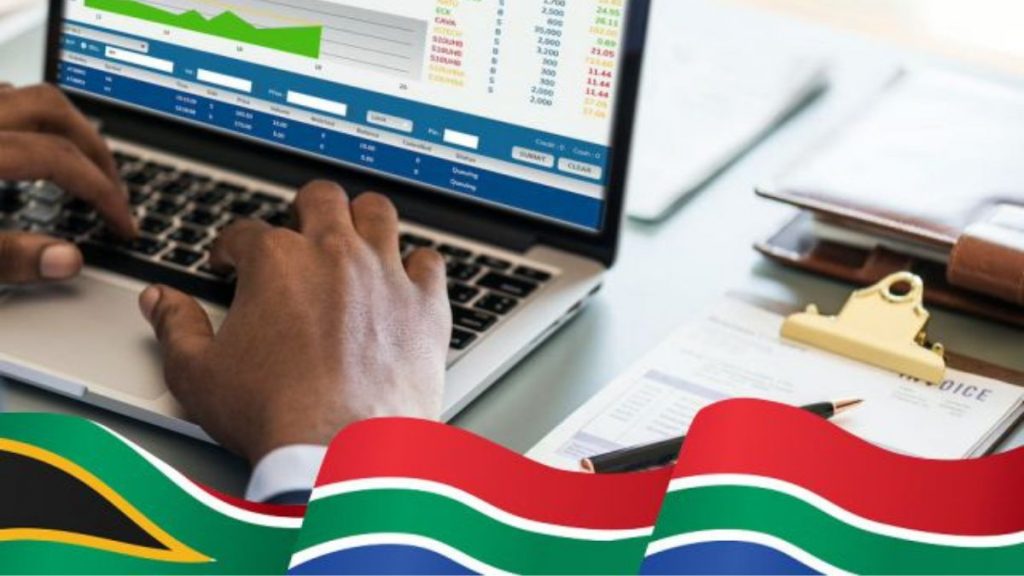
You have some familiarity with foreign exchange (forex) if you have ever converted your local money into a foreign currency at an airport or forex counter.
You’ve probably seen that the relative values of different currencies change as the purchasing and selling rates move up and down.
If you want to make money trading forex, you need to know what influences currency exchange rates.
The value of a currency in relation to another reflects the relative health of its economy.
Increases in economic growth tend to support a currency’s value, whereas decreases in growth tend to lead to a currency’s depreciation.
Here, we will take a closer look at Forex trading for South African traders.
The Forex trading landscape in South Africa
Forex trading SA entails speculating on the rise and fall of currencies in order to profit.
South Africans can lawfully trade in the foreign exchange market through any FSCA-regulated forex broker who is authorised to offer derivative instruments to South African traders.
The daily forex trading volume in South Africa is projected to be over $19.1 billion USD.
Because of the increased market liquidity, 24/5 market hours, and rapid speed, you are likely to wish to begin trading forex as an investment product.
However, there are numerous hazards associated with CFD trading, but there are also proven ways to succeed.
How to trade Forex in South Africa
Trading forex legally is now possible for all South Africans.
To begin trading online, all you need is a laptop or device, a fast internet connection, some investment capital, and a decent strategy with effective risk management.
To place live trades in the forex market, you must first sign up with a regulated Forex broker.
South African traders are accepted by over 100 brokers.
1. Open a trading account
To begin trading forex, select a reputable and regulated forex broker and open an account.
Choosing a ‘good’ broker is a critical stage because the broker is crucial to the success of your trade.
You must also select an Account Base Currency.
Some SA forex brokers provide ZAR Base Currency Accounts, which might be advantageous in specific situations.
Furthermore, your forex broker should accept ZAR payments and withdrawals via bank transfers and EFT.
2. Choose your leverage ratio
Leverage, by definition, entails borrowing a specific amount of money in order to invest in anything.
In Forex, utilising leverage is borrowing money from your broker to place an order for a larger position than your actual capital.
However, leverage is a two-edged sword that has the potential to raise your profits if you are correct while also increasing the chance of a larger loss if you are incorrect.
A leverage of 100:1 enables the trader to open a position worth 100 times the starting margin.
If the trader is not cautious when putting up the stop-loss, your trading account may quickly be depleted.
3. Set a stop loss
Stop loss is the price at which you decide to terminate a losing trade that you can establish.
Losses are unavoidable, but how you deal with them is critical.
So, anytime you place a trade, remember to set a stop loss.
For risk management, having a specified stop loss is critical.
For example, a simple method would be to set your stop loss at 2% of your equity per trade.

















 Loading ...