

The Bleisure Boom: how to leverage the trend of combining work and leisure



Imagine this: your business trip to Dubai for a conference wraps up on Thursday, but you extend your stay until Monday — to explore the old city markets, climb the Burj Khalifa, and watch the sunrise in the desert.
The bleisure format — combining business and leisure — has already been embraced by millions of business travellers worldwide, and South Africa is no exception.
But simply extending a business trip isn’t enough for a successful bleisure experience — stable and flexible connectivity is essential.
This convenience is made possible by next-generation eSIM providers like Yesim.
For travellers, it allows seamless transitions between a video conference with the Johannesburg office and an evening stroll through Gardens by the Bay in Singapore.
For corporations, it becomes a tool to enhance employee satisfaction and engagement without incurring additional costs.
What’s driving the growth of bleisure: reasons and figures
The transformation of work and travel is happening before our eyes, and bleisure is one of the clearest signs of these changes.
Transformation of corporate culture
The COVID-19 pandemic permanently changed attitudes toward work and employee mobility.
The hybrid model, which has become the norm for millions of professionals, proved that productivity is not tied to an office chair.
This freedom naturally extended to business trips — why fly home immediately after a conference when you can work remotely for a few more days and explore a new country?
The scale of this transformation is impressive.
Analysts at Fortune Business Insights estimated the global bleisure market at $762 billion in 2025, with projections to reach $2,210 billion by 2034 — nearly a threefold increase in nine years.
An alternative forecast by Precedence Research is even more optimistic: $816 billion in 2025, growing to $3,574 billion by 2034, with a compound annual growth rate of 17.38%.

The demand of a new generation of professionals
Millennials and Generation Z are gradually becoming the dominant force in the workforce, bringing fundamentally new expectations.
For them, experiences matter more than accumulation, and travel is not a luxury but a necessity for personal growth and career development.
A report from SAP Concur shows that millennials lead in bleisure travel, accounting for more than a third of all such trips, but interest is also evident among Generation X and even baby boomers.
This is no longer a narrow age niche — it is a widespread expectation encompassing the full spectrum of working professionals.
Benefits for companies
Bleisure is an investment with measurable returns.
The first benefit is talent retention: replacing a skilled employee can cost several months’ salary, while the option to extend a business trip helps retain valuable staff.
The second is increased productivity: employees return rested and motivated.
The third is strengthening client relationships through informal meetings and a better understanding of local markets.
A large-scale survey by the Global Business Travel Association confirms that this approach benefits all participants in the process.
How to plan a successful bleisure trip: practical recommendations
The theory sounds appealing, but how do you organise a hybrid trip in practice? Here are three key elements of a successful bleisure strategy.
Stable connectivity — the foundation of bleisure
Imagine this: you’re on the observation deck of the Burj Khalifa when an urgent video conference with the office suddenly begins.
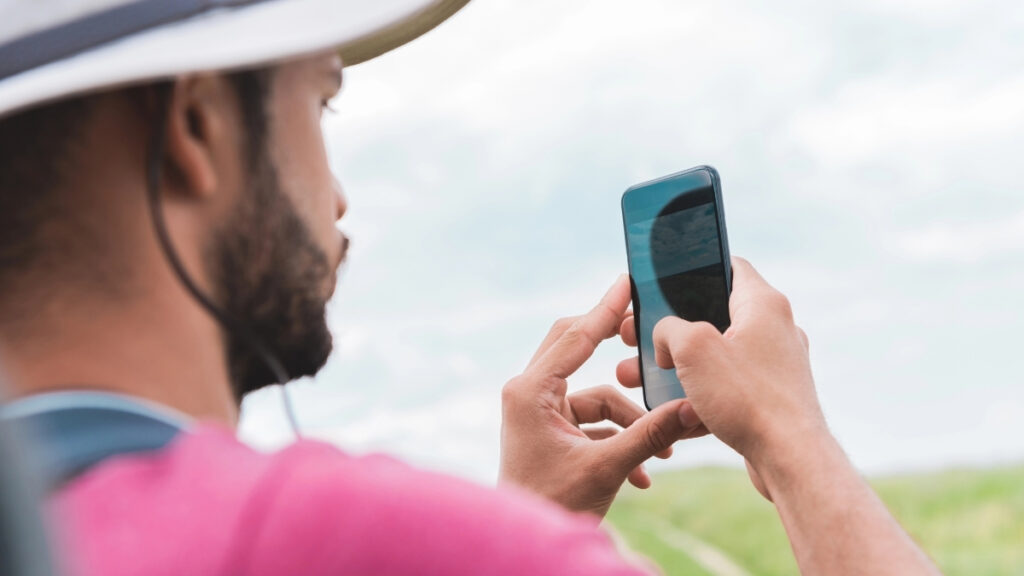
Or you need access to your corporate CRM while sitting in a small café along the Seine. Without reliable internet, bleisure becomes a source of stress rather than enjoyment.
Traditional ways of staying connected abroad have serious drawbacks.
International roaming with local South African operators like Vodacom or MTN remains expensive — without special packages, the cost per MB can reach 0.55–1.1 ZAR.
Public Wi-Fi in hotels and cafés poses security risks for corporate data, is often unstable, and isn’t available everywhere.
Local SIM cards come with their own challenges: finding a mobile shop in an unfamiliar city, navigating local plans in an unknown language, temporarily losing your main number, and dealing with registration procedures.
Swiss company Yesim, a next-generation eSIM provider, offers plans tailored to different travel styles.
The Global Package covers over 80 countries, the Global Plus Package spans more than 140 countries, and the Pay & Fly plan operates on a pay-as-you-go model: one eSIM for the entire world, paying only for the data you use.
The system automatically switches to the best network among more than 800 partner operators worldwide, which is especially valuable in regions with unreliable coverage.
For those who want to test the connection quality at a minimal cost, a trial plan is available with 500 MB for just 9.6 ZAR.
New users can also use the promo code GETYESIM15 to receive a 15% discount on their first order.
To compare actual expenses: a week in Dubai using Vodacom roaming with active data usage (video calls, navigation, social media — up to 5 GB) can cost 1,500–2,000 ZAR, whereas with Yesim, a 7-day unlimited package for the UAE costs around 470 ZAR — a significant difference.
Optimising routes and logistics
Not all destinations are equally suited for bleisure.
Ideal locations combine a well-developed business infrastructure with rich tourist opportunities.
Cities like Dubai, Singapore, London, and Barcelona allow an international conference to easily turn into a cultural weekend experience.
When choosing accommodation, prioritise hotels with coworking spaces or corporate apartments for extended stays — they offer a balance between work comfort and leisure convenience.
Schedule the personal part of your trip during the shoulder season — this allows you to save on lodging and flights without compromising on weather or experiences.
Balancing work and leisure
Successful bleisure requires careful planning.
Coordinate work hours with your team, taking time zones into account — for example, morning meetings with the Cape Town office could free up the afternoon for exploring a new city.
Use weekends and local holidays to minimise time off.
For employees with families, bleisure offers the chance to turn a business trip into a family getaway.
The company covers the employee’s travel and accommodation during workdays, while the family joins on the weekend at their own expense — everyone benefits, with no additional costs for the company.
Investing in human capital
Bleisure is not a “company-paid vacation,” but an investment in human capital.
Companies that recognise this early gain a competitive edge: their job openings attract top talent, staff turnover decreases, and employees return from trips not exhausted, but inspired.
The question is no longer whether to allow people to combine work and travel, but how to integrate this practice effectively into corporate culture.
The infrastructure already exists: providers like Yesim offer eSIM solutions that enable work from anywhere in the world without losing connectivity or paying extra for roaming.
South African companies should take note of how their counterparts in Europe and North America are turning bleisure into a strategic tool for talent retention.
In an era where skilled professionals consider not only salary but also quality of life, this kind of flexibility can become a decisive advantage.
Click here to learn more about Yesim’s eSIM mobile data plans for travel and business.















 Loading ...