

The South African who left his job at a liquor company to start a bank and became a billionaire


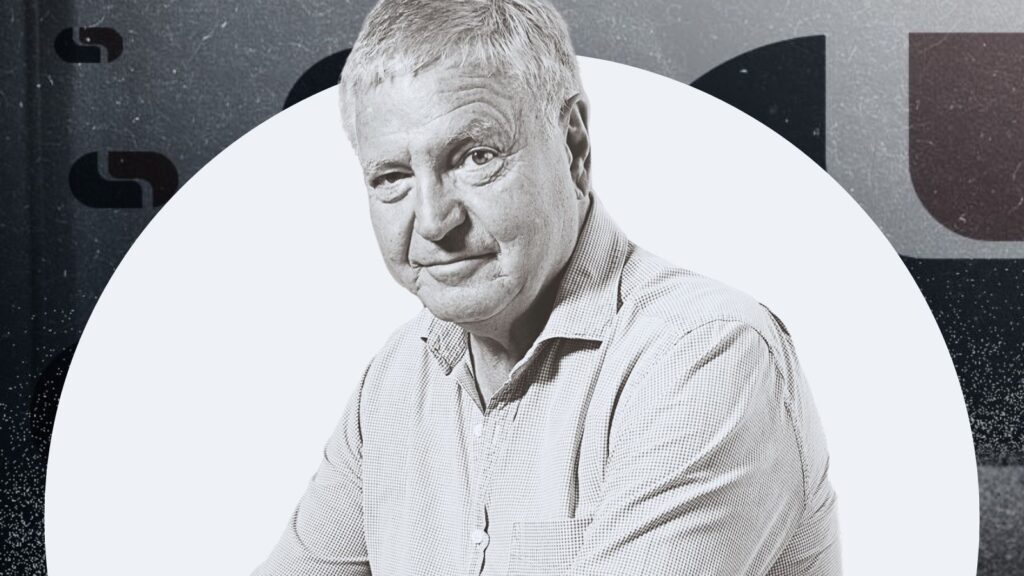
Michiel le Roux co-founded Capitec in 2001 and served as the company’s first CEO and chairman. Since its inception, the bank has grown to become the largest in South Africa by customer numbers.
Le Roux was born in South Africa in May 1949 and grew up in several towns, attending different schools due to his father’s work as a mine ventilation engineer.
He later attended Hoërskool Alberton, where he completed his high school education and graduated in 1966.
After matriculating, he enrolled at Stellenbosch University, where he earned a Bachelor of Commerce and a Bachelor of Laws degree, the latter of which he completed in 1972.
While studying, he stayed at the Eendrag residence in Stellenbosch. After graduation, he began his career in the liquor industry, working for Distillers.
Le Roux eventually became the managing director of the company, which had grown to be the leading wine and spirits producer in the country by 1979.
In 1994, he transitioned into the banking industry by joining Boland Bank, a small regional bank near Cape Town, where he worked for four years.
“Boland introduced me to banking, and that’s where I discovered that banking was very archaic,” Le Roux said on Radio 702.
“The first thing I asked when I got there [Boland Bank] was ‘why do banks close at 3 o’clock in the afternoon?” he said.
The chairperson of Boland Bank, Christo Wiese, appointed Le Roux as the company’s managing director, a position he held until his resignation in 1998.
His resignation resulted from a disagreement with Wiese over the bank’s future direction, which ultimately cost him millions and led to a lawsuit between them that lasted nearly a year.
South Africa’s biggest bank

Over the past 25 years, Capitec has transformed from a micro-loan provider into the nation’s largest bank by customer numbers, now serving over 26 million clients. The bank currently has a market capitalisation of R544 billion.
“We remained true to our fundamentals and executed our strategies, growing our active client base to 25 million,” Capitec said.
Michiel le Roux became a billionaire by retaining a massive 11% stake as the company grew into Africa’s most valuable bank.
Rather than diversifying his wealth, his fortune scaled directly alongside Capitec’s explosive rise on the Johannesburg Stock Exchange (JSE).
For the financial year ended 28 February 2026, headline earnings increased by 23% to R16.8 billion, up from R13.7 billion in 2025. The group also raised its dividend per share by 23% to 7,980 cents.
“That is several years of compounding momentum – a trajectory very few can match. We are not a growth story that has peaked. We are still building,” the group said.
The bank’s net interest income increased by 19%, reaching R24.1 billion in 2025, up from R20.2 billion in the previous year. Interest income from lending rose by 14%.
This growth was driven by significant increases in loan disbursements: 27% for Personal Banking and 48% for Business Banking.
The bank’s overall growth strategy focuses on transitioning to digital channels, which has allowed it to rapidly expand its client base.
This digital-first approach has also helped Capitec reduce costs, enabling it to provide affordable banking products that appeal to lower-income earners in the country.
While the bank emphasises its digital-first model, it also recognises the importance of maintaining a strong branch network and offering in-person engagement.
The bank has partnered with Home Affairs as part of the government’s new expansion plan, which enables banks to have greater control over the service.
Capitec now operates 86 branches across the country where clients can obtain Smart IDs, specifically focusing on previously underserved areas.
Since its inception in March 2026, the group has successfully processed 71,000 Smart ID applications at its branches.
















 Loading ...