

AI takes hold in South Africa’s R8.4 trillion investment management industry



Artificial intelligence is rapidly becoming part of South Africa’s investment management industry, with firms increasingly using the technology to improve research, analyse information and streamline operations.
The Investment Management South Africa 2026 survey, published by 27four, finds that 82% of participating investment managers use AI.
However, 70% report selective adoption within specific functions, while only 12% use it extensively across their businesses.
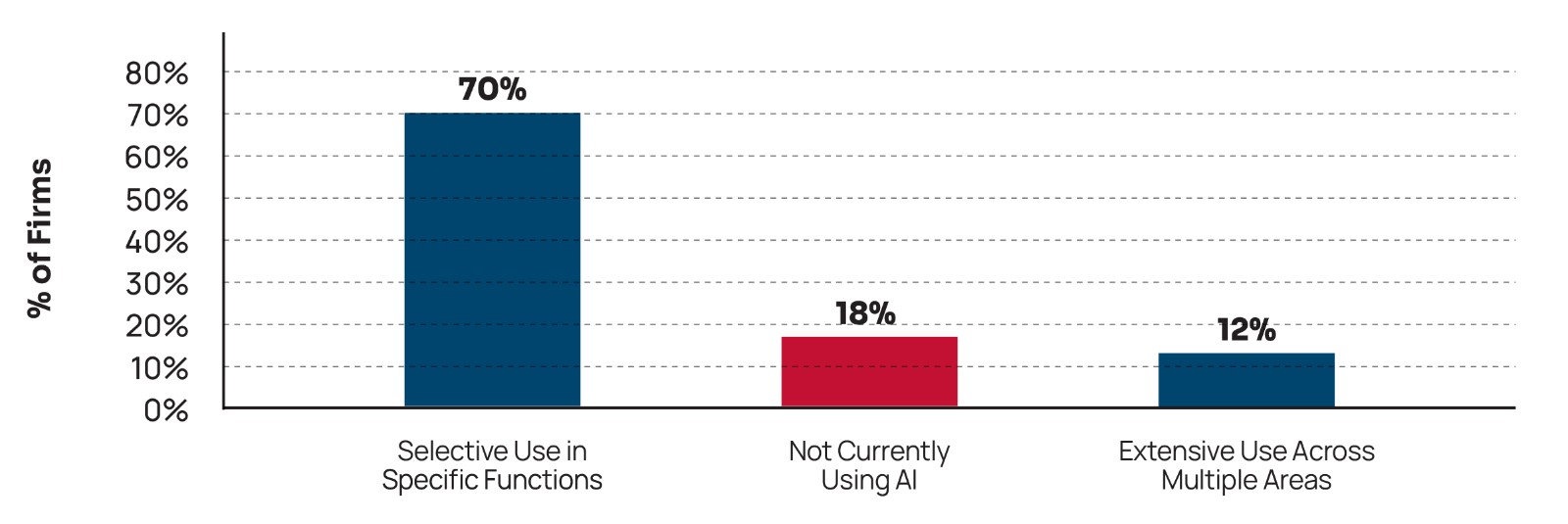
The distinction is important: widespread adoption does not necessarily mean widespread integration.
The survey covers 102 investment managers overseeing R8.38 trillion in assets and employing 5,853 people.
Beyond adoption rates, the research provides insight into where AI is making its presence felt, how investment managers expect it to reshape jobs and whether firms are adequately prepared for the operational risks associated with increasingly technology-driven businesses.
Where AI is being used today
Investment research and idea generation are the leading applications of AI, reported by 90% of firms providing information on how they use the technology.
Middle- and back-office operations follow at 62%, with due diligence at 56%.
The pattern changes closer to the investment decision. Only 21% report using AI for portfolio construction or optimisation, while 2% use it for trading and execution.
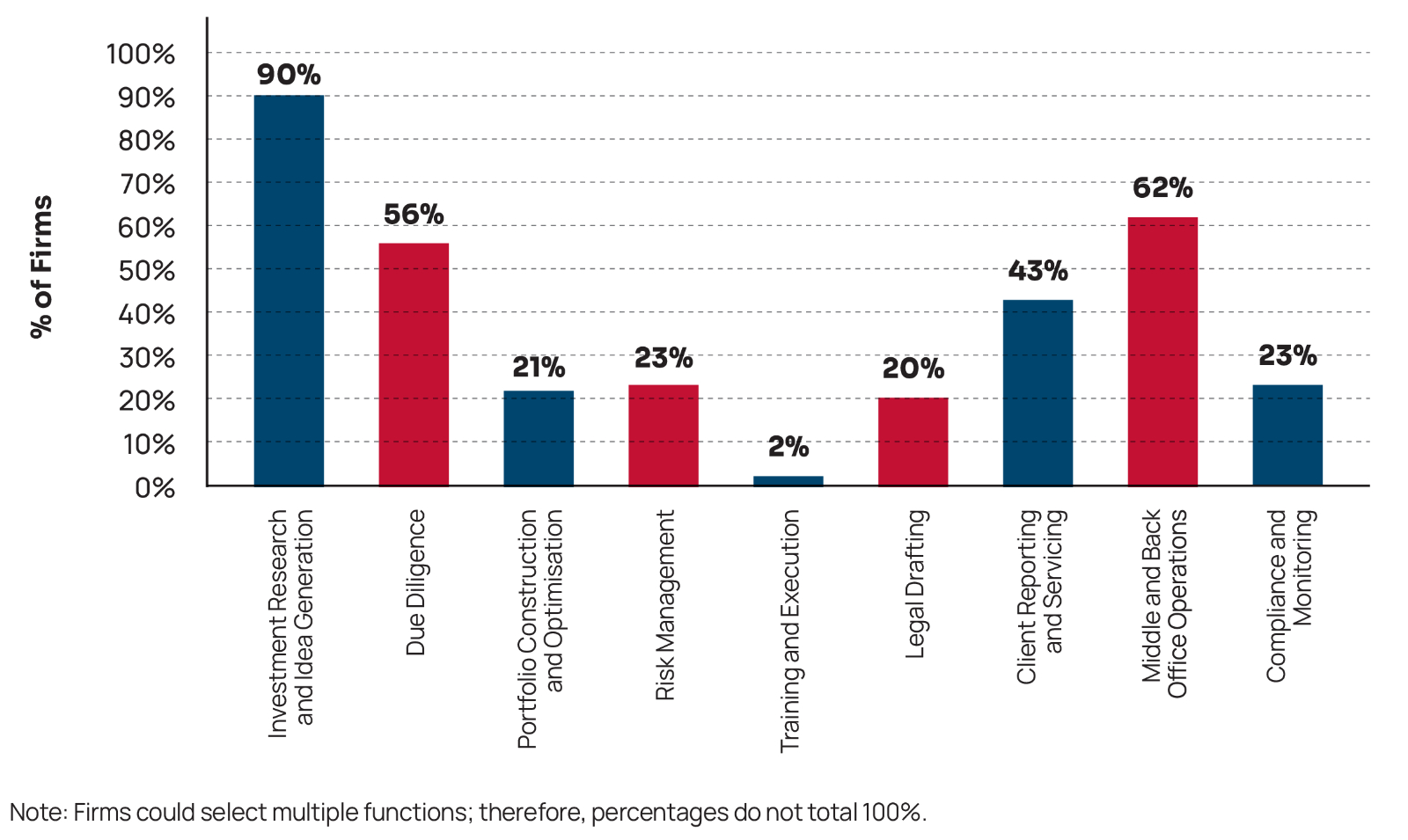
These figures capture a meaningful distinction. Using AI to analyse company reports or summarise research is not the same as relying on it to construct a portfolio or execute a trade.
The survey shows where the tools have gained acceptance; it does not establish whether AI has improved investment performance.
Operational resilience must keep pace
Greater use of AI increases reliance on data, systems and third-party technology. That makes cybersecurity and operational resilience a relevant part of the adoption story.
The survey finds that 89% of participating managers report crime and civil liability insurance and 81% report directors’ and officers’ cover. By comparison, 67% disclose positive cyber-insurance cover.
Among firms that disclosed limits, the median cyber-insurance cover is R10 million, against R50 million for crime and civil liability.
The two risks are not directly comparable, but the figures raise a practical question: are controls, contingency plans and insurance keeping pace with the systems on which firms increasingly depend?
Cyber cover is only one line of defense. Firms also need appropriate controls over confidential information, validation of AI-generated analysis and oversight of external technology providers.
Which jobs do managers expect to change?
Employment expectations challenge the assumption that widespread AI adoption will translate immediately into widespread job losses. Only 1% of managers expect AI to reduce their overall headcount over the next three years.
Instead, 34% expect to reallocate responsibilities without cutting staff and 22% foresee creating new roles and capabilities.
In other words, 56% expect a change in the composition of their workforce rather than a reduction in total employment. Another 28% anticipate no material impact, while 15% are uncertain.
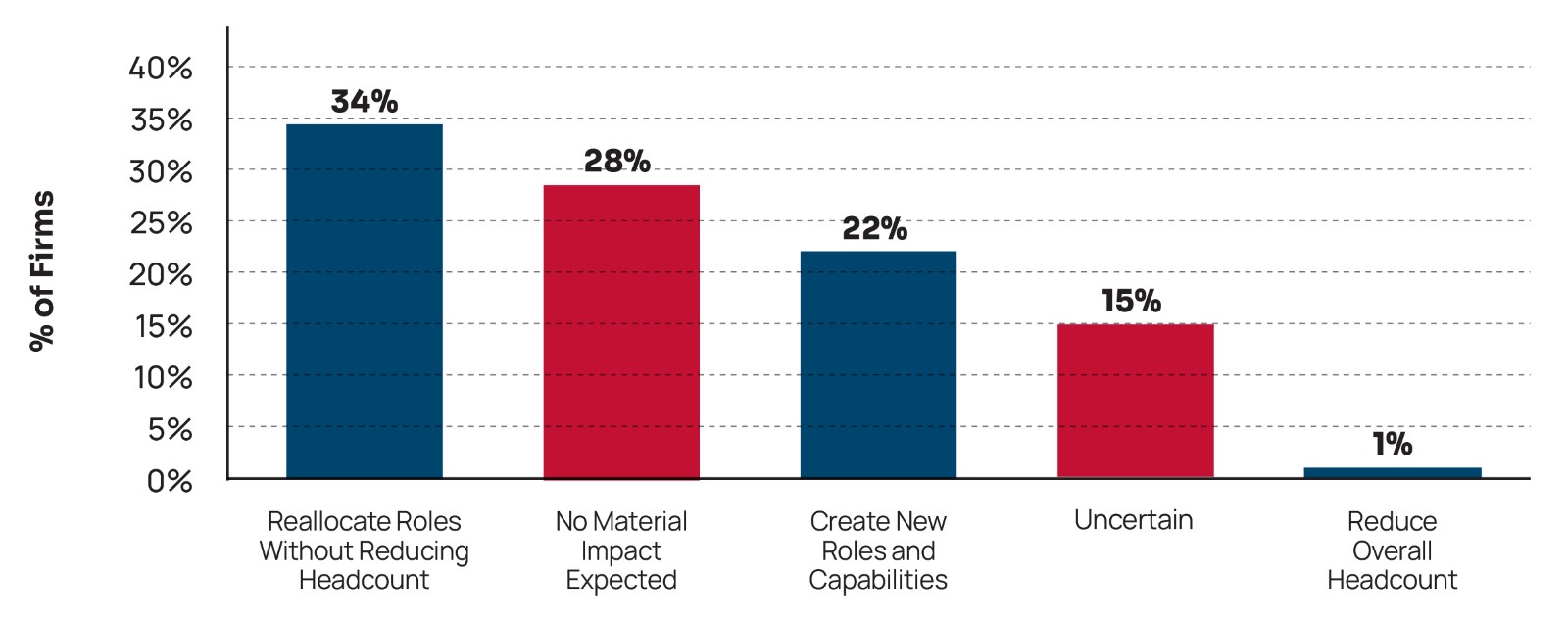
But expectations about total staff numbers are not the same as expectations about individual roles. Asked which functions could face AI-driven automation or role reductions, 48% identify operations and middle-office work.
Investment functions follow at 24%, technology and data at 23%, client servicing and distribution at 14%, and risk and compliance at 7%. A further 22% are uncertain, while 18% expect no material role reductions.
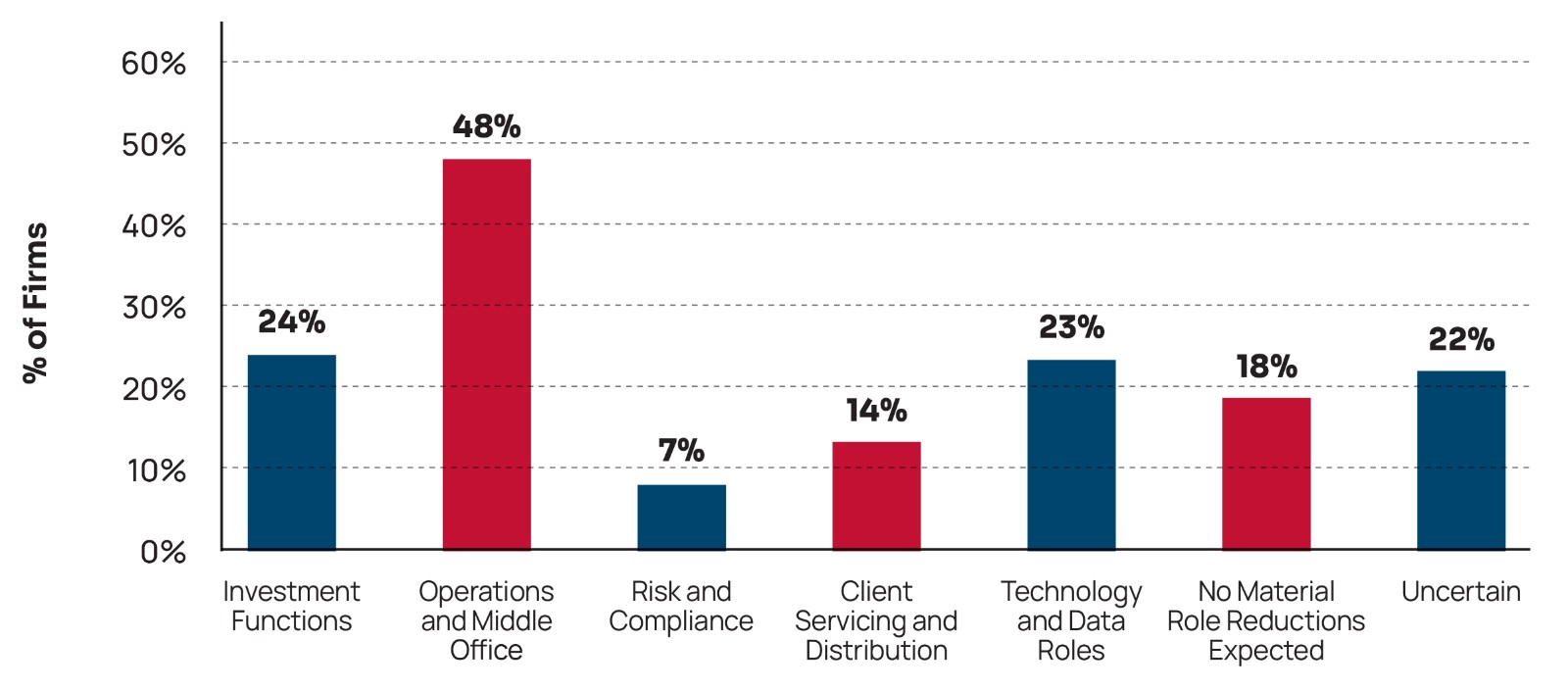
The concentration of expected change in operations and middle-office functions is telling. High-volume, repetitive processes are more readily automated, while areas such as risk and compliance require greater human judgement, oversight and accountability.
Only 7% of managers identify risk and compliance as areas of expected automation or role reductions. AI may support these functions, but interpreting risks, challenging outputs and ensuring regulatory compliance remain human responsibilities.
The survey points to a fundamental shift in the nature of work rather than widespread job displacement.
For investment managers, the challenge is to use AI to improve efficiency while strengthening the skills, judgement and oversight needed to manage increasingly complex investment businesses.
Ultimately, the measure of successful AI adoption will not be how many tasks are automated, but whether the technology delivers better investment performance, stronger decision-making, greater productivity and more effective risk management.
About the research
Investment Management South Africa 2026, published by 27four, presents findings based on participating investment managers’ self-reported AI adoption, applications and expectations.


















 Loading ...