

What you need to know before reselling your concert tickets in South Africa


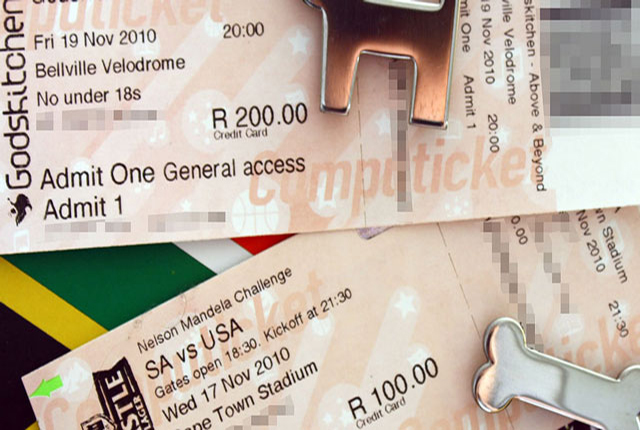
As South Africa continues to host major concerts and events each year, demand for tickets have also seen a massive increase.
However due to unforeseen circumstances, it may not be always be possible to attend an event – leaving you upset and out of pocket.
It has also become increasingly common for unscrupulous people to take advantage of desperate fans, selling tickets at a much higher price than what they originally cost.
According to Ryan Tucker, a specialist in consumer, media and entertainment law, Google recently imposed tough new restrictions on ticket resale companies to prevent music and theatre fans paying above face value on secondary platforms.
“For starters, platforms can’t claim to be ‘official’ sources of tickets in Google results, if they are selling tickets second-hand,” said Tucker.
“They also have to disclose – in a prominent position on their respective sites – if their ticket prices are higher than face value,” he said.
Google explains that these measures aim to protect customers from scams and prevent potential confusion.
South Africa
Tucker said that while ticket touting is not specifically prohibited by either South African legislation, or under the common law, it is usually prohibited in the terms and conditions of primary ticket sellers like Computicket.
“Where common law can comes to the aid of a consumer against a ticket tout is via the law of contract’s Misrepresentation and Fraud rules,” he said.
“Additionally, some provisions of the Consumer Protection Act come into play”:
- Section 29 prohibits ‘misleading, fraudulent or deceptive marketing’, which can include not informing consumers that they are purchasing tickets from a secondary seller or that the tickets are at a higher price.
- Section 41 deals with examples of what would constitute false, misleading or deceptive representation, stipulating that the supplier must state its status, affiliation, connection, sponsorship, or approval.
Tucker said that there could be serious legal consequences when selling tickets at a higher-price, or not disclosing the fact that you are a secondary seller.
“You could be sued on the basis of breach of contract, misrepresentation or fraud; or falling foul of the Consumer Protection Act (CPA),” he said.
“Also, if Google gets wind of the fact that you are reselling tickets on your website, and you are not the primary ticket seller and/or are selling at an inflated price, where you do not disclose this clearly and prominently on your website, you may face action from Google itself.”
Selling that spare ticket on Facebook
While there can be serious consequences for ticket resellers in South Africa, common-sense also has a part to play in differentiating between whether someone is a ‘mass reseller’ or just selling a spare ticket, said Tucker.
“The objective of the ‘mass reseller’ is to scoop up a host of tickets, using various methods and sell them at an inflated price as an economic endeavour, preying on naïve and/or desperate fans,” he said.
“The person faced with the prospect of having a spare ticket (which he has paid for) where he simply wants to recover the cost of the ticket is quite different; and I think that a court would take such a common-sense approach in distinguishing between the two.”
“Of course, there are individual ticket owners who take this a step too far, and try to sell their ‘spare tickets’ at a huge premium, and this is where there may be some grey area,” he said.
He said that in such instances there would still be recourse in terms of breach of contract or the CPA.
“The obvious corollary to this is whether it is in fact financially worthwhile to take such an individual to a tribunal or court – the legal costs may outweigh the premium they paid for the ticket,” he said.
Read: This new technology law will have a big impact on divorce and privacy in South Africa


















 Loading ...