

The 142-year-old small Karoo town part of NASA’s space missions


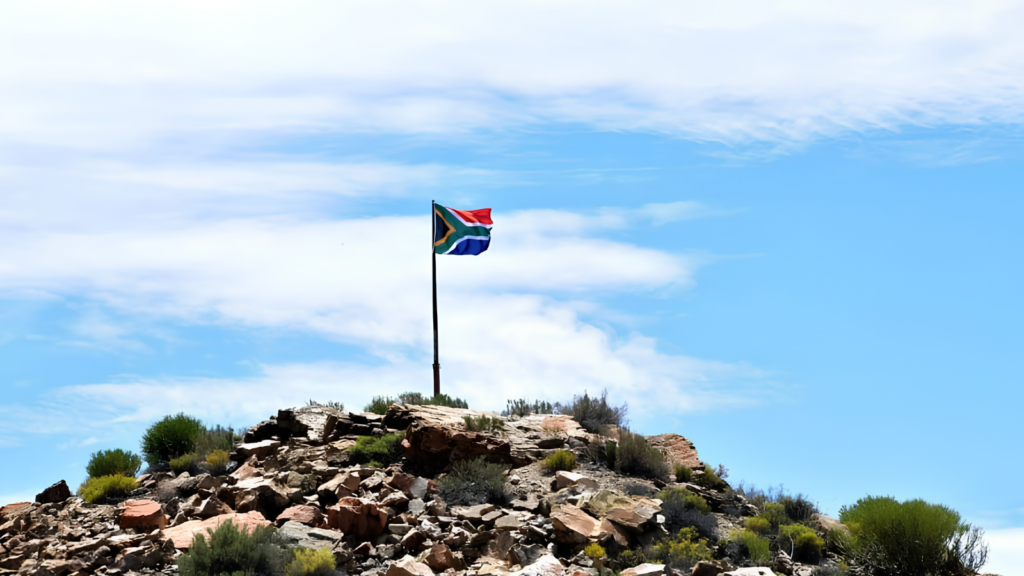
The small, quaint town of Matjiesfontein in South Africa is part of a larger mission, serving as a ground station that assists the United States with its missions to the moon.
Matjiesfontein, located just outside Cape Town, is set to become home to a new deep-space complex for the South African National Space Agency (SANSA), focused on deep-space exploration.
“This site will function as an extension of the renowned Hartebeesthoek facility, celebrated for its world-class services in telemetry, tracking, and command operations,” SANSA said.
“Matjiesfontein (MTJ) will be equipped with sophisticated technology designed for communication with satellites, probes, rockets, and terrestrial planets.”
SANSA said the site is part of NASA’s Lunar Exploration Ground Segment (LEGS), which comprises three locations in the United States, South Africa, and Australia.
SANSA has played an important role in supporting NASA’s Artemis II mission.
Speaking with Cape Talk, SANSA’s chief engineer for space operations, Eugene Avenant, highlighted that the agency played a crucial role in tracking the spacecraft and assisting with the mission.
“SANSA has been tracking the spacecraft, especially in its closer-to-Earth spheres. What is needed for this mission is very accurate orbital information,” Avenant said.
Avenant said that this includes knowing the spacecraft’s exact trajectory, which is crucial for ensuring the safe return of astronauts.
“Basically, on the outward journey, making sure that the trans-lunar injection burn was correct to ensure that it takes the free-return orbit around the Moon,” Avenant said.
Avenant explained that this is accomplished by measuring return signals, specifically the Doppler Shift, which he referred to as a one-way Doppler effect.
He also mentioned that South Africa was included in the initial planning stages of the Artemis missions.
The next flight in the program, Artemis III, is scheduled to be the first lunar landing in over 50 years.
“South Africa was set to use its new ground station under construction in Matjiesfontein to also provide critical services to that mission,” he said.
“We firmly believe that we will still be supporting the NASA Artemis programme going forward from our new ground station at Matjiesfontein.”
The 142-year-old Matjiesfontein
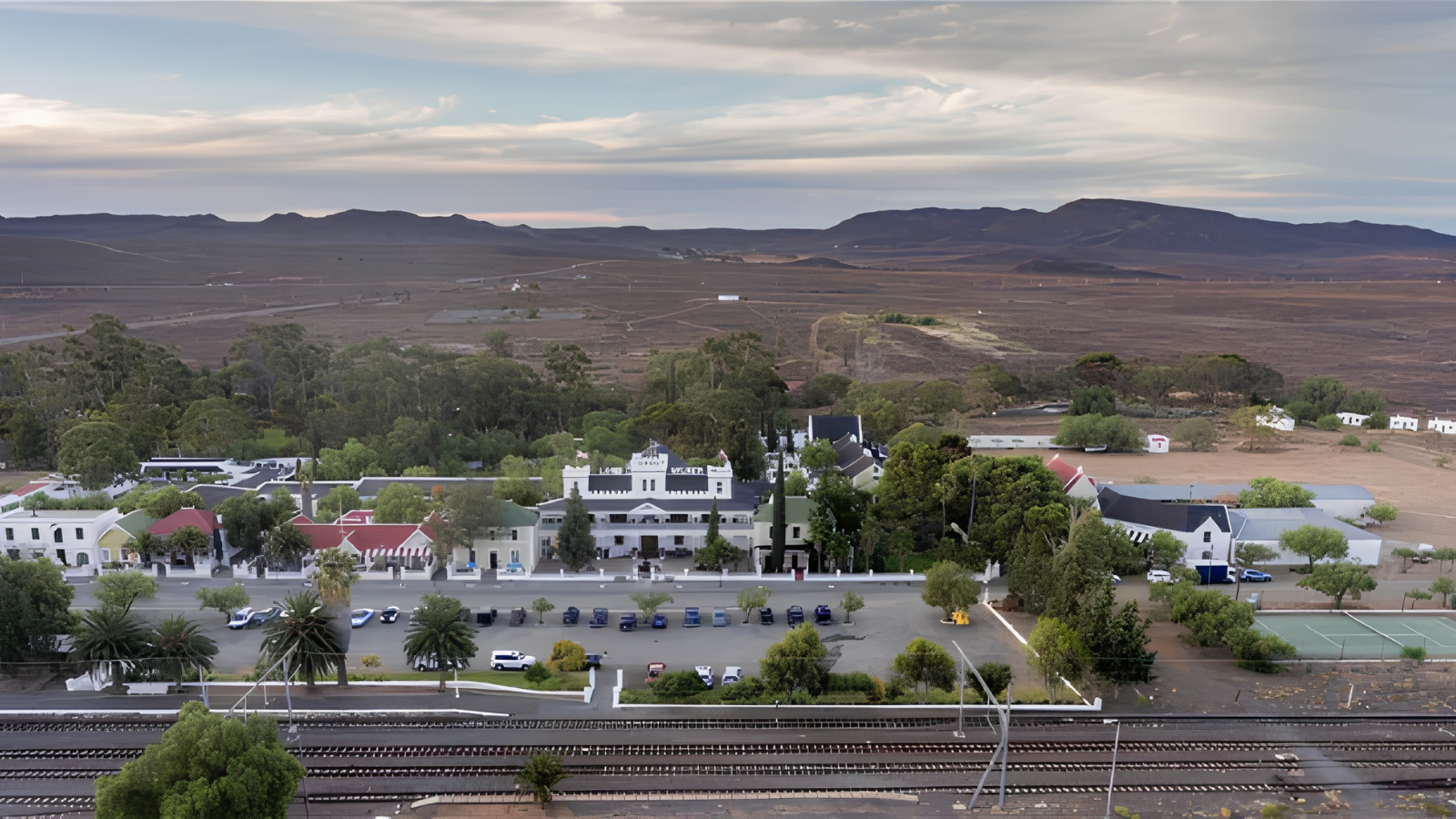
Matjiesfontein was founded in 1884 by a Scottish railwayman named James Douglas Logan.
The village quickly established itself as a fashionable Victorian health spa and is now well known for its historic buildings and tranquil atmosphere.
Matjiesfontein’s history includes notable events such as the residence of international cricketers and the stay of author Olive Schreiner.
The town also served as a fortification during the South African War as the headquarters of the Cape Command, and as a refuge for reformers from the Jameson Raid.
Logan built the Milner Hotel in 1899 during the early stages of the South African War.
The hotel served as a military hospital during the conflict with British forces, with its central turret functioning as a lookout and machine gun post.
In 1968, hotelier David Rawdon purchased Matjiesfontein Village. After a period of renovation, David reopened the hotel in 1970, renaming it The Lord Milner Hotel.
He also established several other hotels, including Rawdons Hotel at Nottingham Road, Lanzerac in the Stellenbosch vineyards, the Marine Hotel in Hermanus, and The Drostdy in Graaff-Reinet.
After David’s death in 2010, the Rawdon family, as custodians of Matjiesfontein, has continued his legacy.
Jon and Tom Rawdon, under the oversight and guidance of David’s brother Bengy, have managed renovations and expansions.
Their renovations include the recent refurbishment of Tweedside Lodge, Logan’s original homestead, which has been transformed into guest accommodation.














 Loading ...