

An exodus has hit South Africa’s rental market


Since January 2020, South Africa’s repo rate has been lowered by three percentage points to its lowest level in decades, prompting many tenants to buy their first homes.
This exodus of more creditworthy tenants from the rental market, coupled with the ongoing financial constraints experienced by others, continued to put downward pressure on rental prices into the first quarter of 2021.
This is reflected in PayProp’s new rental report which details how South Africa’s rental property market has changed over the last year.
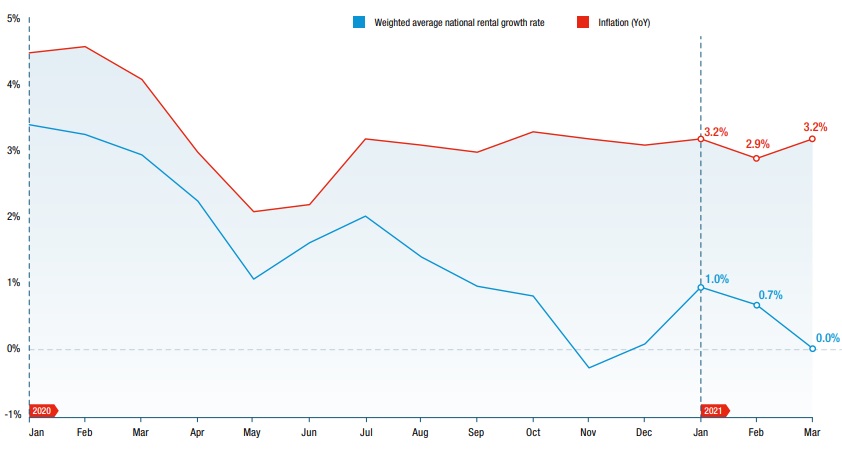
While the monthly rental growth rate, measured year on year, continued to track below inflation for the first quarter, it measured slightly higher than in Q4 2020.
Figures of 1% and 0.7% were recorded in January and February, with no year-on-year (YoY) growth for March 2021.
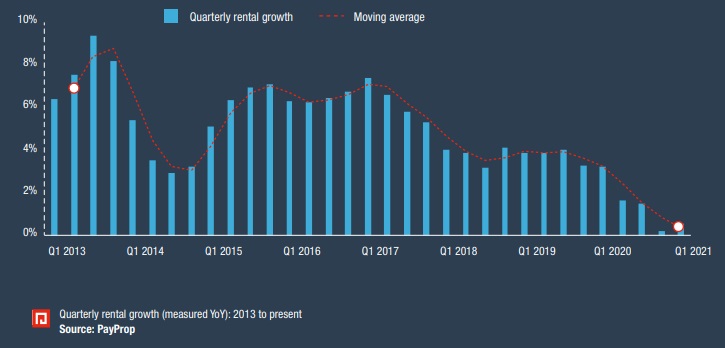
Since 2018, rent levels have been increasing at a much lower pace than in previous years – and it seems unlikely that South Africa will see year-on-year growth rates approaching 10% like it did in 2013 anytime soon, Payprop said.
“To be fair, a protracted global pandemic is by no means a regular occurrence. That said, rental growth has been under pressure even before Covid-19, as a result of both slow economic growth putting pressure on tenants’ financials and an uptick in residential developments in many urban areas, increasing rental accommodation supply,” it said.
Payprop said that the rental market has now changed – more businesses are moving online, offering tenants flexibility in where and how they work, and hence potentially stifling rental market activity.
Arrears
An arrears analysis over the last year, shows that some tenants stopped paying their rent in full when lockdown was first announced at the end of Q1 2020.
Reasons included that they weren’t earning any income, were forced to take a reduction in salary, or were uncertain about their future cash flow.
The percentage of tenants in arrears increased from 19.4% in Q1 to 24.9% in Q2 – an increase of close to 30%.
In June 2020, most industries reopened and tenants returned to work, leading to a steady improvement in the percentage of tenants in arrears each quarter since then. Encouragingly, only 20.3% of tenants were in arrears by Q1 2021 – not quite 1% more than before lockdown.
The average arrears percentage followed a slightly different pattern, likewise increasing between Q1 2020 and Q2 2020, but only peaking in Q3.
“For a tenant to lower their arrears percentage, they must pay their full rent each month, plus some money towards their outstanding balance – and in the current economic climate, this is not easy to do,” Payprop said.
“So while the average arrears amount relative to rent has improved to 93.2% from its peak of 104.6%, we are not at all surprised that this is still much higher than the 78.5% measured before lockdown. We expect this metric to improve further, albeit slowly.”
Read: A look at the 19 square metre micro-apartments for sale in Cape Town

















 Loading ...