

Big trouble ahead for landlords in South Africa


There are early warning signs that arrears could worsen this year, and tenant credit scores are under pressure with an increase in those classed as high risk.
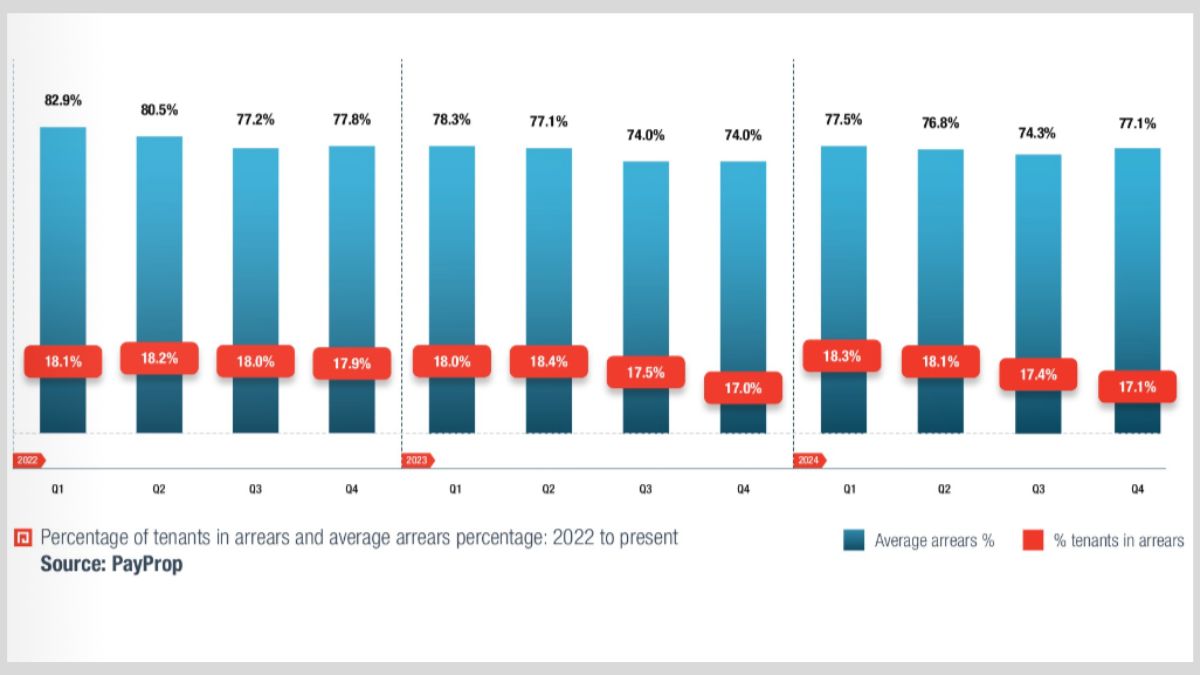
This was highlighted in the latest PayProp Rental Index for the fourth quarter of 2024. At the end of 2023, only 17.0% of tenants were in arrears—the lowest ever recorded by PayProp.
However, the report highlighted that, as rental growth slowed at the start of 2024, arrears surged to 18.3%, affecting nearly every province.
The good news is that this trend reversed as the economy improved, and arrears dropped to 17.1% by the end of 2024, just above the previous year’s record low.
But despite the decline in the number of tenants in arrears, tenants who remain behind on payments are falling further into debt.
The average arrears percentage, which indicates the proportion of rent owed by tenants in arrears, rose from a record low of 74.0% at the end of 2023 to 77.5% in Q1 2024.
Although it decreased in Q2 and Q3, it climbed to 77.1% in Q4.
This indicates that while fewer tenants are behind on rent, those who are struggling are falling deeper into debt, raising concerns about worsening arrears in the coming year.
The report explained that arrears generally peak in the first quarter and gradually recover throughout the year.
However, the increase in Q4 could indicate deeper financial distress among tenants, which could be an early sign of worse to come this year.
Looking at the provincial data, the Western Cape had the best tenant arrears performance in South Africa, with only 13.2% of tenants behind on rent, the lowest rate in the country.
This is an improvement from 14.3% in Q4 2023. Additionally, tenants in arrears in the Western Cape owed just 60.9% of the average rent, the lowest debt burden nationwide.
North West also showed significant improvement, with arrears dropping to 15.5% from 25.7% at the start of the year and the debt amount aligning with the national average at 77.1%.
Limpopo performed well, too, with tenants in arrears owing 71.8% of the average rent, comfortably below the national average.
The Free State had the worst tenant arrears situation, with 24.2% of tenants behind on rent, the highest in the country. These tenants also owed the most, at 90.4% of the average rent, up from 85.5% in Q4 2023.
Mpumalanga also struggled, with 19.6% of tenants in arrears, the second highest rate, although the debt percentage fell slightly to 67.8%.
KwaZulu-Natal followed closely, with 19.4% of tenants behind on rent, owing 71.7% of the average rent.
Payprop also noted that high interest rates and inflation continue to strain tenants’ finances. In Q4 2024, tenants spent 44.1% of their income on debt repayments, up from 43.6% a year earlier.
Rent also took up more of their budget, rising to 28.7% of income from 28.3% in Q3 2023. The average tenant credit score remained at 647 in Q4 2024, consistent with the past two years.
Although credit score providers like Experian consider this low risk, it falls short of the minimum risk bracket.
PayProp’s Tenant Assessment Report, which combines credit scoring with rental payment data, shows worsening tenant risk compared to a year ago.
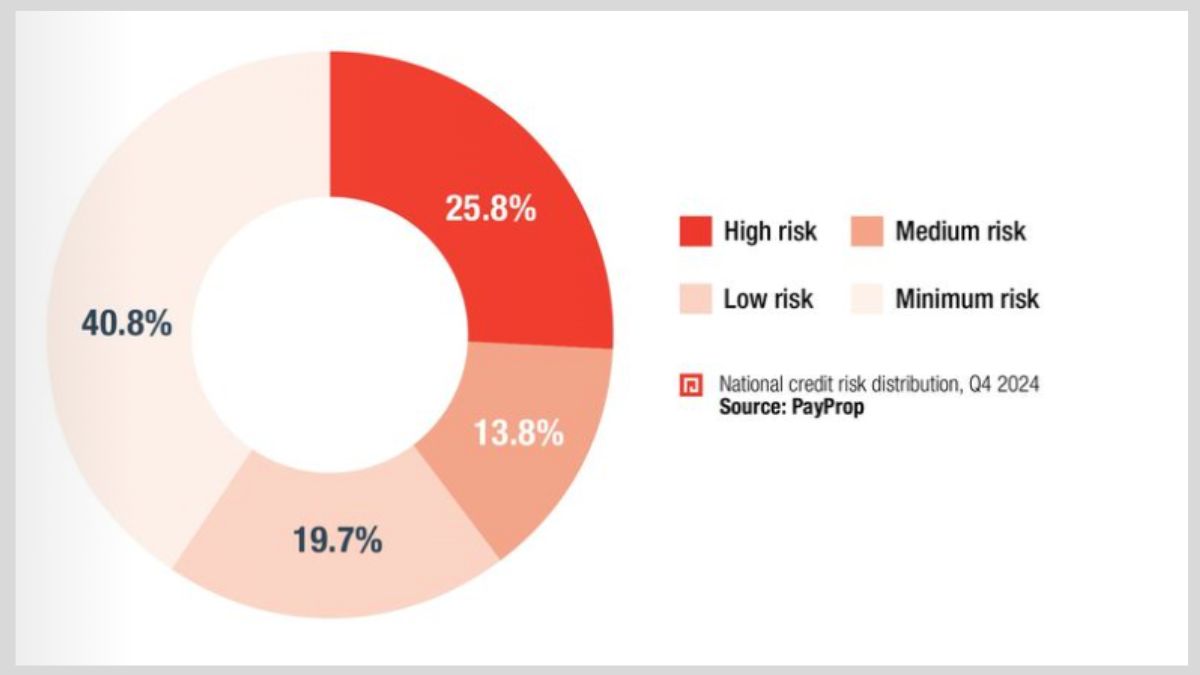
The report showed only 40.8% of tenants were classified as minimum risk in Q4 2024, down from 41.4% a year earlier.
Additionally, 25.8% were categorised as high-risk, up from 24.8% in Q4 2023. High-risk tenants are more likely to fall behind on rent, posing challenges for landlords.
After deteriorating at the start of 2024, tenant risk improved slightly in the second half of the year, with more tenants moving into lower-risk categories.
PayProp said that if interest rates drop in 2025 as expected, this trend could continue, easing some pressure on tenants and landlords alike.
However, PayProp stressed that the rise in arrears value in Q4 means landlords should remain cautious in the year ahead.


















 Loading ...