

South Africa’s millionaires find a new home as they flee service failures in Gauteng


South Africa has seen an increase in millionaires, with the Western Cape witnessing a boom in high-net-worth individuals (HNWIs) at Gauteng’s expense.
Figures from the latest Africa Wealth Report from Henley and Partners showed that South Africa has 3,700 more resident dollar millionaires in 2025 than last year.
According to the report, South Africa remains the most significant wealth market on the continent, home to 41,100 millionaires, 112 centi-millionaires, and eight billionaires.
This accounts for about 34% of Africa’s total millionaire population, roughly equal to the combined tally of the next five wealthiest nations.
Berry Everitt, CEO of the Chas Everitt International property group, said that lifestyle and new business opportunities are promoting millionaires to move across Africa.
Everitt said that is especially noticeable in “current wealth flows across the continent and their effects on luxury property demand, development and prices in certain cities and other affluent nodes.”
Despite the increased number of millionaires, the nation’s economic heartland, Gauteng, is not the primary destination for the rich.
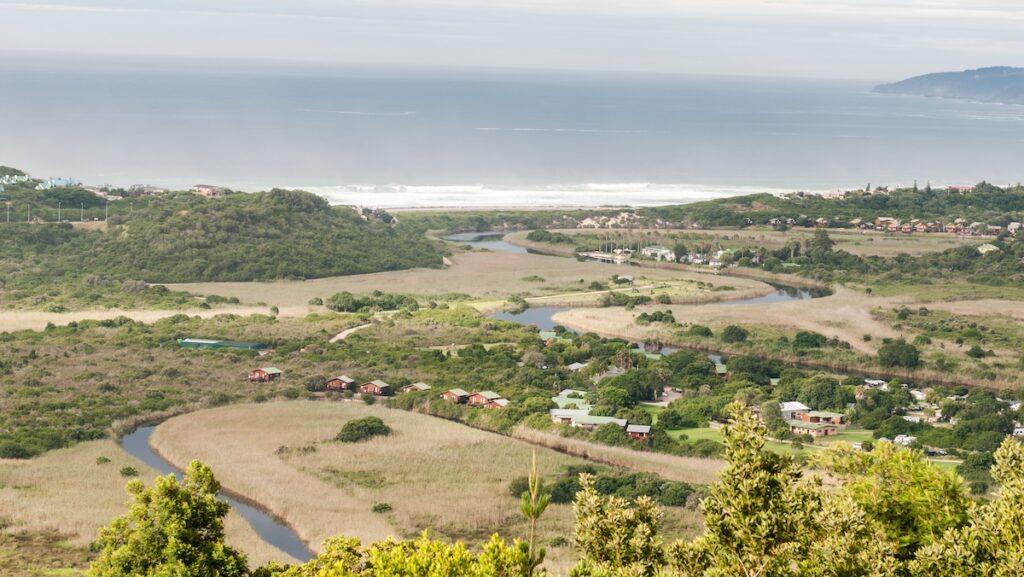
The Western Cape now has 17,300 millionaires between Cape Town, the Winelands, the Whale Coast, and the Garden Route.
This is larger than the roughly 14,000 millionaires who live in Johannesburg and Pretoria.
The nation’s southern region is also home to 65 of South Africa’s 112 centi-millionaires and six of its eight billionaires.
Everitt noted that the wealth redistribution has developed over many years, and started with the semigration of rich families from Gauteng to the Western Cape.
This is due to the pursuit of the comparatively better quality of life the province offers. The rise of remote working during the Covid-19 pandemic accelerated this trend, said Everitt.
This was further underpinned by Cape Town being named the best city in the world again by Time Magazine.
This has led to international HNWI families joining their South African counterparts, with a growing shortage of luxury homes on the Atlantic Seaboard and Constantia.
“Prices in these areas have soared, and that has led, in turn, to buyers broadening their search to other parts of the province that also offer exceptional lifestyle advantages.”
“These include the Whale Coast and its central town of Hermanus, where property sales have doubled in the past five years and the average home price has risen by 75%, and the Winelands, where prices in luxury wellness estates like Val de Vie have almost tripled since 2020.”
George Plettenberg Bay on the Garden Route boasts world-class golf estates and signature courses.
Many HNWIs are buying luxury homes with sea and mountain views on the Garden Route, with easy access to quality schools, private healthcare amenities and upmarket shopping venues.
These amenities and properties come for a fraction of what it would cost them to enjoy this lifestyle elsewhere.
Gauteng Stumbles

Everitt noted that the quality of life for residents in Johannesburg and Pretoria has continued to decline over the last year amid deteriorating transport, electricity and water infrastructure.
This has been made worse by poor municipal management, relatively high crime levels and general neglect and incompetence from the local government.
This has resulted in prime property prices in Central Sandton stagnating to around $1,800 per sqm, while those in Cape Town have soared to reach $5,800 per sqm.
“This has also led to new residential development in Johannesburg being largely restricted, currently, to the conversion of under-utilised office blocks and office parks into rental apartments,” said Everitt.
“Cape Town enjoys a development boom that is bringing hundreds of new, upmarket housing options to the market.”
That said, Johannesburg still has a few things going for it, including a good climate, lower cost for luxury properties, and being home to most blue-chip companies.
Given that it meets the second key relocation driver—fresh business opportunity—Johannesburg may remain as the nation’s wealthiest city in the coming years.
However, this does depend on local authorities following through on promised renewal activities.

















 Loading ...