

Severe storm warning for South African homeowners


South Africans are being urged to brace for severe storms. The South African Weather Service (SAWS) has issued a yellow level 2 and 4 warning for thundershowers expected to hit several parts of the country.
The service said the storms could be particularly disruptive, with warnings of hail, lightning, strong winds and flooding.
“Remember that with severe thunderstorms, you can expect heavy downpours that lead to localised flooding, a possibility of damaging winds, and the possibility of hail over these areas,” it said.
The highest-level warning, a yellow level 4, has been issued for the north-western parts of KwaZulu-Natal.
According to SAWS, this means residents in these areas could face severe thunderstorms accompanied by strong winds.
There are also indicators of excessive lightning and hail, which may lead to damage or loss to infrastructure, informal settlements, vehicles and major travel disruptions.
A yellow level 2 warning has also been issued for parts of the Free State, Mpumalanga, and western KwaZulu-Natal.
In these regions, SAWS has highlighted risks of “localised damage to infrastructure, vehicles and informal settlements.”
Emergency services have urged the public to be cautious, as the unsettled conditions could create dangerous situations on the ground.
The weather service has also shared detailed safety advice for households and commuters. “Expect localised flooding of susceptible roads, low-lying areas and bridges,” SAWS warned.
“Localised damages to informal/formal houses or structures (roofs and carports) due to hail and strong winds. Disruption of services, such as power surges and bodily injuries caused by lightning.”
Residents were urged not to cross flooded roads or swollen streams, and to move to higher ground where rising water levels are observed.
During lightning activity, people should avoid trees, stay clear of power lines and barbed wire fences, and move away from bodies of water.
Take steps to safeguard your house and car
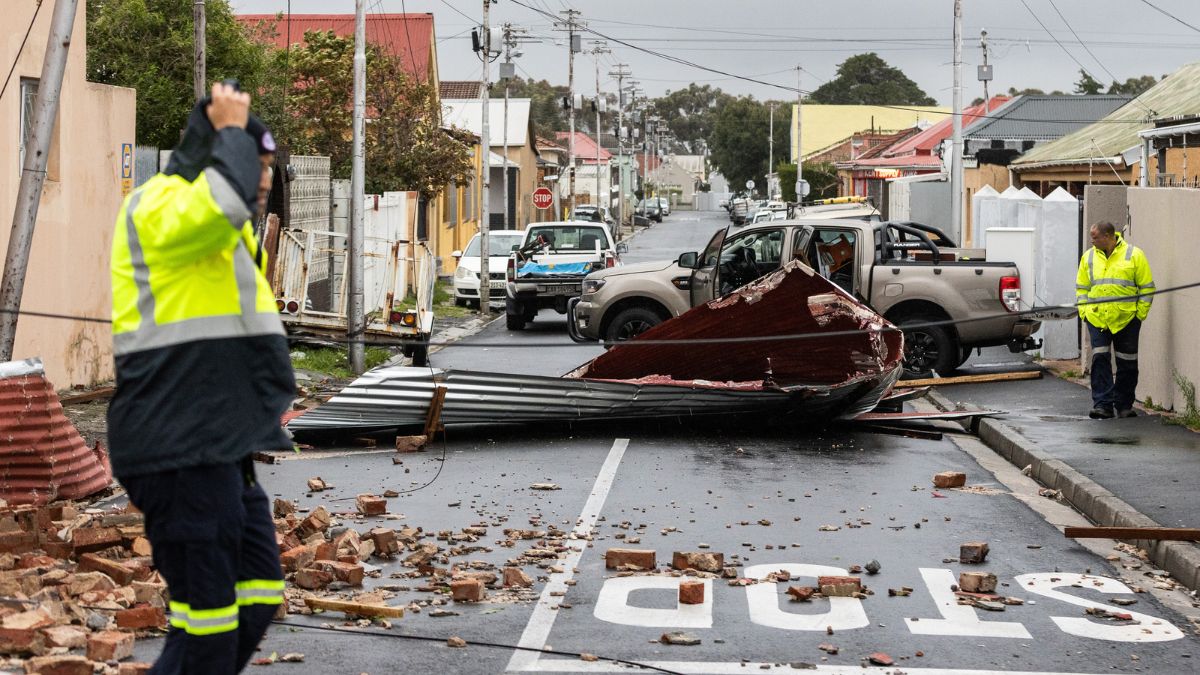
Public safety is the immediate concern, but the economic and financial impact of repeated severe weather events is also important.
Chief Actuary at Momentum Insure, Rudolph Britz, warned that while South Africans are often resilient, ignoring weather alerts comes with consequences.
“While we cannot control the weather, we can control how well we prepare for it. Insurance is evolving with the times and is no longer a safety net for traditional risks.”
“It is now an essential part of our financial planning and security in a world in which climate instability threatens homes, vehicles, businesses, and personal finances,” he said.
Britz stressed that taking warnings seriously can make a difference not just in protecting lives, but also in safeguarding assets.
“Ignoring the risks posed by heavy rain that results in floods, high winds that can lift roofs, hailstorms that damage cars, and lightning that can strike anywhere is irresponsible and costly if it results in insurance claims that could have been prevented.”
He added that while weather alerts do not necessarily affect claim payouts, being proactive about risk management benefits everyone. “Severe weather isn’t just an inconvenience; it’s also potentially expensive,” he said.
“Given the droughts, floods, mudslides, snow and even hurricanes which South Africa has experienced over the last few years, taking precautions with weatherproof measures is a smart way to protect your home or business premises.”
Practical steps, he explained, can help minimise the damage caused by climate instability.
“Solar power can mitigate outages caused by weather, back-up water systems counter periods of drought, reducing the impact of weather on your asset.”
“However, it is crucial to update insurance policies to reflect new investments and ensure full coverage of upgrades.”
Britz said the unpredictability of South Africa’s weather should be a wake-up call. “We are ultimately at the mercy of the weather. We cannot change it, but we can change our behaviour.”
“We need to ensure that we keep our property and loved ones safe, and as climate change impacts weather patterns, insurance must evolve.”


















 Loading ...