

Bad news for anyone buying a house in Cape Town


South Africa’s hottest property market has become a keen focus of the international community, which could signal bad news for citizens looking to buy a home.
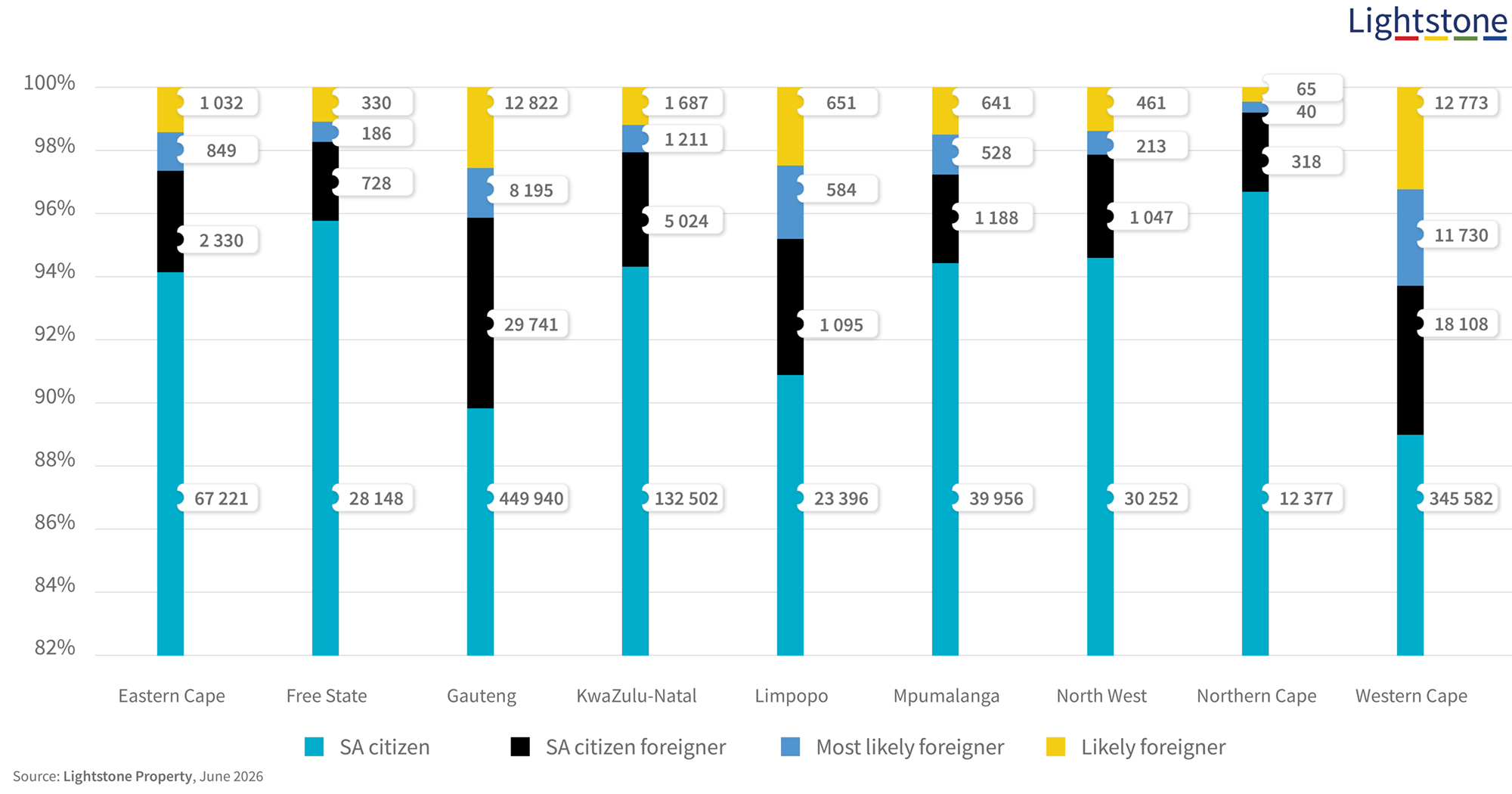
Data from Lightstone Property revealed that approximately 6% of all property purchases in South Africa were likely made by a foreign citizen.
This percentage increased alongside housing values, with approximately 39% of properties worth more than R20 million likely to be bought by non-South African citizens.
This trend of wealthy foreign nationals entering South Africa’s property market is often associated with the Western Cape, but other provinces have experienced similar patterns.
Lightstone found that provinces such as Gauteng and Limpopo also had high numbers of foreign property buyers.
The group also noted that the KwaZulu-Natal north coast had seen high levels of foreign investment, including areas such as Zimbali, Ballito, and Salt Rock.
Despite high numbers from these areas, the Western Cape still led with the highest number of foreign property buyers of any province.
This high level of foreign property investment is evident in Cape Town’s Atlantic Seaboard, one of South Africa’s most expensive areas.
The area includes suburbs such as Sea Point and Clifton, with Sea Point seeing the highest number of foreign property buyers along the Atlantic Seaboard.
In Sea Point, Lightstone found that 1,118 properties had been bought by foreign nationals, at an average price of R5.4 million.
The group also observed that areas such as Bakoven and Camps Bay had nearly 50% of their properties bought by non-South African citizens.
There are several key reasons for foreign property buyers’ interest in Cape Town, including its coastal lifestyle and strong municipal service delivery.
The city also offers a lower cost of living than many European coastal areas, while still offering impressive natural beauty.
Not just foreign investment
The high amount of foreign investment could be a worrying sign for South Africans looking to buy property in the Western Cape.
In December 2025 alone, Western Cape property prices increased by 7.5% year-on-year, following a pattern of consistent price increases.
The price increases have had a worrying impact on the area’s cost of living, with many warning that South Africans could become priced out of the city.
Foreign property buyers are not the only factor driving up property prices, with semigration also boosting demand for homes in Cape Town.
Semigration refers to South Africans from inland areas, such as Gauteng, moving to Cape Town and other high-value coastal areas in search of a different lifestyle and a higher standard of living.
The trend has taken off in South Africa, with Cape Town becoming the semigration hotspot in recent years.
In March 2026, BetterBond noted that semigration trends were focused on areas with strong local governance and access to good services, such as schools.
It said that Cape Town was a prime choice for semigration due to the high buyer confidence in the municipality.
The influx of both foreign and domestic property seekers has driven demand for Western Cape properties to a level far higher than in other areas of South Africa.
This, in turn, has led to Western Cape property values skyrocketing far higher than those of other South African provinces.
Demand for housing is not the only concern for the Western Cape, particularly Cape Town, which faces challenges with expansion.
The Cape Town metro is surrounded by the ocean on one side and mountainous terrain on the other, making expansion difficult for the city.
This limits the city’s ability to expand its housing market, making existing properties more in demand and driving up their prices.
All of these aspects combined create a worrying picture for South Africans looking to buy affordable homes in Cape Town, but existing homeowners can enjoy the benefits of increased demand.

















 Loading ...