

The future of TV is mobile, on-demand and heading to virtual reality


Ericsson has released its annual Consumerlab TV and Media report for 2017, showing the latest trends in media consumption across the globe – and how things are expected to change in the years to come.
The 2017 report confirmed many of the trends analysts had foreseen in the early 2010s, when they heralded the age of mobile video and the death of the couch potato, highlighting that, in 2017, 70% of consumers watched video on a mobile device (smartphone, tablet or laptop).
Smartphones make up a fifth of total viewing, with approximately six hours per week spent watching TV and video on the device, Ericsson said.
The report highlighted an increasing decline in ‘couch potatoes’ (people who are traditional media consumers, sitting down to watch scheduled programming), being replaced by high-usage and high-spending multi-screen viewers.

Looking at future trends, Ericsson said that it expects things to continue along this path – with mobile devices seen to be matching traditional TV screens by 2020 as the medium of choice for content consumption, and TV-on-demand moving closer to the half-way point in its ‘battle’ with scheduled content.

However, one of the biggest changes highlighted by the report is in social TV and the rise of Virtual Reality (VR), which has in the past two years entered into some living rooms, and remains a hotly anticipated technology for savvy media consumers.
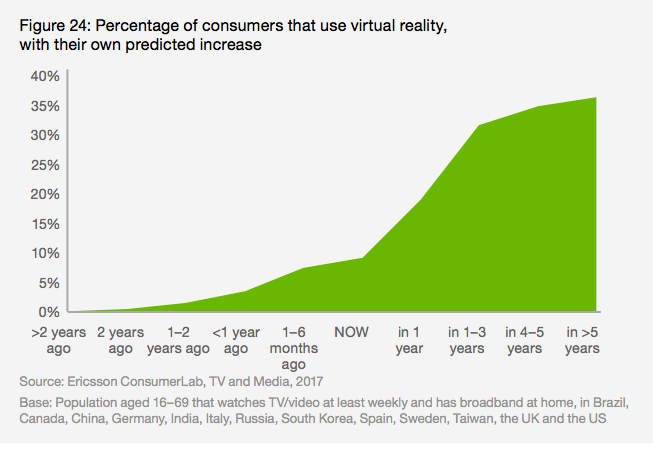
According to Ericsson’s survey, while only a small percentage of consumers make use of VR (under 10% of respondents), this is expected to increase significantly over the next five years to about 35% of consumers.
“The majority of current and potential VR users believe VR will be an essential component of TV and video in the future,” the group said.
However, the technology is still in its early years, and there are many barriers for consumers to adopt its use.
Close to 55% of consumers planning to get VR devices would prefer if the headsets were cheaper; almost half think there should be more immersive content available; and a third would be more interested in VR if they could get a VR bundle from their TV and video provider, the survey showed.
“There are other well-known general barriers to VR too, such as bulky headsets, low resolution on cheaper devices, and isolation from the physical world. However, with these issues currently being addressed, it is not hard to believe that VR will completely change the rules of future content viewing and creation,” the group said.
















 Loading ...