

High data prices can force small businesses to close: Ramaphosa



At least 70% of the country’s economic sectors are dominated by three or four large firms – each with an average market share of between 46% and 67%.
This is according to Competition commissioner Tembinkosi Bonakele, speaking at the Competition Law, Economics and Policy Conference at the Gordon Institute of Business Science (GIBS) on Friday.
“The economy is hobbled by cartels, abuse of dominance and public regulations that increase barriers to entry,” said Bonakele.
“A key strategic role for a competition authority operating in this environment is to lower barriers to entry and promote market access. There is a growing recognition that product markets play a big role on the distribution of wealth as higher prices transfer wealth more generally to the owners of capital.”
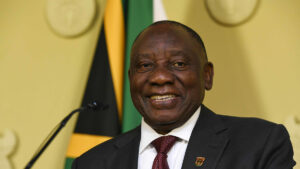
This was echoed by deputy president Cyril Ramphosa who said it was the purpose of the Competition Act to facilitate economic transformation that is radical, inclusive and sustainable.
“When cartels fix the price of a necessity like bread, poor families are sometimes forced to choose between paying for school transport or starving,” said Ramaphosa.
“When the costs of telecommunications including data are high, small businesses can be forced to close shop or lay off personnel. When the private health care system fixes prices for life saving drugs and overcharges for admissions, individuals and families find themselves compelled to use the already overburdened public health system.”
Ramaphosa said it was now the responsibility of business, as social partners, to confront attitudes and end practices that place the activities of business at odds with the interests of society.
“By resisting competition and charging more for products and services, businesses add to the hardships of the ordinary poor. In doing so, they are complicit in perpetuating poverty and deepening inequality,” he said.
Investigation into data prices
In July, the Competition Commission announced that it would will officially launch an investigation into why data costs are so high across South Africa’s “big four” networks.
The commission will reportedly focus on how South African data prices benchmark internationally, how accessible data services are to the public, and whether the market could be made into a more competitive and inclusive environment.
In an analysis of the inquiry, legal analysts at Norton Rose Fulbright said that the probe was likely to also directly name and shame companies with unfair data practices – including fixed-line providers.
“The South African wireless data market is dominated by a small number of large companies, and the Commission appears to be of the view that this, along with the stagnation of policy implementation and lack of significant improvements in infrastructure, has hamstrung competitiveness in the local market,” said Norton Rose Fulbright.
“Fixed-line data providers aren’t out of the firing line either, as the Commission hasn’t limited their inquiry to the mobile sector.
“The same report called for better co-ordination between the telecoms giants and the competition and consumer regulators, and noted that the limited range of radio frequencies in SA prevents small service providers from entering the market.”
Read: Consumer Commission says mobile data should already last for 3 years – not just 30 days

















 Loading ...