

Government officially responds to social media ban for anyone under 16 in South Africa


The South African government has officially ruled out a ban on social media access for children under the age of 16, despite countries such as Australia moving ahead with strict new restrictions.
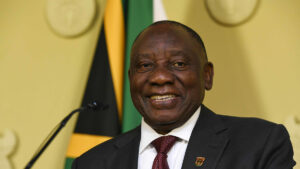
This was confirmed by the Minister of Communications and Digital Technologies, Solly Malatsi, in a parliamentary Q&A.
He was asked whether the government planned to introduce legislation or regulations restricting access to social media platforms for people under 16.
The question specifically asked whether South Africa would follow measures adopted or proposed in other countries and, if so, what platforms would be covered and when the restrictions could be introduced.
Malatsi gave a clear response.
“No. There is currently no irrefutable indication that a general social media access ban for persons under 16 years old actually prevents them from being digitally active on such platforms,” he said.
The response means that South Africa currently has no plans to introduce a blanket social media ban for children under 16.
The issue received international attention this year. Australia has banned children under 16 from accessing social media since December 2025, unless platforms can successfully verify users’ ages.
According to Emma Sadleir, founder of The Digital Law Company, Australia had introduced the legislation earlier in the year, but delayed its implementation until 10 December.
This was done to give technology companies time to develop systems that comply with the law. Sadleir said she supports the principle behind the legislation, even though enforcing it will be difficult.
She said the restrictions could also help establish new social norms around children’s use of technology.
“It’s like banning alcohol under 18; we know some teens will still get it, but it creates a social norm,” Sadleir said.
Sadleir said she regularly deals with cases involving children harmed by online activity and believes the situation is deteriorating.

Enforcement is the biggest hurdle
“I’m the first responder when things go wrong with children online in South Africa, and it’s going horribly wrong,” Sadleir said.
“The average age of first exposure to pornography is about nine years old. Children are scrolling TikTok and YouTube late into the night, and it’s damaging.”
Other countries are also considering tougher measures. France is examining digital curfews that would restrict teenagers’ access to social media between 22h00 and 06h00.
However, Sadleir acknowledged that age restrictions will inevitably be circumvented. “When the UK introduced its Online Safety Act, VPN (virtual private network) downloads shot up by 1,400% in a week,” she said.
“There will always be workarounds—fake IDs, old masks for facial recognition, whatever it takes.”
Australia’s legislation allows platforms to use facial scanning, official identification or data-based age estimation to verify users.
Sadleir believes South Africa could introduce similar legislation, but believes the biggest problem would be enforcement against international technology companies.
“The problem is international tech companies don’t take South African law seriously. Until the government is willing to take a stronger stance, enforcement will remain impossible,” she said.

















 Loading ...