

Thousands of jobs on the line in South Africa – with Eskom told to cut prices


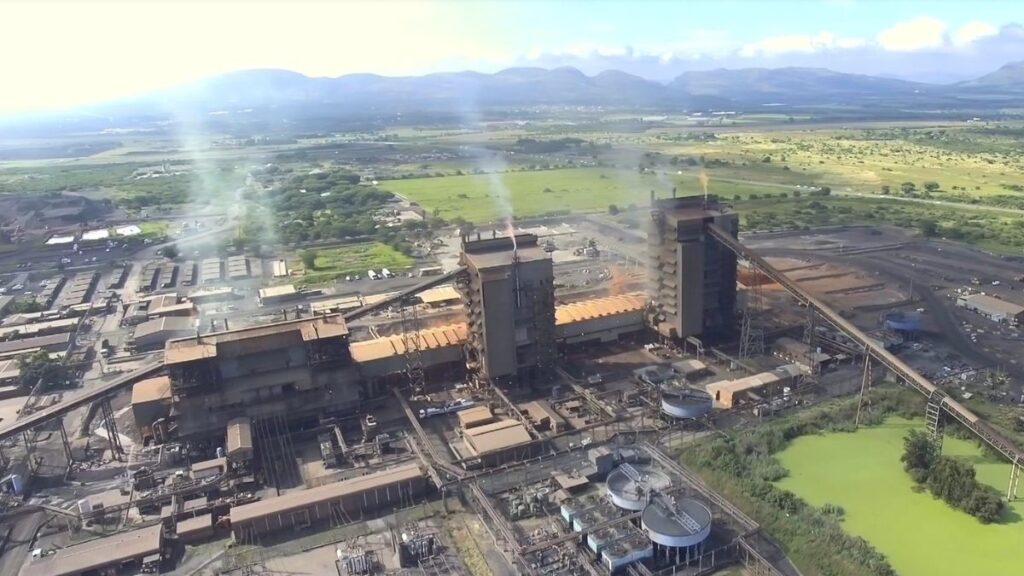
Thousands of jobs could be cut in South Africa if major smelters do not get their wish for significantly discounted electricity prices.
Trade union Solidarity said that if Eskom or the Minister of Electricity do not come forward at the eleventh hour with solutions regarding electricity tariffs, thousands of employees will face great hardship.
Last year, ferrochrome smelters across South Africa said that they would retrench thousands of employees amid failures to address rising electricity costs.
For instance, the Glencore-Merafe joint venture announced that 2,400 workers at its Boshoek and Wonderkop smelters would be retrenched.
Eskom reached agreements with Samancor Chrome and the Glencore–Merafe Chrome Venture for short-term relief while it works on a longer-term solution.
The Glencore–Merafe Chrome Venture has restarted production at its Lion Smelter in Steelpoort, Limpopo, under the new tariff, but warned that it is unsustainable in the long term.
This agreement put a temporary halt to retrenchment proceedings at the smelters.
Under the deal, there is a 12-month interim electricity tariff of 87.74c per kWh, which was approved by the National Energy Regulator of South Africa (NERSA).
The deadline for a longer-term relief is 28 February, and no viable solution has been presented yet. After the deadline, smelters can resume retrenchment talks.
Solidarity said the deadline falls on the coming weekend, and there is no indication that Eskom is willing to meet the 62c/kWh these smelters require.
No Budget relief

The latest Budget by Finance Minister Enoch Godongwana contained no interim relief for the smelters. Solidarity said that if no solution comes, thousands of employees in Mpumalanga will be affected.
“The budget speech has come and gone; the deadline is almost here, and there is still no light at the end of the tunnel,” said Willie Venter, Deputy General Secretary of Solidarity.
“We are extremely concerned about the consequences for thousands of smelter employees and expect that this could affect the lives of at least 12,000 people.”
“All hope now rests on Eskom or the Minister of Electricity to present a solution in time to save the industry and its workers.”
On top of Glencore-Merafe and Samancor, the manganese smelter Transalloys has also said that it may need to close its doors if a better electricity tariff does not materialise.
Solidarity said that Transalloys employs approximately 600 people in Witbank, Samancor’s plants in Witbank and Middelburg employ around 1,000 people, and Glencore’s operation in Witbank roughly 130.
It added that Columbus Steel, with about 2,000 employees in Middelburg, is also under pressure, while Ferroglobe in Witbank may be forced to reduce positions further without the tariff.
Venter said these employees and their families represent over 12,000 people in a community recently shaken by the closure of Highveld Steel.
“The impact of retrenchments on the Mpumalanga region, in which Witbank and Middelburg are situated, will be significant. Our concern is that large-scale unemployment awaits this area,” said Venter.
“A situation similar to the one that struck Newcastle’s steel industry awaits this community.”
Solidarity has thus made a final appeal to Eskom and the Minister to institute the 62c tariff so that thousands of employees don’t lose their jobs.
While smelters are calling for lower prices, one should note that the average South African spends far more per kWh, with household prices across the country starting at over R2 per kWh.
Eskom Group CEO Dan Marokane said that serious flaws exist in negotiated electricity pricing discounts for energy-intensive firms, with the costs eventually passed on to households.















 Loading ...