

Over 40 jobs that pay more than the average salary in South Africa


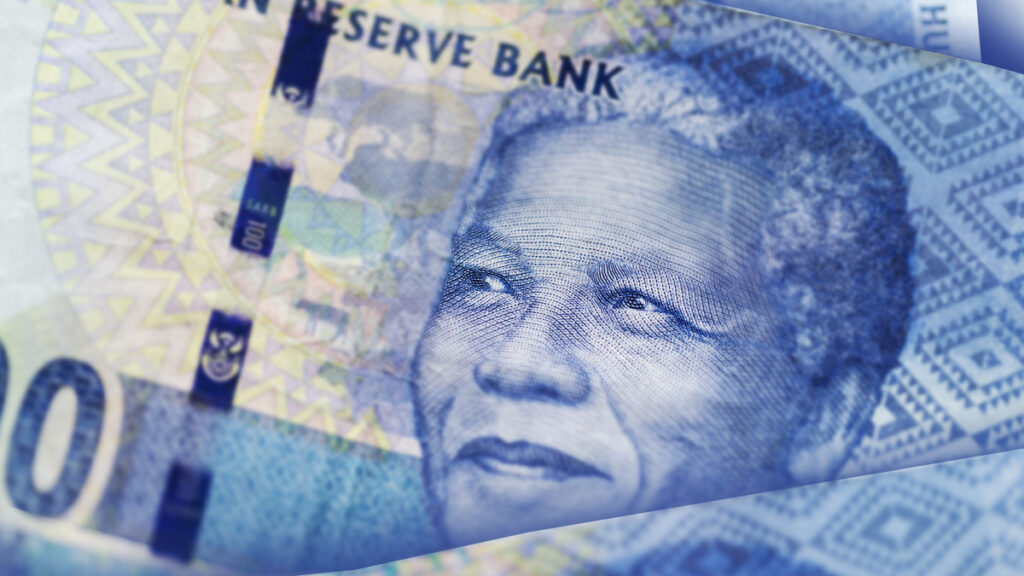
Stats SA’s latest quarterly employment survey (QES) shows that the average monthly salary in South Africa increased to R29,490 in the third quarter of the year.
This represents a 0.3% increase over the revised R29,402 recorded in the second quarter of the year (previously R29,290).
Year-on-year average monthly earnings paid to employees increased by 4.3% between September 2024 and September 2025, Stats SA noted.
Gross earnings paid to employees increased by R10.7 billion or 1,1% from R990 billion in June 2025 to just over R1 trillion in September 2025.
Basic salary/wages paid to employees increased by R7.8 billion or 0.9% from R903.4 billion in June 2025 to R911.2 billion in September 2025.
Bonuses paid to employees increased by R6.2 billion or 10.9% from R56.7 billion in June 2025 to R62.9 billion in September 2025.
Overtime paid to employees decreased by R3.3 billion or 11.1% from R29.9 billion in June 2025 to R26.6 billion in September 2025.
According to the more detailed breakdown of salary data, as the average has climbed higher, the number of jobs that pay in line with the average has kept pace.
43 jobs paid more than the average salary in the second quarter of the year, and the same number of jobs pay above the average in Q3, though the mix is different.
This shows that the increases are spread across various industries, and the growth isn’t being driven by one sector in particular.
The QES covers eight key industries or sectors in South Africa, which are split further into 20 sub-categories, mainly made up of various manufacturing sectors, as well as a split between government and non-government community and social services.
The dataset breaks these numbers down further, covering earning estimates across over 90 job types in the formal, non-agricultural sector.
Notably, of the 90 or so jobs covered by the survey, 43 job types paid higher than the national average over the quarter.
The highest average was R75,206 per month for those working in financial intermediation and related activities.
This is followed by those working in electricity, gas, steam and water supply, where the average earnings were R63,778 per month.
Utility salaries typically rank among the highest-paying jobs in the country fairly consistently.
Other high-paying jobs include those working in computer and related business services, air transport and health and social work.
Looking at the other end of the list, those working in hotels and restaurants have dropped to the bottom of the list, earning an average of R11,873 per month.
Workers in apparel and knitted textile manufacturing earned more than hotel workers, with an average monthly salary of R12,035.
The table below outlines the 43 jobs that currently pay more than the national average:
| # | Job | Sector | Average Pay |
|---|---|---|---|
| 1 | Activities auxiliary to financial intermediation | Business Services | R75,206 |
| 2 | Electricity, gas, steam and water supply | Electricity & Water | R63,778 |
| 3 | Financial intermediation (i.e. Banks) except insurance and pension funding | Business Services | R58,911 |
| 4 | Computer and related activities | Business Services | R57,625 |
| 5 | Extra Budgetary institutions | Government | R56,413 |
| 6 | Air transport | Transport | R55,518 |
| 7 | Coke oven products; petroleum refineries; processing of nuclear fuel | Manufacturing | R54,512 |
| 8 | Insurance and pension funding | Business Services | R49,761 |
| 9 | Electric motors, generators and transformers | Manufacturing | R47,812 |
| 10 | Legal, accounting, bookkeeping and auditing activities | Business Services | R47,383 |
| 11 | Health and social work | NGO | R46,944 |
| 12 | Architectural, engineering and other technical activities | Business Services | R46,426 |
| 13 | Motor vehicles | Manufacturing | R43,847 |
| 14 | Collection, purification and distribution of water | Electricity & Water | R43,234 |
| 15 | Sea and coastal water transport | Transport | R43,087 |
| 16 | Research and development | Business Services | R42,515 |
| 17 | Real estate activities | Business Services | R42,298 |
| 18 | National departments | Government | R40,424 |
| 19 | Activities of membership organisattion | NGO | R39,243 |
| 20 | Medical appliances and instruments and appliances etc | Manufacturing | R38,742 |
| 21 | Post and telecommunications | Transport | R38,514 |
| 22 | Provincial departments | Government | R36,777 |
| 23 | Non-gold mining | Mining | R36,609 |
| 24 | Basic chemicals | Manufacturing | R35,826 |
| 25 | Other chemical products; | Manufacturing | R35,531 |
| 26 | Universities and technikons | Government | R35,372 |
| 27 | Railway and tramway locomotives and rolling stock; aircraft and spacecraft | Manufacturing | R34,887 |
| 28 | Gold mining | Mining | R34,651 |
| 29 | Basic iron and steel | Manufacturing | R34,635 |
| 30 | Office, accounting and computing machinery | Manufacturing | R34,572 |
| 31 | Advertising | Business Services | R34,523 |
| 32 | General purpose machinery | Manufacturing | R34,479 |
| 33 | Supporting and auxilliary transport activities | Transport | R33,876 |
| 34 | Optical instruments and photographic equipment; watches and clocks | Manufacturing | R33,803 |
| 35 | Wholesale trade | Trade | R33,105 |
| 36 | Special purpose machinery | Manufacturing | R33,072 |
| 37 | Local government | Government | R31,734 |
| 38 | Basic precious and non-ferrous metals | Manufacturing | R31,669 |
| 39 | TVET Colleges | Government | R31,158 |
| 40 | Land transport and transport via pipelines | Transport | R31,084 |
| 41 | Television, radio, sound or video apparatus, etc | Manufacturing | R29,770 |
| 42 | Publishing | Manufacturing | R29,563 |
| 43 | Insulated wire and cable | Manufacturing | R29,563 |
The following describes the industry segments.
- Mining includes mining and quarrying
- Manufacturing includes food and beverages, furniture, textiles, wood, printing and publishing, petroleum and chemicals, non-metals and mineral products, electrical, medical and technology-related apparatus, and transport equipment
- Electricity & Water includes electricity, gas and water supply
- Trade includes wholesale, retail, motor, hotel and restaurants
- Transport includes freight, storage and postal communication
- Business services include financial intermediation, banking, insurance and real estate
- Government includes social and personal services run by and related to the state
- NGO include social and personal services run by and related to non-government organisations and entities.















 Loading ...