

South Africa’s richest province hacked, and interest rate hikes back on the menu


The South African rand extended its fall on Friday, heading for a second consecutive week of losses as surging energy prices, fuelled by conflict in the Middle East, rattled global markets and heightened inflation concerns.
The rand traded at R16.80 against the dollar, little changed from its Thursday close of 16.7950, while the greenback was last up 0.4% against a basket of currencies.
The rand has faced sustained pressure since the US-Israeli war on Iran started nearly two weeks ago.
It fell by more than 3% last week and is poised to decline by around 2% this week. Rising oil prices pose a challenge for South Africa, a net energy importer.
Oil prices rose above $100 a barrel, despite the US trying to ease supply concerns by issuing a 30-day licence for countries to buy Russian oil and petroleum products stranded at sea.
“While this war continues and the stress in the oil market builds, one should expect emerging market currencies such as the rand and its LATAM peers to underperform developed-market currencies, especially the US dollar,” ETM Analytics said.
On the Johannesburg Stock Exchange, the Top-40 index fell 0.6%. South Africa’s benchmark 2035 government bond also weakened, with its yield rising 1.7 basis points to 8.885%.
Next week, domestically focused investors will look to the country’s statistics agency for the release of inflation and retail sales data.
Investec economist Lara Hodes said inflation was forecast at 0.5% m/m and 3.1% y/y for February, from 3.5% y/y previously.
“Owing to the persistent war in the Middle East, a cut in interest rates by the SARB in March is now not anticipated, with elevated oil prices and a depreciating rand as an upside risk to the inflation outlook,” said Hodes.
5 important things happening in South Africa today

Gauteng hacked: A threat actor called XP95 has claimed responsibility for a breach of the Gauteng Provincial Government that has resulted in 3.8TB of people’s personal data being stolen. According to the group’s announcement of the breach, they have obtained 3,673,556 files and are selling them for $25,000. Based on samples of the stolen files uploaded to their Telegram channel, the group gained access to a system containing data from people seeking employment from the provincial government. [MyBroadband]
Interest rate hike warning: Prolonged higher oil prices could force the South African Reserve Bank to consider raising interest rates, as a weaker rand pushes inflation above levels it’s prepared to tolerate. Goldman Sachs economist Andrew Matheny cautioned that the rand may face sustained pressure if the US-Israel war on Iran pushes oil prices toward $130 per barrel and the assumption that the disruption to crude flows won’t last long proves wrong. If there is a significant and persistent breach, those are the circumstances in which the South African Reserve Bank would likely hike rates, he said. [Daily Investor]
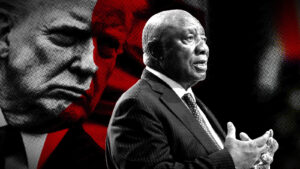
GNU splits on Bozell: The Government of National Unity has suffered another ruction, this time based around the Department of International Relations and Cooperation’s decision to démarche US ambassador to South Africa, Brent Bozell, over comments made at a conference this week. At least two other parties in the GNU, the DA and FF+, have criticised the department’s handling of the situation. [News24]
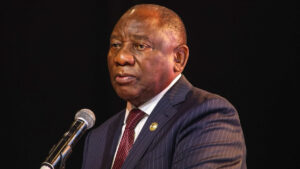
2,200 troops deployed: President Cyril Ramaphosa has deployed 2,200 troops to put boots on the ground in five provinces. The deployment, first announced in the president’s State of the Nation Address last month, is to aid the South African Police and other local authorities in combatting crime. [IOL]
R500 billion bailouts: Between 2008 and 2023, South Africa’s state-owned entities (SOEs), which include South African Airways (SAA) and Transnet, received more than R520 billion in government support. This is according to a report by the Organisation Undoing Tax Abuse (Outa), which says there is little link between these entities’ performance and their remuneration practices. Thus, the organisation is calling for urgent reform of how SOEs oversee board remuneration of non-executive board members. Its report also calls for accountability by linking board members’ pay to measurable outcomes and imposing consequences. [TopAuto]













 Loading ...