

Why South Africa is still a top destination for skilled foreign workers


South Africa’s economy may be in the doldrums, but for foreign workers looking for a high standard of living with increased buying power, it remains a very appealing destination.
According to a study by ECA International, which specialises in the metrics around compensation and standards of living for expats around the world, South Africa is a country that offers foreign workers a decent standard of living, and high levels of relative buying power.
Relative buying power refers to net earnings versus the cost of living in any given country. It is a factor to consider when moving, as sometimes a lower salary in a destination country can provide a higher standard of living than a higher salary in another.
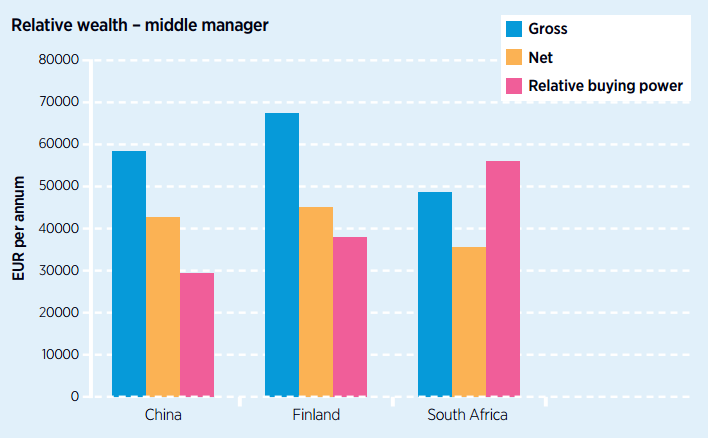
For example, a middle manager from China moving to Finland would have an initial impression that they would get a significant rise in gross salary, from EUR 58,500 to EUR 67,500.
In more realistic terms, the employee would see a similar increase in their buying power, from EUR 29,900 to EUR 38,300, still a healthy incentive towards making the move.
If that worker then moves from Finland to South Africa, the manager would see a steep drop in their gross salary, from EUR 67,500 to EUR 48,900 – less than he was earning in China.
However, in terms of relative buying power, the employee is still moving upwards, as their buying power (EUR 29,900 at home) has actually increased from EUR 38,300 in Finland to EUR 56,000 in South Africa.
The concept works also works in reverse – i.e. a South African middle manager looking to move abroad can expect their relative buying power to decrease, depending on the destination.
“Being ‘better-off’ is all about having greater buying power. One of the principal challenges in showing the value of a local salary package is being able to communicate its actual buying power,” ECA said.
The graph below shows net salaries adjusted for the value of the goods that can be purchased in each country, which is achieved by applying ECA’s cost of living indices.
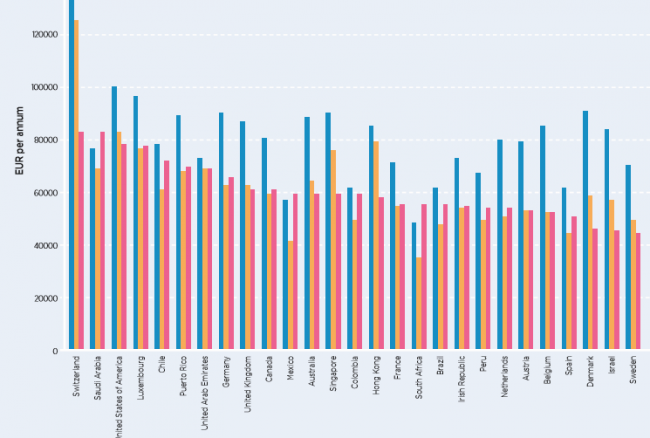
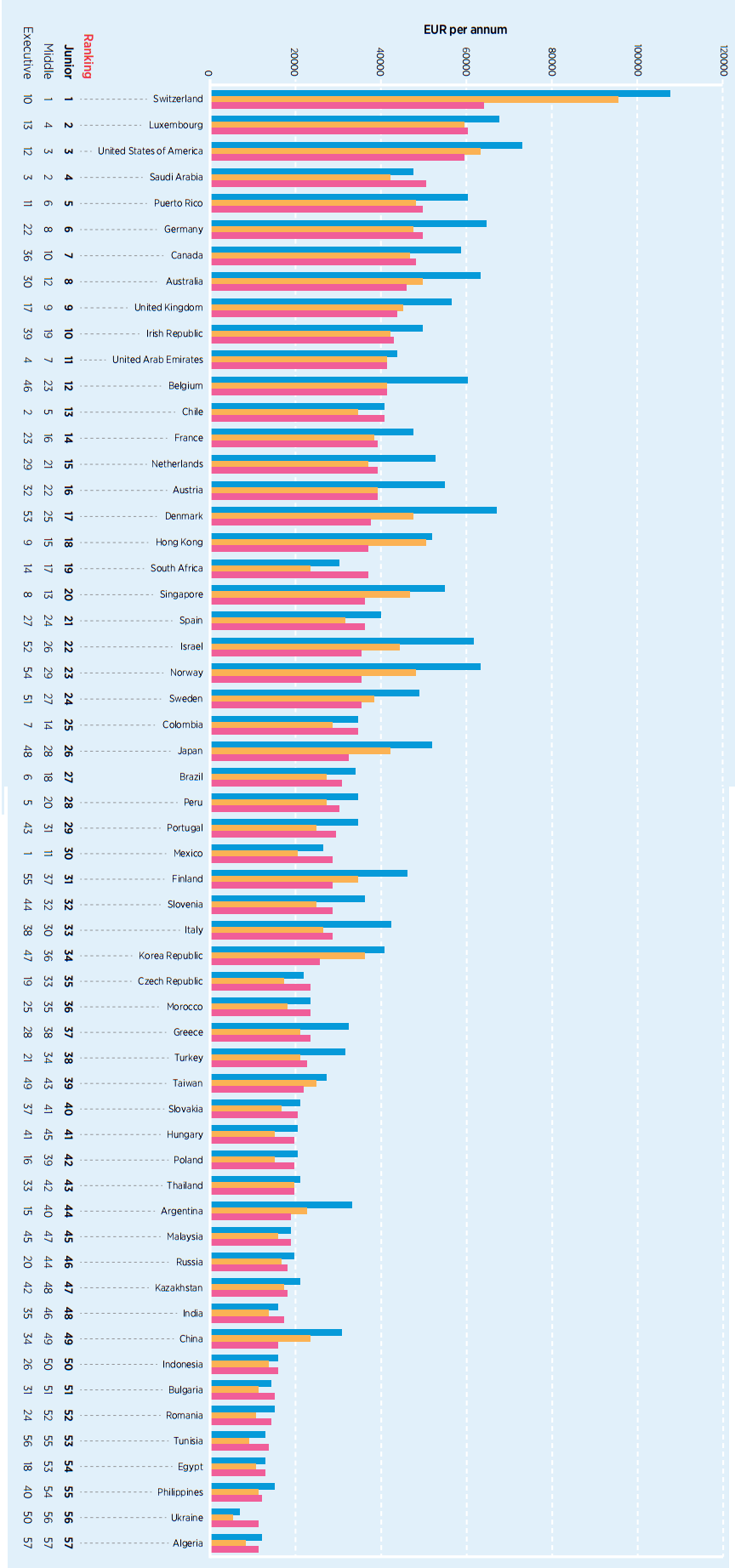
The graph below shows how earning power changes among junior, middle and executive managers in the countries listed.
South Africa moves from offering the 19th best buying power level for junior managers, to 17th best for middle managers, to 14th best for executives moving to live and work in the country.
For a middle and junior manager working in Switzerland, they can expect to earn a high income, and enjoy increased buying power.
For some countries, tax rates on middle and executive manager salaries cut into their buying power significantly. For the global number one, Switzerland, this pushes executive buying power lower (to 10th), while an executive in Mexico would climb all the way to the top of the ladder.
South Africa remains fairly consistent within the top 20 countries, making it one of the most attractive destinations to draw top global talent.
The impact of junk status and recession
The ECA analysis is based on 2016 data, before South Africa suffered the knocks of two ratings downgrades to junk status, and the more recent move into a technical recession.
While both of these events bode ill for the cost of living and the economy of South Africa in the long-run, they have been priced into the market for the past few years, and did not come as much of a shock.
Regarding currency fluctuations, ECA said that this would not have much of an impact on the relative buying power in local markets, and the markets tend to constantly readjust themselves to the economic climate.


















 Loading ...