

Eskom’s new board faces mounting criticism – not even one full week into the job


Several energy commentators have raised red flags of potential conflicts of interest among Eskom’s new board of directors.
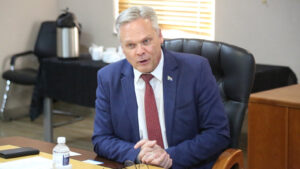
In an interview with eNCA, energy analyst Ted Blom voiced his concerns about three conflicts of interest among the newly-appointed members of Eskom’s board, including chairperson Mpho Makwana.
Former Standing Committee on Public Accounts (SCOPA) chair Themba Godi shared Blom’s concerns in a separate interview, saying that Makwana is a member of no less than ten boards, including being the chairman of Nedbank – which has invested almost R30 billion into renewables.
Blom said that these positions held by Makwana bring doubt about where his loyalties will lie at a time when Eskom is in crisis and fighting for its life.
“There are clear interests in the same industry as Eskom, and you can’t be serving two guards. You [the board] must either serve the competitor or Eskom, not both,” said Blom.
Makwana, in response to questions surrounding potential conflicts of interest, said there has been incorrect reporting, as he has had no commercial interests in renewables or Independent Power Producers (IPPS) since 2019.
“In 2019, I sold all assets involved in renewables and IPPs. On Friday (30 September), I stepped down immediately from the board of directors of the remaining South African IPP company I was a part of,” he said.
He added that he is a portfolio professional – meaning he is not employed on a full-time basis at any company – and currently only holds chairmanship positions on two major entities: Nedbank and Eskom.
He serves as a non-executive director in two smaller groups – including a state-owned company, the South African Forest Company – and has some advisory positions at smaller companies where his small family business holds interest.
Blom said that Eskom can’t afford a board with fraying interests, as it has been appointed to do a very difficult job requiring undivided attention in Eskom’s best interests – because the livelihood of 60 million South Africans critically depends on Eskom to deliver on its mandate.
Criticism
The new Eskom board was appointed by the Department of Public Enterprises less than a week ago, and has already come under intense scrutiny and has already faced criticism amid continued rolling blackouts in the country.
Makwana said earlier this week that the board needs one to two months to conduct an “onboarding programme” before he can confidently comment on any plans to resolve South Africa’s energy crisis. Critics have pointed out, however, that South Africa does not have the luxury of time.
Intellidex analyst Peter Attard Montalto previously noted that a change in the Eskom board is a positive development and a step in the right direction of turning the group around – but it does not do anything to resolve the fundamental problems at the power utility – like an ageing fleet and decades of mismanagement.
He said that the only solution to the country’s power crisis is to add more capacity and new generation to the grid, which will still take several years to accomplish.
In the meantime, he warned that load shedding in South Africa is likely to get worse, particularly in October and November – during the two months the new board is “onboarding” – where blackouts could hit stage 6 or even stage 8.
“There’s a lot going on to help in the long term, but in the short term, we need to manage expectations really carefully. Things are going to get a lot, lot worse,” he said.
Makwana, meanwhile, has also faced criticism for talking of bonuses – or “appropriate incentives” – for Eskom employees.
The chair said that South Africans need to remember that it’s not just technical maintenance and power stations running on their own. “People are going to end the crisis. We need to spend less time battering them (the employees) and spend more time uplifting them and inspiring them,” he said.
He said that “culture eats strategy for lunch”, and that no matter what strategy the board tries to implement, if the corporate culture does not change, the business won’t change.
The chair said that it’s people that change the business, “so the 39,000 to 40,000 Eskom employees are of paramount importance to restoring Eskom’s reputation and restoring Eskom’s performance. That is of critical importance. Then you can go look at maintenance and the supply chain”.
Read: New Eskom board says it needs 2 months to find its feet – but ‘bonuses’ are already in the mix
















 Loading ...