

The tide is turning in South Africa


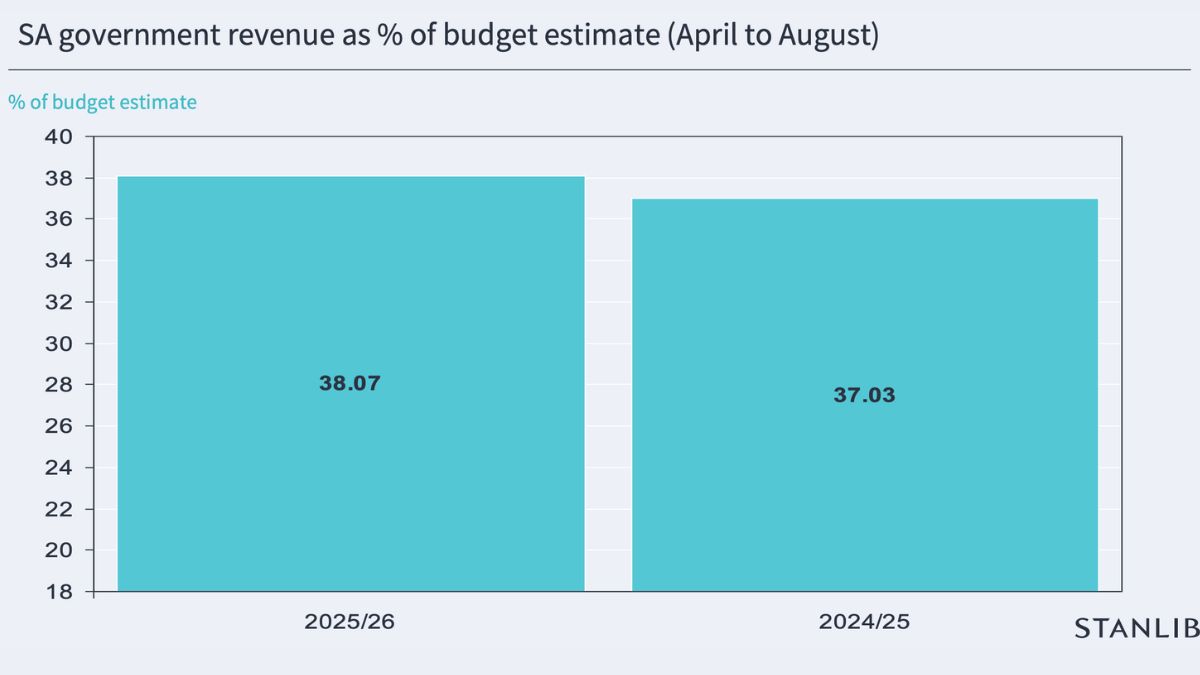
South Africa’s latest government revenue and expenditure data surprised on the upside, suggesting the country may stay on track to achieve fiscal consolidation this year despite sluggish economic growth.
This is according to Stanlib Chief Economist Kevin Lings, who noted that South Africa’s National Treasury’s data on government revenue and expenditure was better than expected.
A detailed breakdown of the tax revenue data reveals that individual income tax has risen by a respectable 8.4% y/y in the first five months of the tax year, while corporate tax collection has increased by 6.9%.
Importantly, VAT receipts are up a substantial 11.4% y/y, helped by a drop in VAT refunds.
Lings explained that data indicates that when we get the update for the Medium-Term Budget in November, we should have a set of numbers that look reasonably on track to achieve fiscal consolidation.
“In other words, we’re managing to avoid a further deterioration in South Africa’s fiscal balances,” he said.
Lings noted that government revenue has been stronger than anticipated, particularly in corporate tax collections.
“Corporate taxes exceeded expectations and have continued to perform well. If we look at where the gold and platinum prices are, there could even be some upside surprise to corporate tax revenue as we get deeper into the year,” he said.
Individual tax collections have also been holding up, although not growing rapidly. “You wouldn’t say it’s especially buoyant because we’re simply not creating enough formal sector jobs for that to happen.
“However, it has been a decent performance and it’s on track to achieve the sort of budgeted numbers the government put forward in their final budget attempt,” Lings explained.
Value-added tax (VAT) collection has been another area of strength, though partly because of lower refunds. “The area that is overall doing very well is VAT collection,” Lings said.
“But VAT refunds have actually declined. SARS stated that they would attempt to reduce the backlog of VAT refunds, but they have not done a particularly effective job in doing so. What it’s done, however, is give them some buoyancy within VAT collection overall.”
Overall fiscal trend is encouraging
The combination of strong corporate taxes, stable personal income tax, and resilient VAT collection has placed government revenue in a solid position.
“If you take those three key items, which make up the bulk of South Africa’s tax revenue, you would say that’s putting us in a very good position to achieve the revenue outcome that was put forward earlier this year,” Lings said.
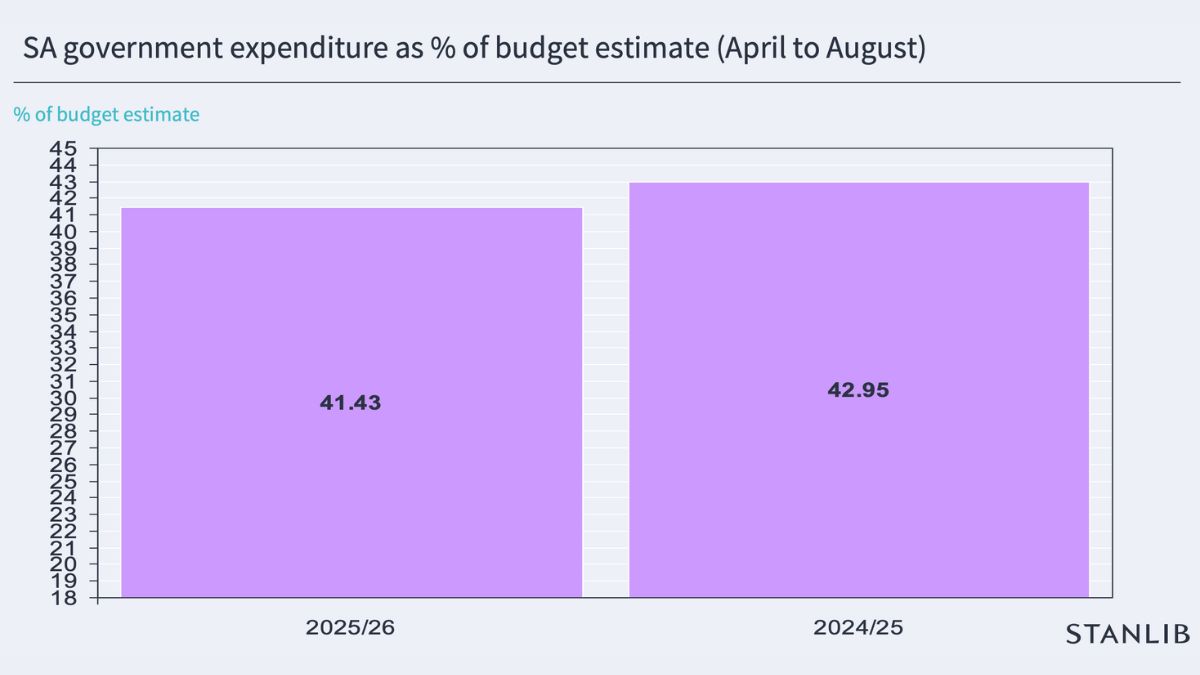
On the expenditure side, government spending is behind budget, although this is something Lings said can be interpreted in different ways.
“You can argue that’s either good or bad. In a country struggling with infrastructure, you wouldn’t think the government would be underspending,” he noted.
“However, if you look at the effectiveness of government spending, which hasn’t been good, then any form of underspending perhaps can be seen in a positive light.”
And this is how Lings has interpreted it. The result of stronger-than-expected tax receipts and slower expenditure is that South Africa’s fiscal balance is holding up better than expected.
“You’ve got a fiscal balance that’s holding on reasonably well, and an element of fiscal consolidation that continues,” said Lings.
“I don’t think we’re going to see significant fiscal deterioration, even though the economy is barely growing at about 1%.”
Looking ahead, Lings said the Medium-Term Budget Policy Statement, which has been postponed to 12 November, will provide a clearer picture of the government’s fiscal position.
“Normally that occurs in October, but because the budget itself was late in finalising, the Medium-Term Budget has been pushed out by a month,” he said.
He added that another key event to watch is the Financial Action Task Force’s (FATF) meeting on 24 October, where South Africa’s potential removal from the grey list will be decided.
Along with this, Lings remained encouraged by the overall fiscal trend. “If I look at South Africa’s fiscal parameters and the way the main budget numbers are being managed, you would say that’s a very decent outcome,” he said.
“It puts us in a position where we can demonstrate ongoing fiscal consolidation and hopefully, at some point, leverage that position into more substantial growth and improved confidence.”
“For the moment, we’ve got to accept that it’s tough going. But at least the tax revenue is holding up even though the economy is not performing especially well,” he added.
















 Loading ...