

South Africa heading for a meltdown


The South African government’s failure to uphold the rule of law and to reform the economy has created an untenable and unsustainable environment that may lead to social unrest and early elections being called.
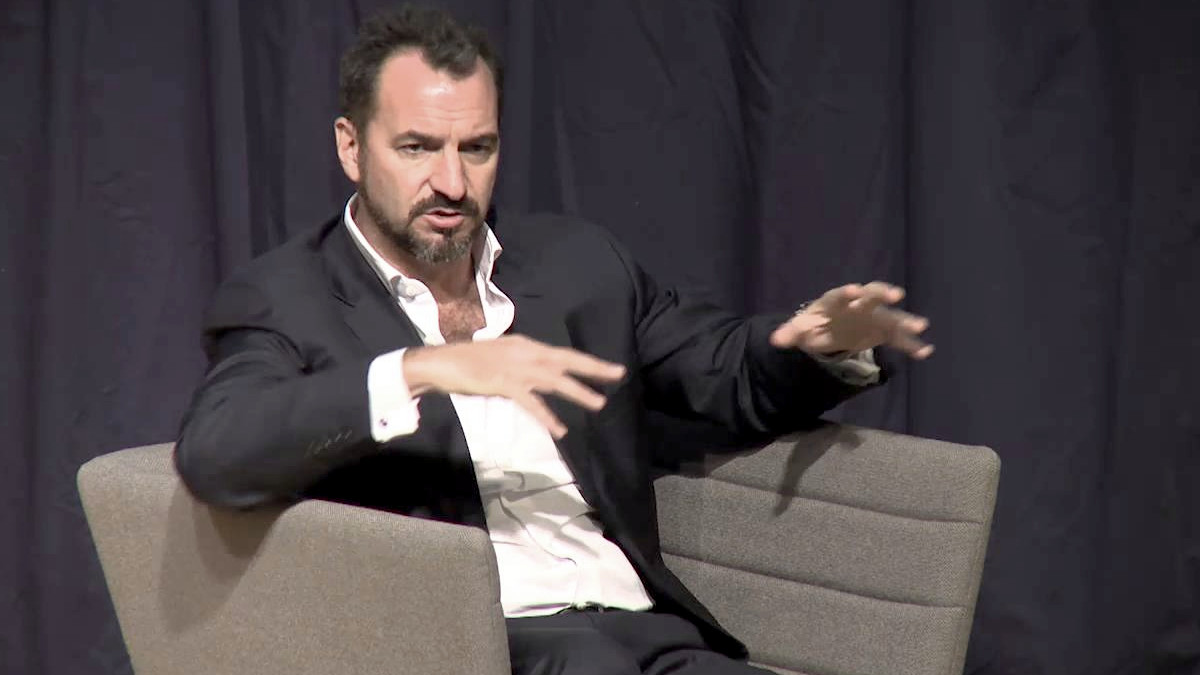
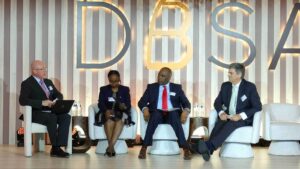
This is according to former CEO of Goldman Sachs sub-Saharan Africa, Colin Coleman, who believes that without immediate action to change South Africa’s growth trajectory, the country faces a “systemic meltdown”.
According to Coleman, quoted in the Sunday Times, the government has failed to grow the tax base, create jobs, spend productively, hold criminals accountable for corruption, and uphold the rule of law.
This has created an environment where social unrest is likely to escalate, and for something fundamental to snap within the government of national unity (GNU). If protests escalate and national security is threatened, this may trigger early national elections.
Notably, Coleman’s view is that whatever decline is happening will not be sustainable through to 2029, and the country will reach a boiling point before then.
Coleman is also a non-resident fellow with the Atlantic Council’s Africa Centre and co-chair and non-executive director of the Youth Employment Service.
He also flagged South Africa’s descent into becoming a mafia state, where there has been a rise of an illicit and untaxed economy, driven by politically connected people and the political elite itself.
This echoes sentiments from North West University Political analyst, Professor Andre Duvenhage, who recently said much of the same.
Duvenhage shared his views amidst the Madlanga Commission hearings into criminality, political interference and corruption in the Criminal Justice System.
Testimony before the commission has pointed to powerful criminal syndicates having infiltrated South Africa’s criminal justice system, and corruption being rife within the South African Police Service.
Duvenhage said South Africa can now be categorised as a mafia state, or criminal state, based on objective criteria.
Mafia state
He explained that a criminal state is where crime is rife and organised crime has reached a level where it is difficult to distinguish between the political and criminal elite.
“The classic differentiation between a normal state and a mafia state is where you cannot clearly differentiate between the political and criminal elite,” he said.
“In the South African context, there is a long history of evidence, which includes academic research, that this differentiation does not exist.”
The assessments also came amid raids on politically-connected individuals tied to the looting of Tembisa Hospital, where R2 billion was misappropriated by a handful of people and blown on luxury lifestyles.
The Tembisa Hospital scandal is sadly just the latest in a long and growing list of instances of state corruption where public funds were simply stolen.
On a local level, there are multiple examples of municipalities collapsing and falling into ruin as money intended for service delivery and development disappears.
On a national level, there are well-documented and widely reported cases of the state stealing money – from the early reports of the Nkandla scandal, through the billions looted during the State Capture saga, the Covid-19 emergency funds, social security funds and the Road Accident Fund.
At the same time, the national government has increased its spending, hiked taxes, and continued to adopt anti-business and anti-growth policies.
It is also looking to set up even more multi-billion rand funds like the National Health Insurance Fund and Transformation Fund, with little else but promises that the money won’t be misappropriated and stolen this time.
Coleman said the only hope is for the South African government to do things differently, which is unlikely to happen with “the same team”.
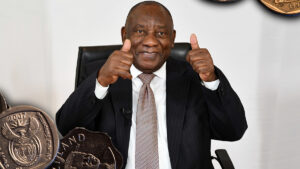
He said that President Cyril Ramaphosa could make changes and appoint capable people to critical portfolios that can execute the necessary reforms. However, he does not have these people around him, he said.
In all likelihood, it will be up to voters to decide the path forward, he said, with an earlier national election likely to shake up the country’s share of power.











 Loading ...