

Driving vs the Gautrain – and only one option makes sense


The Gautrain is South Africa’s only world-class infrastructure development and is a fantastic choice for Gauteng’s commuters, but it only makes sense to use either drive or use the Gautrain’s services.
As a person who commutes between Johannesburg and Centurion throughout the week for work, I have grown incredibly tired of the N1 and the traffic on the route.
I thus decided to try the Gautrain more over the last few weeks to see which service is better in terms of cost, time and emissions.
Launched in the early 2010s, the Gautrain provides high-speed rail service between Johannesburg, Pretoria, and OR Tambo International Airport.
The South African Institution of Civil Engineering (SAICE) has given the Gautrain an A- rating, which makes it the only world-class infrastructure project in the country.
For context, most of South Africa’s other infrastructure projects only received a D from SAICE.
An A rating from SAICE indicates that the infrastructure is in excellent condition, well-maintained, and can withstand pressure from unusual events.
In addition to the rapid rail network, which can reach speeds of up to 160km/h, the Gautrain also features a comprehensive bus network to complete the final part of a journey.
While there are still questions about its future management and financial viability ahead of its expansion, I thought it was worth comparing it to my regular commute.
As someone who is becoming more environmentally conscious, I also wanted to test public transportation, as it has a significantly smaller carbon footprint.
I thus decided to compare the cost of transportation between the two locations, as someone who travels during peak times, to determine which was more cost-effective.
Cost

Travel is one of the most significant costs for South African travellers, and a comparison between road and rail travel has several variables.
I personally drive a hatchback that achieves an incredibly low fuel consumption of 5.32 litres per 100km, which is particularly impressive given that I primarily drive on highways.
Given that I still need to pay off my car and its insurance, the costs extend dramatically from just the fuel costs.
While using the train, I would drive for about 10 minutes to reach the Rosebank station and utilise the R1 per day parking.
I would then use the Gautrain buses when I reached Centurion, which works out to a mere R13 for those who used the rail.
After finishing work, I would use the bus service again. However, since I had not used the rail service in the last hour, my fare increased to R29 for the trip.
When it comes to using the train, I would typically pay R83 in the morning and then R67 in the evening as a non-peak traveller.
In total, I paid R193 per day to use the Gautrain’s services, including trains, buses and parking.
This would differ depending on how the service is used, but this is the easiest way to suit my schedule.
If I expand my experience to a full month involving 22 working days, I would have to pay over R4,200 to use the Gautrain’s services if I stuck with the pay-as-you-go product.
However, the Gautrain does offer weekly and monthly products, which can save rail users 7.5% and 15%, respectively.
Even as a pay-as-you-go customer, the total monthly cost was far smaller than my car payment, insurance and fuel costs combined, where I pay over R330 per day on average.
However, the one caveat is that I don’t spend close to R4,200 on petrol per month, which is the only cost I save using the train instead of my car.
Given that I still have to cover my car payment and my insurance, it is not economical to pay off my car and use the Gautrain at the same time.
Time
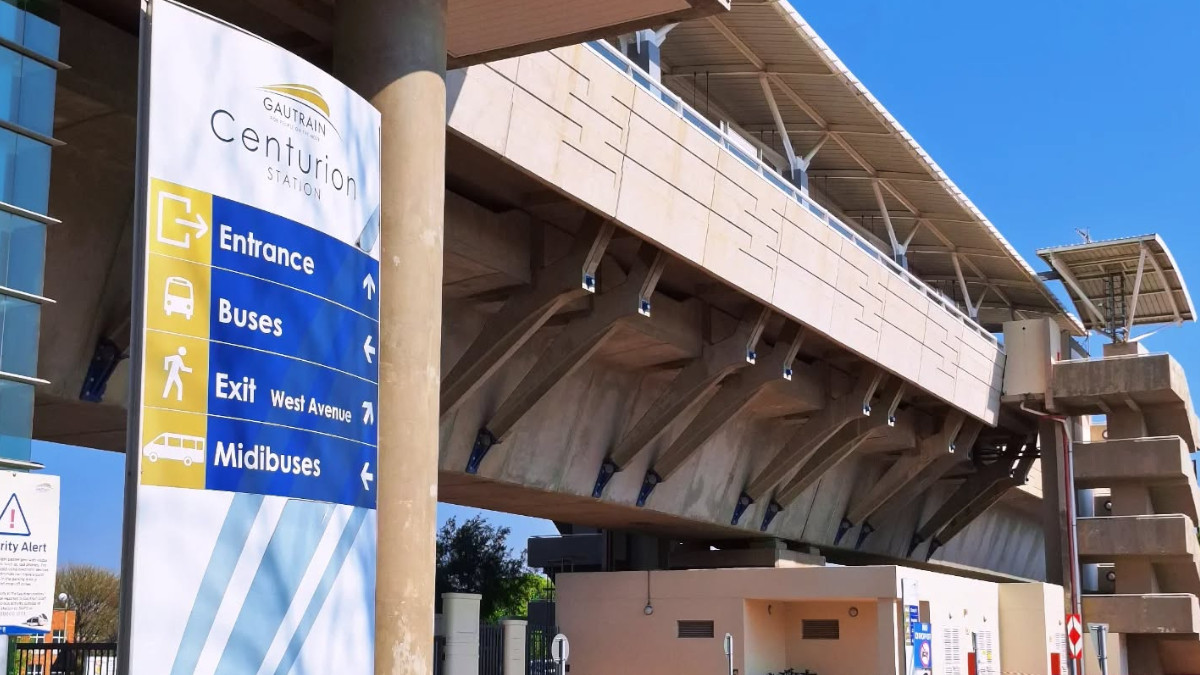
While the Gautrain is incredibly efficient, it does still take far longer for commuters who have to travel to areas far from the stations.
In a perfect morning, I would need to drive 10 minutes, catch a train that took 23 minutes, wait 8 minutes for the bus to leave, sit on the bus for 20 minutes and then walk for 5 minutes to get to work.
I would then have to repeat the process the following evening. This would take my total travel time to 2 hour and 12 minutes per day.
Moreover, I need to perfectly time every single train and bus, as they depart every 10 minutes and 20 minutes, respectively. If one was missed, the waiting time increased.
That said, missing the services is relatively easy, as the Gautrain App allows you to track buses in real-time, which makes it difficult to miss one, and the trains typically run like clockwork.
While driving, I would typically spend around 35 minutes in the car each way, assuming there was no traffic.
As someone who drives against the typical flow of traffic on the highway in the morning and evening, I can usually cover the distance quite quickly.
Overall, while the train is far faster than your typical drive, it is best used by people who work or live next to a station. Hence, the prices near a station are higher.
The Gautrain’s website estimates that I would save 54 minutes per day travelling between Centurion and Rosebank if I just travelled between the two stations.
Work
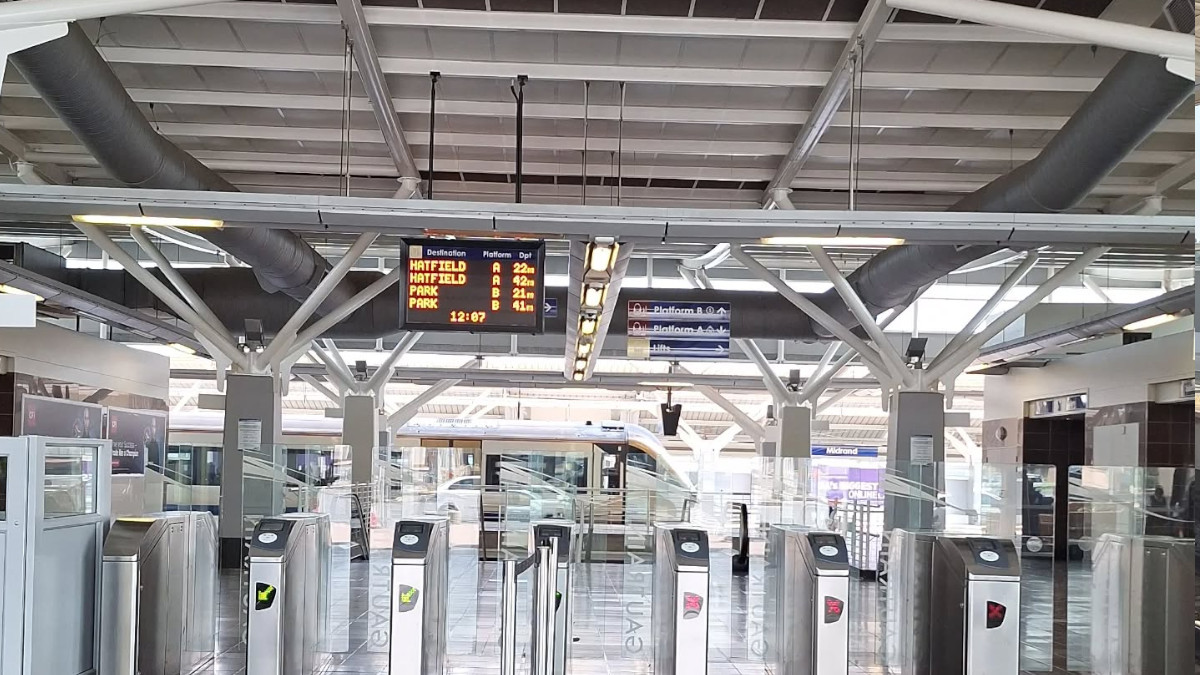
Working is one area where the Gautrain is vastly superior to driving. As I was not driving, I could often work for an extra hour each day on the train.
In my case, this often includes writing emails, drafting articles, and preparing for the day ahead in the morning, and then completing CFA coursework on the way back.
While the Gautrain’s connectivity varies significantly and is particularly poor in the underground stations in Sandton and Rosebank, it was fine for me 90% of the time.
Driving, on the other hand, requires your full attention and offers phone calls as the only avenue to do any work.
Emissions
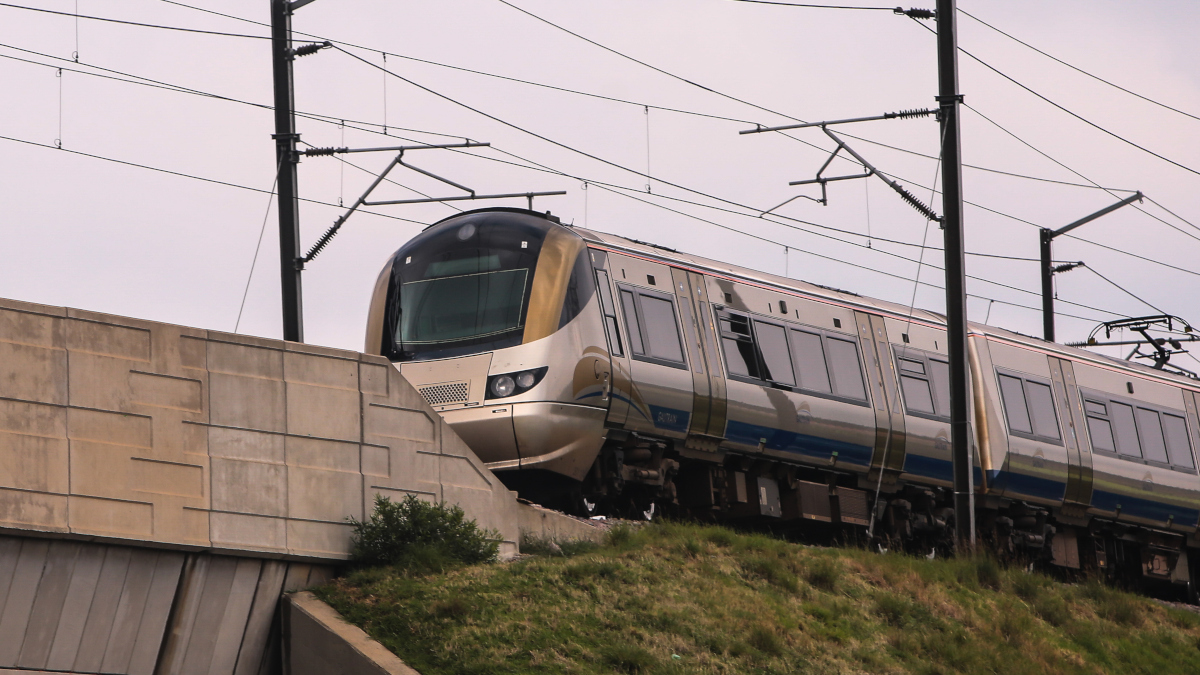
With transportation being one of the worst emitters globally, I am looking for ways to lower my carbon footprint.
Public transport systems significantly lower emissions compared to personal internal combustion engine cars.
Even with my car’s relatively low fuel consumption, the Gautrain’s website estimates that I reduce my CO2 emissions from 9.5 kilos per day to 4.7 kilos per day.
While the use of a bus may increase CO2 emissions, buses are still less environmentally damaging than personal vehicles.
Thoughts
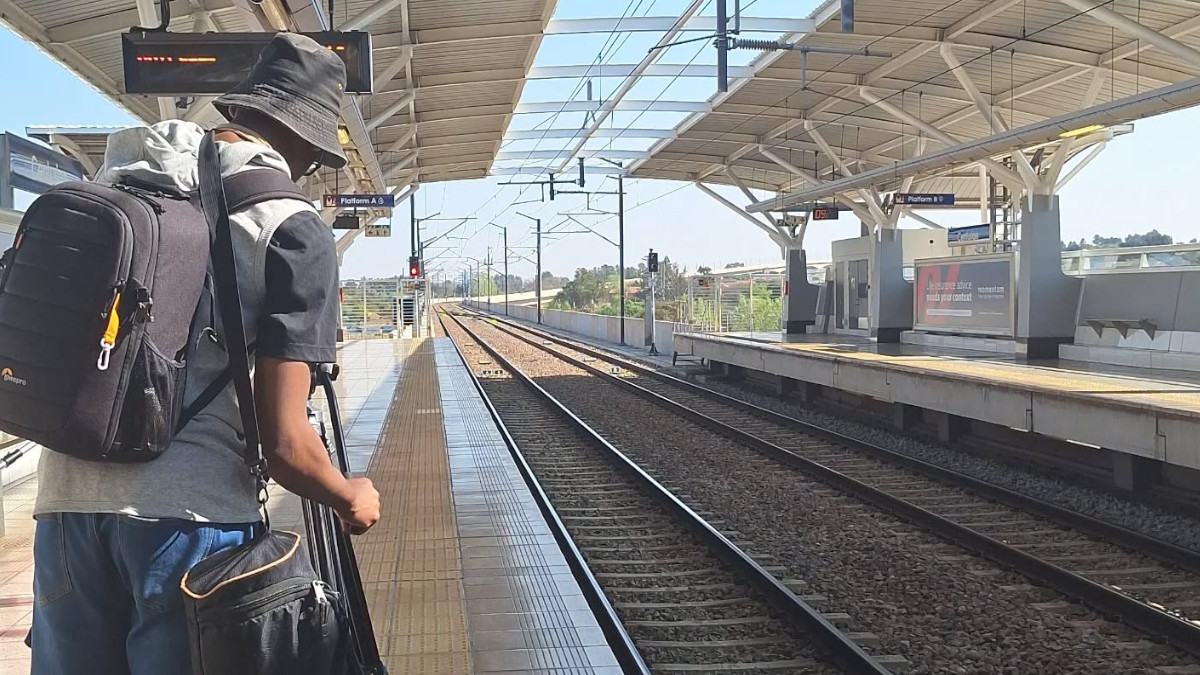
Overall, I thoroughly enjoyed using the Gautrain for my commute, even if there are some cost and time issues.
I enjoyed the communal and friendly environment with fellow passengers and staff. I also had no safety fears, which I often do on South African roads.
The ability to work on the train is also a huge plus, given my heavy workload currently, while I was also happy to lower my emissions.
However, the total time to get from point A to point B and back took its toll, while the overall cost doesn’t make sense for someone who is paying off a car.
My experiance of the Gautrain in numbers can be found below:
| Comparison per Day | Car | Gautrain |
| Cost | R328 | R193 |
| Time | 1hr 10m | 2hr 12m |
| Work+Study | N/A | 2Hr |
| Emissions* | 9.472kg of CO2 | 4.65kg of CO2 |
Other users of the Gautrain will have vastly different experiences, and can check the Gautrain’s website to get a rough idea of the change in their commutes.


















 Loading ...