

Important court ruling affecting marriages in South Africa


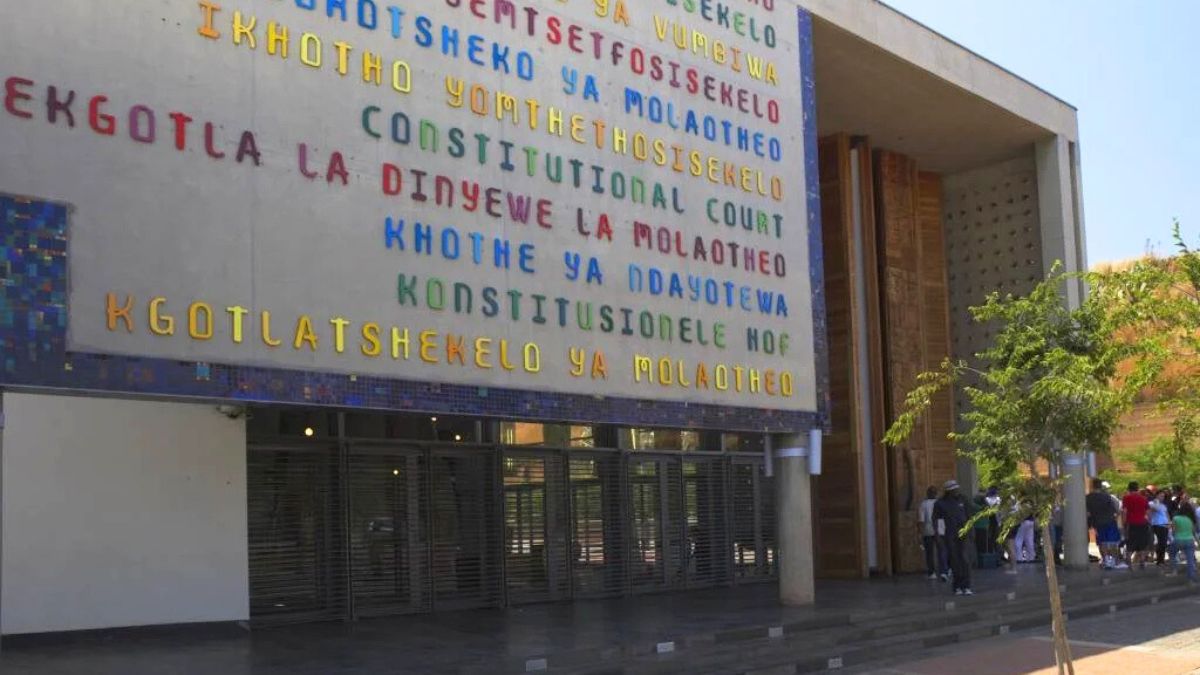
South Africa’s Constitutional Court has handed down a landmark judgment that clarifies how property rights operate when couples move from a customary marriage to a civil marriage.
The judgment, handed down on 21 January 2026, overturned a High Court ruling that had found part of the Recognition of Customary Marriages Act unconstitutional.
While the Constitutional Court ultimately upheld the law, it also made it clear that couples cannot casually change their matrimonial property arrangements once a customary marriage already exists.
The case arose from a divorce dispute between a couple who entered into a customary marriage in 2011. Years later, they decided to formalise their relationship through a civil marriage.
Before doing so, they signed an antenuptial contract stating that their civil marriage would be out of community of property and subject to the accrual system.
They then married civilly in 2021 without dividing the joint estate that existed under their customary marriage.
When the relationship later broke down, one spouse tried to enforce the antenuptial contract. The other argued that the contract was invalid and that the law allowing such agreements was unconstitutional.
The dispute centred on section 10(2) of the Recognition of Customary Marriages Act, which deals with situations where spouses married under customary law later marry each other civilly.
The High Court had ruled that this provision was unconstitutional because it appeared to allow couples to change their matrimonial property system simply by signing a written agreement, without any court oversight.
In the High Court’s view, this could unfairly prejudice economically weaker spouses, particularly women, and amount to an arbitrary deprivation of property.
That ruling had to be confirmed by the Constitutional Court. Writing for the majority, Justice Majiedt said the High Court’s concerns were based on an incorrect reading of the law.
He stressed that the Recognition of Customary Marriages Act was adopted to correct the historical marginalisation of customary marriages and to place them on the same legal footing as civil marriages.
The Court found that section 10(2) cannot be read in isolation. When read together with other provisions in the Act and the Matrimonial Property Act, the law is clear.
Once a customary marriage exists, any change to the matrimonial property regime requires a court application. This process is designed to protect both spouses and creditors and to prevent abuse.
Serious risks for couples who sign antenuptial contracts after a customary marriage
A key finding of the judgment is that a customary marriage does not end when the spouses later enter into a civil marriage with each other.
Instead, the civil marriage absorbs or “subsumes” the customary marriage. In legal terms, there is one continuous marriage that begins under customary law and later becomes governed by civil law. That marriage can be dissolved only by death or divorce.
The Court warned that treating the civil marriage as terminating the customary marriage would undermine the very purpose of the Recognition Act and revive discrimination against customary marriages.
On this interpretation, the antenuptial contract in the case was invalid, not because the law itself was unconstitutional, but because the couple failed to follow the correct legal process.
Since they were already married, they could not change their property regime without court approval.
A minority judgment disagreed with parts of the majority’s reasoning and argued that section 10(2) was intended to allow couples to regulate the consequences of their later civil marriage through an antenuptial contract.
However, even the dissent agreed that the provision was not unconstitutional, meaning the High Court’s ruling could not stand.
Legal expert Lucia Bugana, executive director at NLB Attorneys, said the judgment is significant because it restores the correct interpretation of the Recognition of Customary Marriages Act.
She said the Constitutional Court was right to read the law as a whole rather than focusing on one clause in isolation.
According to Bugana, the Act was specifically designed to recognise customary marriages and to protect women by giving them equal status and property rights.
The judgment confirmed that women do not lose those rights simply because a customary marriage later becomes a civil marriage.
“The customary marriage is not terminated. It continues—only the marriage system changes,” she said.
Bugana also warned that the ruling highlights serious risks for couples who sign antenuptial contracts after a customary marriage already exists.
Such contracts are not valid unless a court approves a change to the matrimonial property system.
While this can clash with cultural practices such as lobola negotiations, she said the legal position is now clear.
The ruling confirmed that customary marriages are fully recognised, continuous, and protected under South African law, and that court oversight is a key safeguard when it comes to changing property rights within a marriage.


















 Loading ...