

Godongwana delivers some good news to taxpayers in South Africa


South African Finance Minister Enoch Godongwana ruled out any major tax changes in next month’s budget, but stressed the importance of keeping fiscal consolidation on track.
“It’s not something we intend — making major, substantial” tax changes in the 25 February budget, Godongwana told Bloomberg Television in an interview at the World Economic Forum in Davos, Switzerland on Friday.
The minister, who will enter a pre-budget quiet period for public comments on 26 January, also highlighted the need to maintain fiscal discipline.
“Fiscal consolidation is a necessary but insufficient condition for growth,” Godongwana said. Without fiscal consolidation, “it’s difficult to achieve all other associated growth-enhancing policies.”
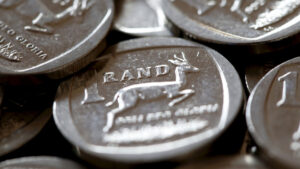
South African assets are enjoying their best performance in years, with the stock market up, bond yields down, and the rand rallying to its strongest levels against the dollar since 2022 as investors take stock of some recent positive developments.
These include a November budget update showing improved public finances, which Godongwana is expected to repeat in the upcoming annual budget, plus his backing for the central bank’s shift to a 3% inflation goal and a rating upgrade by S&P Global Ratings.
The improved outlook, along with surging gold prices, has driven an almost 3% gain in the rand against the dollar this year, making it one of the top-performing currencies tracked by Bloomberg.
South Africa is still in talks with Washington to secure a reduction in the 30% tariff that President Donald Trump has slapped on its exports to the US, the highest in sub-Saharan Africa.
“I’m quite confident we will have a deal with the United States of America on the trade front,” he said, without providing a time frame.
Pressure on SARS

Godongwana’s comments will ease some tensions felt by taxpayers since his medium-term budget policy statement in November 2025, where he warned that an extra R20 billion in tax measures could be coming this year.
These extra taxes are entirely contingent on the success of SARS’s collection efforts.
If the South African Revenue Service fails to collect the additional R20 billion to R50 billion it has targeted for this financial year, Treasury would be forced to address the shortfall through taxes.
Positively, SARS announced in late 2025 that it had collected higher-than-anticipated revenue for the current financial year, exceeding R18 billion.
However, this surplus came from various sources, including higher corporate income tax, the increased fuel levy, and the National Treasury’s 2025 income tax measures, such as not adjusting tax brackets.
There were also higher PAYE collections from Two-Pot withdrawals, as taxpayers sacrificed their retirement savings for an immediate financial boost.
SARS’s data for the first six months of the year showed that debt collections—where it planned to find the additional R20 billion—remained below May 2025 estimates, undershooting by around R700 million.
Another caveat is that the finance minister said only that there are plans to make “substantial” tax changes. This does not mean tax measures are completely off the table.
Tax experts and economists have noted that, despite South African taxpayers being overtaxed and stretched beyond the Laffer Curve, the government could still push for more tax from various sources.
This includes another possible hike to the fuel levy, or again not adjusting tax brackets for inflation (ie, bracket creep).
(With Bloomberg)















 Loading ...