

Rand should be R9 to the dollar


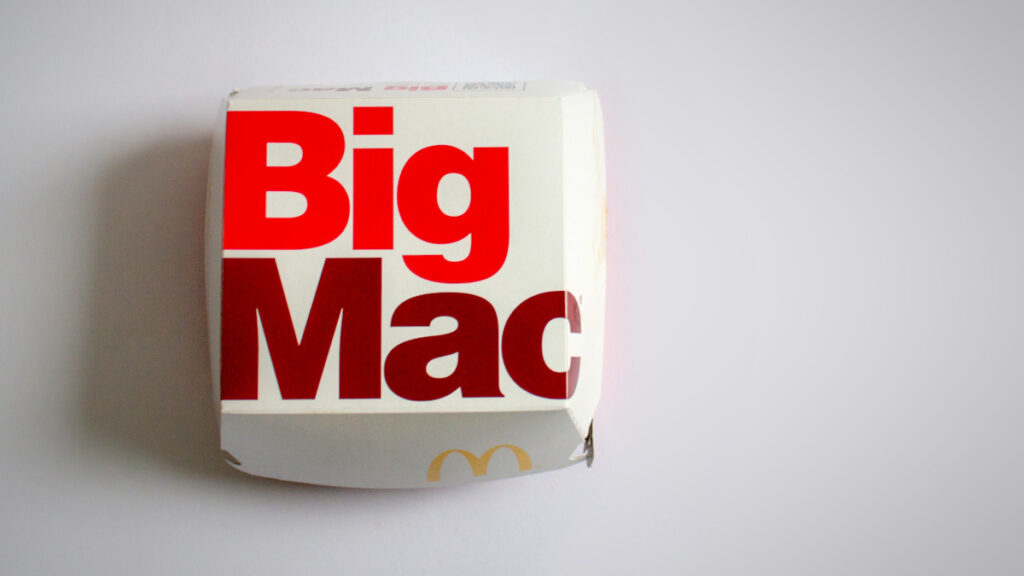
South Africa’s rand is currently trading near or within the range many economists consider its “fair value”, but the latest Big Max Index shows it is still undervalued and could be even stronger.
On Tuesday (3 February), the rand pulled back below R16.00 to the dollar following a sharp turn in its fortunes on a surging dollar.
The local unit has hit some of its strongest levels in three and a half years against the greenback, owing not only to dollar weakness but also to a swing in global sentiment toward South Africa’s economy.
While the ups and downs of the dollar are beyond South Africa’s control, a panel of economists has argued that the country’s reform agenda, which is picking up pace, should be cause for local positivity to continue.
Analysts have pegged the rand’s fair value between R13/$ and R16/$, with broader estimates extending this to R12/$-R18/$.
Nevertheless, economists believe the rand should be trading around R15.60/$, reflecting its fair value.
This has been broadly supported by the January 2026 edition of the Big Mac Index, which shows that, on a purchasing power parity basis (PPP), the rand is undervalued and should be trading much stronger against the dollar.
Using its anchor for PPP—the Big Mac—the rand should be closer to R9.00 to the dollar on a direct PPP basis, or around R12.50/$ when accounting for GDP.
The Big Mac Index is an initiative created by The Economist that aims to measure whether currencies are priced at their “correct” level. The Index is updated twice a year—in January and July.
It is based on purchasing power parity—the notion that, in the long run, exchange rates should move towards the rate that would equalise the prices of an identical basket of goods and services in any two countries.
The Big Mac is selected for comparison because the popular fast-food meal is widely available worldwide and remains fairly consistent in price; however, it is by no means an exact measure.
One of the Big Mac index’s biggest flaws is that it doesn’t take the full picture into account when evaluating currency differences.
Experts have argued that because of PPP, the cost of producing a Big Mac is typically lower in poorer countries, thereby skewing the data.
To account for this, The Economist produces a parallel index that factors in a country’s GDP per capita to draw a more accurate conclusion.
The ‘real’ value of the rand in 2026
Using the ‘raw’ direct conversion data, a Big Mac costs R54.90 in South Africa and US$6.12 in the United States.
The implied exchange rate is therefore R8.97/$.
The difference between this and the actual exchange rate, R16.35 at the time The Economist did the study, suggests the South African rand is 45.1% undervalued.
This would make the rand the 10th most undervalued currency among the countries covered in the study. Notably, this is far higher up the list than when the rand was the 5th most undervalued in 2025 (implying it is trading closer to its fair value).

When accounting for GDP differences, a Big Mac costs 45.1% less in South Africa (US$3.36) than in the United States (US$6.12) at market exchange rates.
Based on differences in GDP per person, The Economist noted that a Big Mac should cost 23.4% less.
This suggests the South African rand is 28.4% undervalued, implying an exchange rate of R12.52/$, aligning with the broader “fair value” range put forward by analysts.
Adjusted for GDP, the rand becomes the 12th most undervalued currency against the dollar.

It should be noted that a currency can be undervalued for a number of reasons, and that PPP is a rudimentary and “blunt” comparison.
A currency’s value is driven by economic fundamentals and sentiment about its home country’s direction.
In South Africa’s case, while commodity markets are healthy, the economy is on a growth trajectory, and reforms are taking shape, the country’s GDP has been stagnant for over a decade, and unemployment remains critically high.
If the Government of National Unity can survive a politically volatile year ahead and maintain positive momentum over time, the rand may shed some of its risk premium and reflect its ‘true’ value.
















 Loading ...