

Iconic 130-year-old retailer that disappeared from shopping malls across South Africa


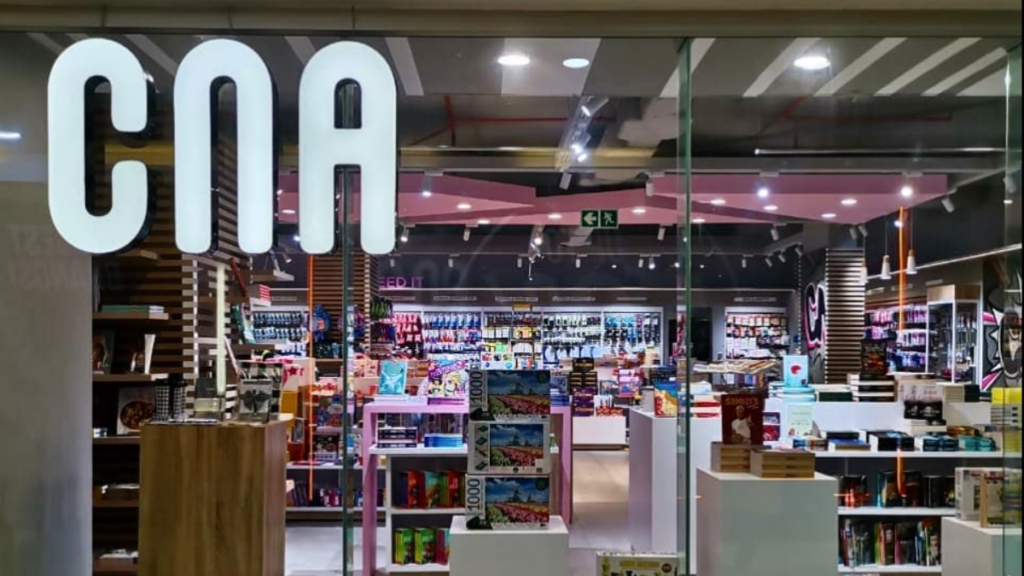
South Africa’s 130-year-old stationery, books, and gifts retailer Central News Agency, well known as CNA, has virtually ceased to exist, after being placed in business rescue in 2021.
The stationery retailer, which lived through both world wars, was placed into business rescue after 78% of its creditors, including retrenched staff, suppliers and landlords, voted to save the chain nearly five years ago.
According to BusinessDay, CNA faced intense competition from retailers such as the Australian chain Typo and other online retailers that package and sell stationery, weakening consumer demand, which resulted in the chain failing to sell stock. Additional strain was caused by the COVID-19 pandemic.
The retailer owed R264 million to creditors, including former staff who voted to keep the business going.
Under business rescue, more than 80 non-profitable stores were closed, the head office was shut down, and management salaries were cut by more than 40%.
Business rescue provides a company with temporary relief from debts and repayments, allowing business rescue practitioners to take complete control of management.
The practitioners evaluate whether the business can be restructured for survival. If restructuring isn’t feasible, their goal is to deliver a better outcome for the company’s creditors and shareholders than what would result from an immediate liquidation of the company.
“CNA was sold in terms of an adopted business rescue plan to a purchaser consortium that included the Everland Group,” said Business Rescue Partner representative Stacey Roux.
“Approximately two years after implementation of the business rescue plan, there were press reports of a shareholder dispute at Everland level and the closure of certain CNA stores,” she said.
“It has also come to our attention that Everland is in liquidation and that Icon Insolvency Practitioners (Pretoria) are administering that liquidation process.”
In 2021, CNA’s footprint was planned to be reduced under the business rescue plan, from 163 to 55 stores nationwide.
The lifecycle of CNA

CNA was established in 1896 by business partners Michael Davis and Albert Lindbergh in Johannesburg, which was primarily a mining town at the time.
Initially, the company focused on selling and distributing newspapers, including the Rand Daily Mail and Sunday Times. The first newspapers offered by CNA were The Star, The Standard, and Diggers News.
In 1901, CNA started opening bookstores at railway stations across what was still called “the Cape,” with its first suburban branch in Jeppestown, Johannesburg.
In 1902, the Argus and the Cape Times entered into publishing contracts with CNA, leading to significant growth for the retailer, which was floated as a public company by 1903.
In 1903, CNA was listed on the Johannesburg Stock Exchange (JSE), and by 1904, it had stores across the country, continuing to expand amid high demand for news during World War 1.
CNA became the sole agent for 92% of all British newspapers distributed in South Africa, as well as some American publications, by 1932.
During World War two, CNA’s London suppliers were bombed in a blitz. After the war, the retailer expanded into Zimbabwe (formerly Rhodesia), opening its range to a more diverse audience in 1951.
Gallo Africa, the company that bought the Nu Metro cinema chain, merged with CNA in 1983.
By 1992, Nu Metro became wholly owned by Gallo Africa. By 1994, the CNA base had expanded to 316 stores nationwide.
Edcon, a South African retail company that formerly owned Edgars and Jet, bought CNA in 2002 for R130 million.
At the time, Edcon took over approximately 137 CNA stores, and expected CNA’s turnover to be around R800 million in the first full trading year.
In 2020, Edcon sold 167 CNA stores, with the brand and trademarks, to a consortium led by Astoria Investments.
In 2021, CNA was placed in business rescue, and parts of the company, including 60 stores, were sold to Black Mountain Investment Management Group for R2 million.


















 Loading ...