

Great news about interest rate cuts in South Africa


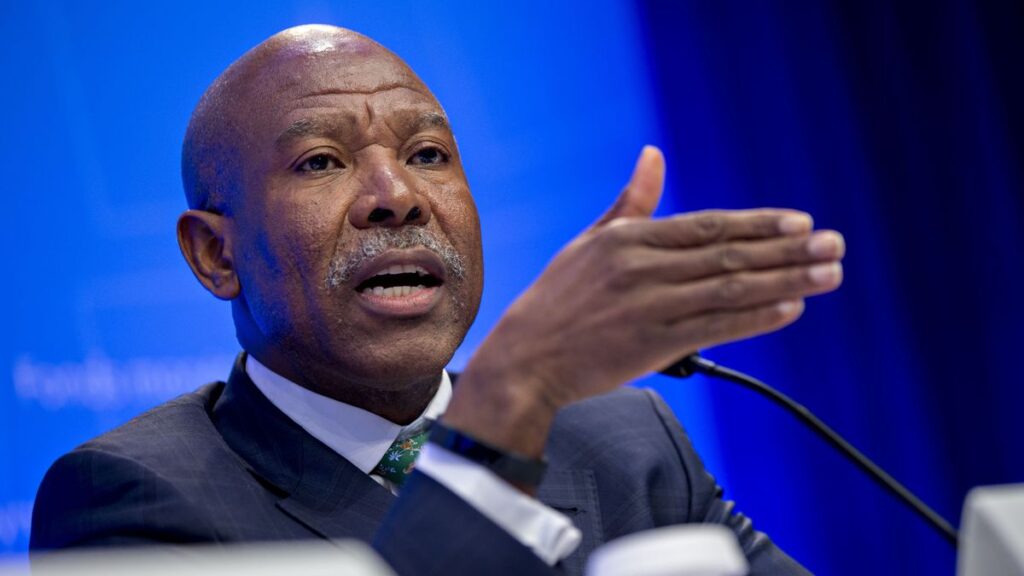
South Africa’s consumer inflation has dipped to 3.5% in January 2026, down from the 3.6% recorded in December.
This lends credence to the South African Reserve Bank’s (SARB) view that inflation has peaked in South Africa and that the country will now gradually move towards the new 3.0% target.
It also means conditions are supportive of interest rate cuts continuing, with 75 basis points of cuts expected in 2026 and even more through 2027 and 2028.
According to the latest data from Stats SA, the CPI rose to 3.5% in January, driven by stable food inflation and lower fuel prices. T
The monthly change in CPI was 0.2%, the same as December’s reading. Food inflation—one of the biggest drivers of inflation—remained flat at 4.4% for a third consecutive month.
The annual rate for cereal products slowed significantly in January, declining to 0.6% from 2.1% in December.
White rice recorded a rate of -11.0%, representing an eleventh consecutive month of deflation. Maize meal inflation declined notably from 9.5% in December to 2.6% in January.
The rate for oils & fats softened to 4.0% from 4.6% in December. Olive oil is 7.9% and butter 0.7% cheaper than a year ago.
The milk, other dairy products & eggs category registered -0.5%, higher than December’s -1.1%. Fresh full-cream milk (-1.4%), fresh low-fat milk (-1.6%) and eggs (-7.6%) contributed to the deflationary trend.
Eggs are becoming more affordable. The average price for a tray of six eggs was R22.90 in January, down from R24.51 in January 2025 and well below the peak of R25.85 recorded in December 2023.
However, meat prices continue to bring pressure to the basket, with another month of double-digit increases. Meat prices are rising due to the Foot and Mouth Disease outbreak.
The annual rate for meat accelerated further to 13.5% from December’s 12.6%. This is the highest print for the category since December 2017 (13.9%).
Three beef products recorded the highest annual rates of all 391 products in the CPI basket.
These were beef steak (31.2%), stewing beef (30.3%) and beef mince (28.0%). More affordable beef products were not immune to sharper price increases, with the rate for beef offal accelerating to 17.2% from 10.5% in December. Pork also rose significantly, to 19.5% from 11.5%.
The fuel index decreased by 3.7% in the 12 months to January. The monthly change for petrol was -3.1%, and for diesel, -5.4%.
The price of inland 95-octane petrol was R20.75 per litre in January, the lowest in almost four years, that is since February 2022 (R20.14).
Interest rate cuts to follow

The drop in inflation, even if slight, is a positive signal for the South African Reserve Bank and likely to feed into a more dovish stance on interest rates.
At the central bank’s first meeting for the year, the Monetary Policy Committee (MPC) voted four to two to keep interest rates on hold.
Two members of the committee wanted a 25 basis-point cut, but the overall messaging was to take a ‘wait-and-see’ approach to assess the impact of previous cuts and keep an eye on inflation.
Reserve Bank Governor Lesetja Kganyago noted that inflation risks around the Foot and Mouth Disease outbreak were a significant concern.
He also flagged the coming electricity price increases from Eskom, which will hit households in April and July 2026.
However, he was confident that, despite these risks, inflation had peaked in December at 3.6%. The latest data confirms this view, at least for January.
Given this confirmation, the expectation among most economists that the SARB will cut interest rates in March 2026 is also gaining support.
Economists anticipate that the SARB will cut rates at least two more times in 2026, at 25 basis points each, with a possibility of another 25 basis point cut if the inflation trajectory holds.
As South Africa moves towards and stabilises around the 3.0% inflation target—which is likely to happen sooner than anticipated—more cuts could follow.










 Loading ...