

Work-from-home could be making a big comeback in South Africa



While a COVID-like lockdown is not currently on the cards for South Africa, work-from-home may become the most viable solution to address record fuel price hikes.
This is according to Investec Chief Economist Annabel Bishop, who noted that it may become a broader short-term response to increased energy risks as the United States’ war in the Middle East drags on.
In an economic note on Monday, Bishop said that market volatility has grown since the US and Israel launched their attacks on Iran at the end of February.
On 28 February, the United States and Israel launched military action against Iran under the banner of “Operation Epic Fury”.
After igniting a fresh conflict in the region, tensions have escalated with continued bombardments from both sides, and the Strait of Hormuz—a critical path for oil shipments—has effectively been shut down.
Currently trading at R17.21 to the dollar, the rand has depreciated 7.00% against the greenback since 27 February—a day before the US attacks.
According to Bishop, while markets had hoped for a short conflict, there are concerns that the war may get worse.
“Financial markets are volatile, and expectations change rapidly, as concerns over the war in the Middle East have now intensified, and interest rate expectations switched to hikes instead of cuts,” she noted.
The rand weakens as risk-off rises, Bishop noted. However, she added that market volatility is significantly lower than the impact of US liberation day tariffs in April 2025 (which were delayed to August).
The economist added that the biggest impact on market volatility in recent years was the lockdowns seen during the COVID-19 pandemic.
These had a similar market impact to that experienced during the global financial crisis of 2008/2009.
However, even with a smaller impact on market volatility, the current war in the Middle East is having a profound effect on global economies, particularly on fuel prices.
Worries that the war in the Middle East is worsening are reflected in oil prices, which are back above US$116 a barrel.
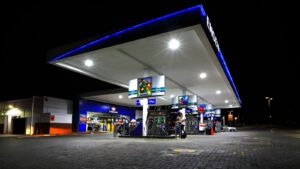
The failure to reopen the Strait of Hormuz has sent fuel prices skyrocketing, with a R10/litre hike in diesel expected to be announced for April and a R6/litre hike in petrol.
As a result, consumers and industry are facing extreme price pressure, with fuel suppliers and retailers already experiencing long queues and sporadic shortages.
Policymakers, whether in government or in corporations and businesses, may turn to alternatives to soften the impact.
Work-from-home ‘lockdown’ in South Africa

Bishop said there is currently no expectation of a COVID-type lockdown on economic activity to manage fuel demand, but an optional work-from-home environment is likely to develop.
“On a lengthening war, work from home is likely to be encouraged where possible,” she said.
“The optional work from home environment, at least initially, on a longer war [would] reduce demand for fuel from commuters, while higher fuel prices will also reduce travel and so demand.”
The government has already floated work-from-home as a possible way to offset upcoming fuel price hikes—though it stressed that it was a broad suggestion rather than an official policy stance.
Bishop said that fuel shortages are also a key risk, and the International Energy Agency (IEA) has recommended measures to reduce fuel demand.
This includes working from home where possible, alternate vehicle access, reducing highway speed and reducing air travel.
“Market concerns run over the energy intensity of economies, and South Africa is no different, with its supply chain diesel-intensive,” she said.
While a strengthening in economic activity was expected for this year, markedly higher fuel prices place this at risk.












 Loading ...