

Calm before the storm in South Africa


South Africa’s economy lifted in March despite the global impact of the war in the Middle East, but South Africa is not out of the woods.
This is according to the PayInc Economic Index, which measures the value of electronic transactions processed through the PayInc platform.
“The PayInc Economic Index increased by 0.9% on a monthly basis to reach an index level of 104.7 in March,” said Shergeran Naidoo, Head of Stakeholder Engagements at PayInc.
“At this level, the index is 4.6% above a year ago.” The latest readings point to strong momentum for the first quarter of 2026.
Elize Kruger, Independent Economist, said that the cumulative impact of the tailwinds supporting the economy since 2025 has lifted economic activity.
“These include moderating inflation, real wage increases, interest rate cuts and improved confidence levels,” said Kruger.
Other data points include new car sales, which grew 17.3% year-over-year in March 2026, and the S&P Global Purchasing Managers’ Index (PMI) saw its first upturn in business conditions in six months.
The Absa PMI also showed a marginal improvement in business activity in the manufacturing sector, though it remains below neutral levels.
While the economic performance is encouraging, it is the calm before the storm, with the Iran war disrupting the economic scenario envisaged for South Africa and the world.
South Africa was widely expected to turn the corner at the start of the year following years of subdued growth, but the US and Israel’s attacks on Iran changed the global outlook.
The International Monetary Fund, in its latest World Economic Outlook report, downgraded its global economic growth by 0.2 percentage points to 3.1% due to the war.
For South Africa, the IMF downgraded South Africa’s growth to only 1.0% in 2026, slicing off 0.4 percentage points.
Pain at the pumps

While the full extent of the war is hard to predict, given that no one knows how long the conflict will last, it has become clear that there will be ripple effects for months to come, even if it’s short-lived.
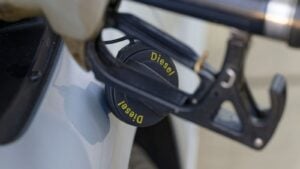
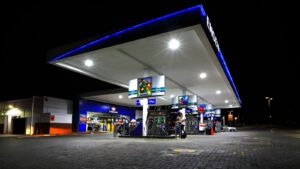
Consumers were already hit with R3, and R7 hit at the pumps for petrol and diesel, respectively, in April, despite the government lowering the fuel levy by R3.
“At least two more months of increases are likely, unless notable progress is made to end the conflict on a meaningful, sustainable basis,” said Kruger.
Current underrecoveries for May are expected to lead to further R3 increases in petrol and R9 increases in diesel.
“It will be impossible for companies to absorb the extent of these projected fuel price increases that will not only cause a spike in consumer inflation but also likely trigger a widespread upward adjustment in prices across the economy,” said Kruger.
Secondary impacts from companies are already evident in the transport sector. Due to a sharp increase in jet fuel prices, many airlines have introduced temporary surcharges in March.
Security companies have also increased their levies, while those who rely on plastic, such as the maker of Jojo Tanks, have also raised prices.
Agricultural organisations have warned that the spikes in both diesel and fertiliser prices will soon be reflected in food prices. It is expected that food prices will be further impacted by transportation costs.












 Loading ...