

New type of Pick n Pay store launches in South Africa, and Ramaphosa set for NHI battle


The South African rand edged up on Friday, as signs emerged of possible peace talks between the U.S. and Iran that could ease Middle East tensions, while domestically focused traders looked ahead to month-end data for clues on the health of Africa’s largest economy.
The rand was at 16.58 against the dollar by 1304 GMT, up about 0.4% from its previous close.
Oil prices slipped in volatile trade on Friday after three Pakistani sources said Iranian Foreign Minister Abbas Araqchi was expected to arrive in Islamabad on Friday night, raising hopes that peace talks between Iran and the United States could resume.
The dollar softened but was still headed for its first weekly gain in nearly a month as investors remained nervous about Middle East tensions.
While Lebanon and Israel extended their ceasefire for three weeks ahead of its expiration on Sunday, Iran showed off its control over the Strait of Hormuz by releasing footage of its commandos storming a huge cargo ship, leaving the timing of the reopening of the world’s most important shipping corridor uncertain and keeping oil prices elevated.
South Africa is a net importer of energy, leaving it highly exposed to swings in global prices.
“The biggest risk right now is a weekend surprise; geopolitical shocks have a habit of dropping on Saturdays and Sundays, and traders are nervous heading into the close,” said Wichard Cilliers, head of market risk at TreasuryONE.
“The situation could unravel quickly if diplomacy fails completely,” Cilliers added.
Domestic investor focus next week will be on South Africa’s business cycle leading indicator, producer inflation numbers, money supply and private sector credit data, trade balance and budget balance figures.
On the Johannesburg Stock Exchange, the Top-40 index was up 0.6%. South Africa’s benchmark 2035 government bond was weaker, with the yield rising 4 basis points to 8.665%.
As of Saturday, 25 April, the rand is trading at R16.50 to the dollar, R22.33 to the pound, and R19.37 to the euro. Gold is currently valued at $4,709.27 per ounce, while oil prices have risen to $105.33 per barrel. [Reuters]
5 important things happening in South Africa today

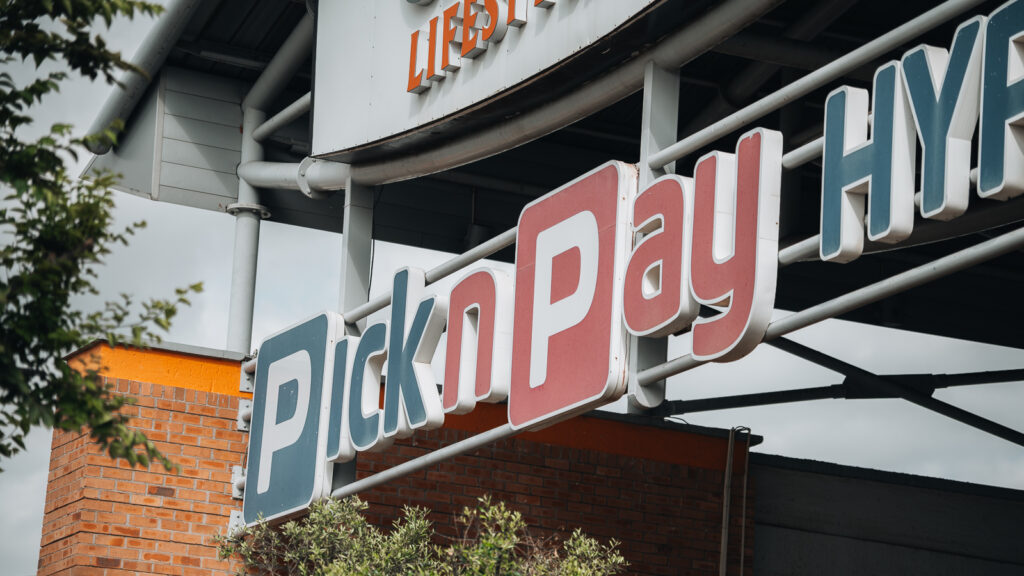
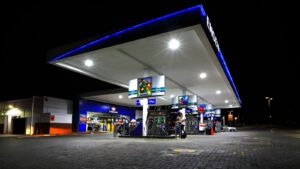
New Pick n Pay stores: Pick n Pay is testing a new type of convenience store format, Pick n Pay Go, in South Africa, following an initial launch in partnership with Vivo Energy in Botswana. The stores aim to offer shoppers on-the-go access to everyday essentials. Unlike Botswana, where Pick n Pay Go operates at petrol forecourts, the new pilot will be in high-traffic urban locations. [Business Times]
NHI battle incoming: President Cyril Ramaphosa is lining up to speak at the Constitutional Court over the National Health Insurance (NHI) bill, which he believes will redress South Africa’s unequal healthcare system. The opposition to the case is led by the Board of Healthcare Funders (BHF), which argues that South Africa lacks the funds. The matter will be before the court from the 5th to the 7th of May 2026. [Sunday Times]
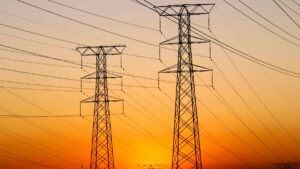
Eskom CEO thanks private power suppliers: Eskom CEO Dan Marokane says that the utility appreciates any power generation that has contributed to the stability of the electricity grid, with no load shedding expected in winter. However, the CEO did say that Eskom will remain the cornerstone of South Africa’s energy security in the future. [MyBroadband]
Anglo American close to sale: Anglo American, whose roots trace back to South Africa, has three potential buyers for its Australian steelmaking coal business, including Stanmore Resources, Mitsubishi, and PT Buma Internasional. This comes after Peabody walked away from a $3.8 billion pact to buy the business last year after a fire at the Moranbah North mine, which roughly halved the deal’s value. [Bloomberg]
Wage hike for government employees: The Department of Public Service and Administration (DPSA) announced a 4% pay hike for public servants, effective 1 April 2026. The 4% increase follows a 5.5% increase in 2025/26, with the increase for 2027/28 based on the same CPI-projected rate as this year, limited to the same 4%-6% range. [BusinessTech]











 Loading ...