

South Africans warned to think twice before storing petrol or diesel at home to save money


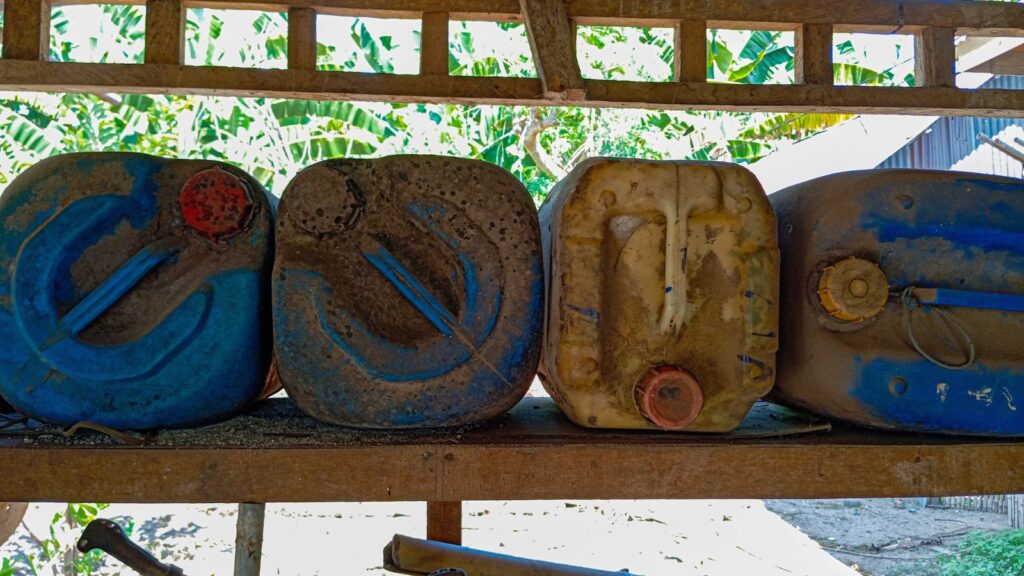
South Africans considering stockpiling petrol or diesel at home amid rising fuel prices have been warned to think carefully about the risks involved.
Insurance experts have stressed that improper storage could lead to devastating fires and rejected insurance claims.
South African motorists have been hit hard for a second month in May as the tensions continue in the Middle East.
This month, petrol increased by R3.27 per litre, pushing the inland petrol price to R26.63 per litre, while diesel jumped by R5.27 per litre.
These massive increases have pushed many South Africans to consider storing additional fuel at home to save money by avoiding the need to fill up and pay more as prices continue to escalate.
Speaking in an interview with 702 Drive, Christelle Colman, CEO and Founder of Ami Underwriting Managers, said that there has been a noticeable discussion on community social media groups about people storing extra fuel at home.
However, Colman said the trend immediately raised concerns about future insurance claims linked to fires caused by improperly stored fuel.
“It made me think about these future claims that are going to start coming our way, where it is found that perhaps the regulations were not met, and fires resulted in claims possibly not being paid out,” she said.
She added that this extended beyond ordinary households to farmers and smallholding owners, many of whom may not fully appreciate the increased fire risk.
“They stockpile it in their private homes, not possibly thinking about the increased risk of fire as a result of that,” she said.
Colman stressed that safety should always come first, even before concerns about insurance claims.
“If you are going to store fuel because you want to save some money or you’re worried you won’t have enough fuel to keep your small business going, just be aware of the fact that there are regulations around storing these containers of fuel,” she said.
Understand that there are regulations

Colman warned that policyholders in South Africa could also face complications with insurers if regulations are ignored.
“You could possibly end up with a problem on an insurance claim, but that should be second after you worry about your own personal safety and that of your family,” she said.
Colman urged South Africans to use only approved fuel containers and avoid unsafe and cheap alternatives.
“The South African National Standard says that these containers must be clearly labelled, must be kept closed, and must be maintained to prevent leaks and vapour,” she explained.
“Don’t use old soft drink bottles and paint buckets or things that are not a safe place to keep this combustible property in.”
Instead, she advised consumers to search for SANS-approved fuel storage containers and ensure they comply with municipal bylaws governing fuel storage limits on residential properties.
“Rather be safe and make sure that you get the correct container if you are going to do it,” she said.
Colman also encouraged homeowners to speak directly with their insurers or brokers before storing significant amounts of fuel.
“My message really is to say ask your insurance company, ask your broker, what is allowed, and then comply with that.” She also advised consumers to get confirmation in writing.
Colman added that some filling stations had recently imposed their own caps on fuel sales, although she was uncertain whether broader legal restrictions existed.
However, she emphasised that homeowners themselves are responsible for understanding what is legally and safely allowed on their property.
She also raised concerns about the transportation of fuel, questioning how people intended to move large quantities safely.
“At the end of the day, make sure, be aware, and understand that there are regulations that you have to comply with, that your insurance policy will expect you to do certain things.”
Otherwise, she warned, consumers could find themselves facing rejected claims after a disaster.
“Don’t get caught in a situation where a claim isn’t paid and then you’re just unhappy with the insurance company at the end of the day,” Colman said.


















 Loading ...