

Over 700 government employees in one department are millionaires – earning R5 million each



The government spends R3.6 billion a year to pay and maintain 722 brigadiers and generals in the South African Police Service (SAPS), which works out to an average of R4.99 million each.
This was revealed by Ian Cameron, chairperson of Parliament’s Portfolio Committee on Police, who argued that the senior management structure of the SAPS has become excessively bloated.
Cameron said the figures came from recent parliamentary questions that requested a breakdown of SAPS’ senior ranks, including brigadiers, major generals, lieutenant generals and the national commissioner.
“In total, the South African Police Service has a number of 722 brigadiers and generals,” he said in an interview with BizNews.
“The long and the short of it is that we spend on those senior officers nearly R3.6 billion to pay them and to maintain them.”
He argued that South Africans should assess whether the country is receiving value for money from such a large and expensive senior leadership structure.
“I like to compare it to some kind of a vehicle. Let’s say we’re paying for the top-of-the-range 4×4 of some kind, and we are receiving the service of a broken-down sedan,” Cameron said.
Cameron contrasted the cost of senior management with the challenges experienced by frontline police officers, saying many units continue to face severe equipment shortages.
He explained that the Cape Town Flying Squad is operating at only about 40% vehicle capacity, while officers in the Cape Flats have been without R5 rifles for several years and were expected to confront extortion gangs armed with AK-47s using only old pistols.
He also pointed to the backlog in ballistic evidence and nearly 300,000 outstanding DNA cases as further examples of SAPS’ operational failures. “So one must wonder exactly why we are paying R3.6 billion,” he said.
Cameron also questioned whether all of the senior officers had earned their positions, citing concerns over appointments made without the necessary policing experience or qualifications.
Concerns about oversight
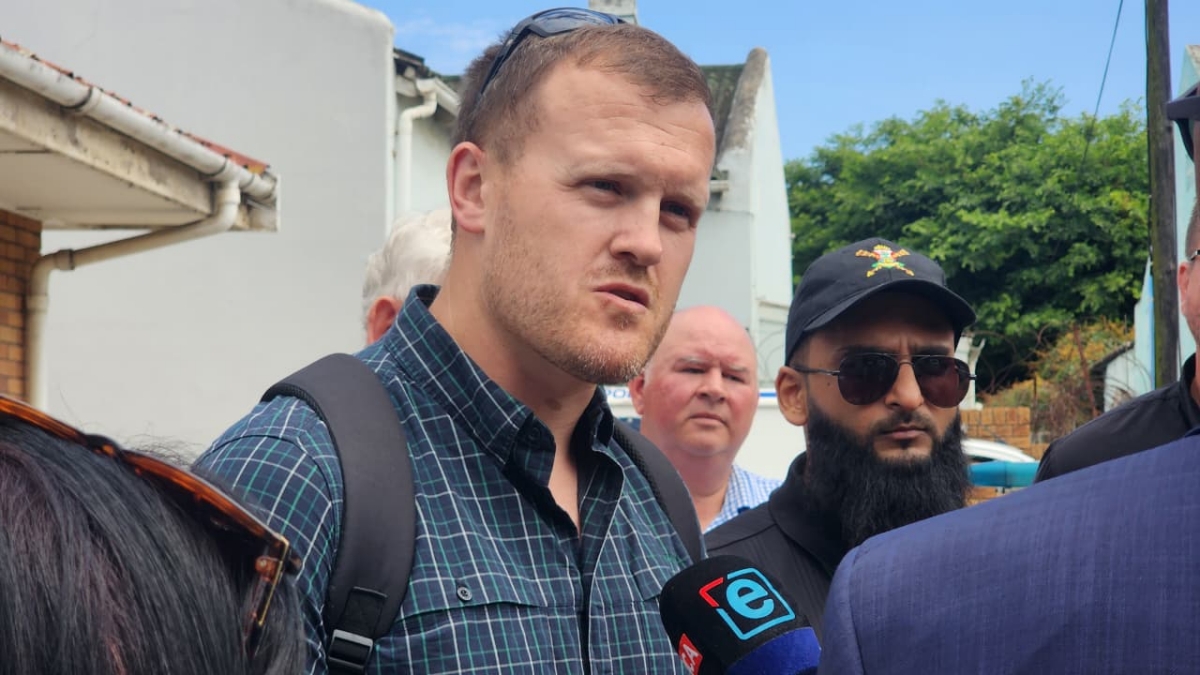
He also highlighted what he described as the concentration of senior officers at headquarters rather than in operational policing.
“Out of those 722 brigadiers and generals, almost 400 of them are stationed at national head office, and another 166 are at provincial head offices,” he said.
“Very few of the senior officers are on the ground level. We must question what they’re actually doing if we see the disarray and what’s happening on ground level”
Cameron said SAPS currently has one full general, National Commissioner General Fannie Masemola, alongside 20 lieutenant generals, 123 major generals and 578 brigadiers.
“In my opinion, it is absurd. It is a totally bloated structure. It just makes no sense whatsoever,” he said.
He added that the slight decline in brigadier numbers since 2018 was likely the result of retirements rather than meaningful restructuring.
Cameron also raised concerns about oversight and pointed to evidence presented at the Madlanga Commission that only five of 823 senior SAPS officers underwent lifestyle audits during the 2024/25 financial year.
“One must wonder whether it’s not intentional, because 0.6% of your senior cohort undergoing lifestyle audits tells me more of someone being complicit than someone actually wanting to do decent lifestyle audits.”
To address the problems, Cameron said SAPS should begin with comprehensive integrity and competency audits of its senior leadership.
“I would start with a broader integrity audit, where you include both lifestyle and a skills audit,” he said.
“You determine who is giving you return on investment, and once you’ve cleaned up that part of the structure, a lot more will siphon through.”
While he acknowledged that reform would take time, Cameron said removing underperforming or unsuitable senior officials was essential to restoring the effectiveness of South Africa’s police service.















 Loading ...