

Two-strike warning for directors in South Africa after new laws come into effect


Sections in the Companies Amendment Act related to executive remuneration have come into effect, introducing a ‘two-strike’ rule for directors serving on remuneration committees.
Sections related to remuneration in the Companies Amendment Act have come into effect, which place stricter requirements on remuneration committees.
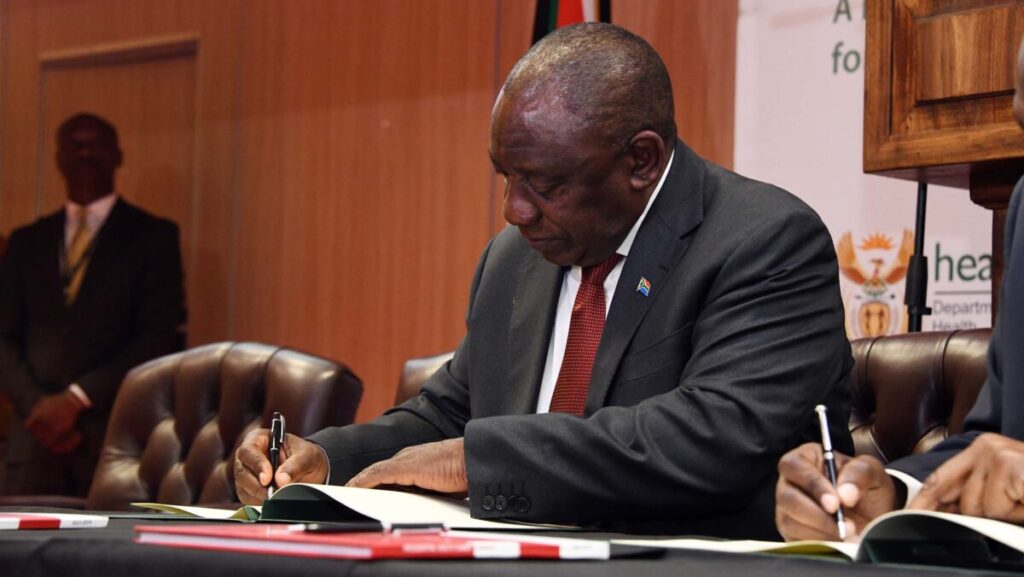
The Companies Act was signed into law in 2024 by President Cyril Ramaphosa, with sections 30A and 30B of the Act coming into effect this year.
The new sections relate to executive remuneration at listed and state-owned companies. The laws will seek to understand how much more executives are paid compared to the lowest-paid employees at a company.
André de Lange, Yaniv Kleitman, and Sasha Schermers from Cliffe Dekker Hofmeyr said that there have been recurring practical issues and anomalies since the commencement of the law.
One major change is in Section 30B(2), which requires companies to prepare an annual remuneration report for presentation and approval by ordinary resolution at the AGM.
Section 30B(4) outlines the consequences if the remuneration report is not approved. The remuneration committee is responsible for allaying shareholder concerns.
The remuneration committee will need to present an explanation in which shareholders’ concerns have been taken into account at the following year’s AGM.
Serious consequences arise if the remuneration report for the previous financial year is not approved at the following AGM.
The non-executive directors of the committee can then continue to serve as directors, provided that they have successfully stood for re-election at that AGM.
However, they will not be eligible to serve on the committee for a period of two years thereafter.
The experts said that the rule regarding stepping down as directors, “strike two”, could be problematic if the company wants to retain those directors on the board, not including the remuneration committee.
“When distributing that subsequent AGM notice, the company will not know whether those directors will be required to step down for re-election at that very AGM,” the Cliffe Dekker Hofmeyr experts noted.
“It would therefore have to give consideration to including a ‘conditional’ resolution in its AGM notice for their re-election, which can fall away or be withdrawn if all goes well on the remuneration vote.”
Outside of the eligibility to serve on the remuneration committee, there are no additional consequences for non-compliance prescribed by law, but it is certainly a damaging indictment.
Relief from the JSE

Unlike the King V Report on Corporate Governance, which gave companies a breather by stating that it would only apply to financial years starting in 2026, the Companies Act amendments came into force immediately.
However, the JSE has offered some relief to listed entities when it comes to binding resolutions at a company’s AGM.
JSE Listing Requirements stated that a listed company must table its remuneration policy and implementation report for separate non-binding advisory votes by shareholders at its AGM.
If 25% or more of the votes were against the advisory vote, engagement with shareholders and a report back at the next AGM are required.
The new provisions in the Companies Act now propose a binding vote by shareholders on these matters, with a threshold of 50% + 1 by way of ordinary resolution.
This means that 50% of the votes cast must be against the resolution for it to fail and for shareholder engagement to follow.
The JSE has issued a letter indicating that, because a company’s compliance with the Act’s amendments meets its requirements, there is no need for a non-binding advisory vote.
This means that the “dissent threshold” is 50%, not 25%, requiring more shareholders to object.
There is an exception for foreign issuers, as the Companies Act does not apply to them. Therefore, foreign issuers must still comply with the non-binding advisory vote requirement in the JSE Listings Requirements.


















 Loading ...