

Big shift in interest rate expectations for South Africa


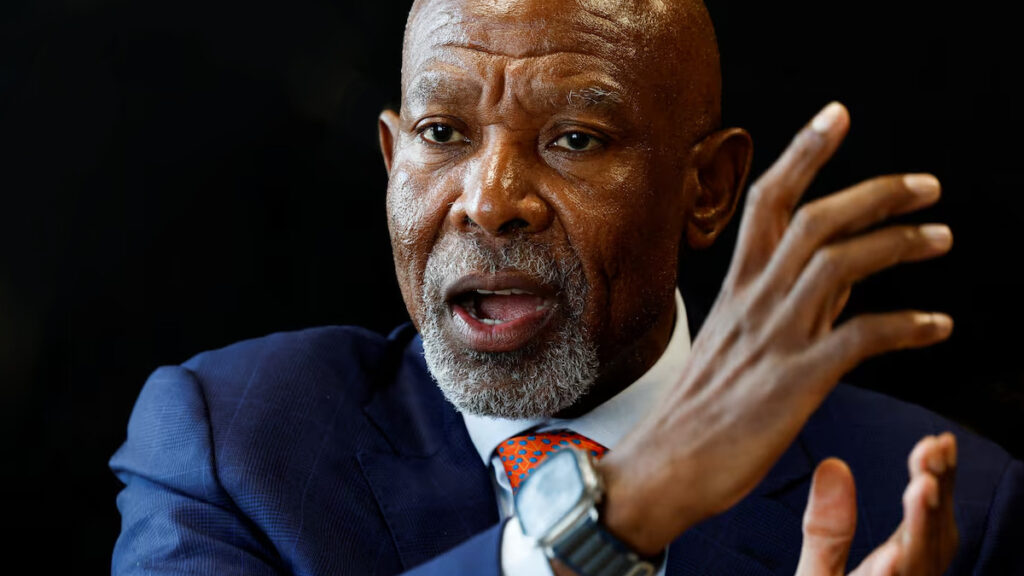
Traders have scaled back bets on additional South African interest-rate hikes after a US-Iran peace deal sent oil prices tumbling, potentially reducing inflationary pressures.
Forward-rate agreements are now pricing in 15 basis points of tightening at the South African Reserve Bank’s July 23 policy meeting, down from 30 basis points a week ago.
The contracts are pricing in a total of 32 basis points of rate hikes this year, down from 70 a week ago.
That implies just one full quarter-point increase by the November rates meeting.
While this is not a complete reversal of expectations—another hike is still anticipated—this is lower than the 50bps pencilled in before, and later than the potential hike seen in July.
Policymakers last month raised borrowing costs by 25 basis points to 7%, delivering their first increase in three years amid intensifying inflationary pressures from the Iran war.
They also signalled that further tightening may be warranted if the conflict drags on.
Inflation in Africa’s biggest economy is expected to rise to 4.7% in May from 4% a month earlier, according to the median estimate of 18 economists in a Bloomberg survey.
Some economists are anticipating an even bigger shock, moving as high as 5.1%. The central bank targets inflation at 3%.
Following the weekend’s peace agreement, however, investor expectations of average inflation over the next five years as measured by breakeven rates fell by 16 basis points to 4.23%.
The easing of expectations should bolster the doves at the SARB’s Monetary Policy Committee, where they were outvoted 4-to-2 for the interest rate hike seen in May.
Four of the six MPC members called for a hike, while two called for rates to remain unchanged.
Reserve Bank governor Lesetja Kganyago noted at the time that the war in Iran was not the only pressure point for inflation, flagging weather conditions as another risk.
Due to the elevated uncertainty, the SARB also presented three scenarios for future interest rates.
One involved a prolonged Middle East crisis, leading to higher food and oil prices, plus a weaker rand. With the hopeful end to the conflict, the risk pressure on this point may ease.
The second scenario involves the El Niño weather pattern, which usually brings drought to South Africa.
The South African Weather Service has warned of the current drought patterns, which it said, while having a slower onset, still have destructive impacts.
The third scenario considered by the SARB in its modelling factored in non-linear effects, i.e., other big shocks that affect inflation.
Notably, all of the scenarios implied higher inflation and lower growth. All three scenarios showed some additional monetary policy tightening.
With Bloomberg














 Loading ...