

Outrage over Absa CEO’s R148 million payday


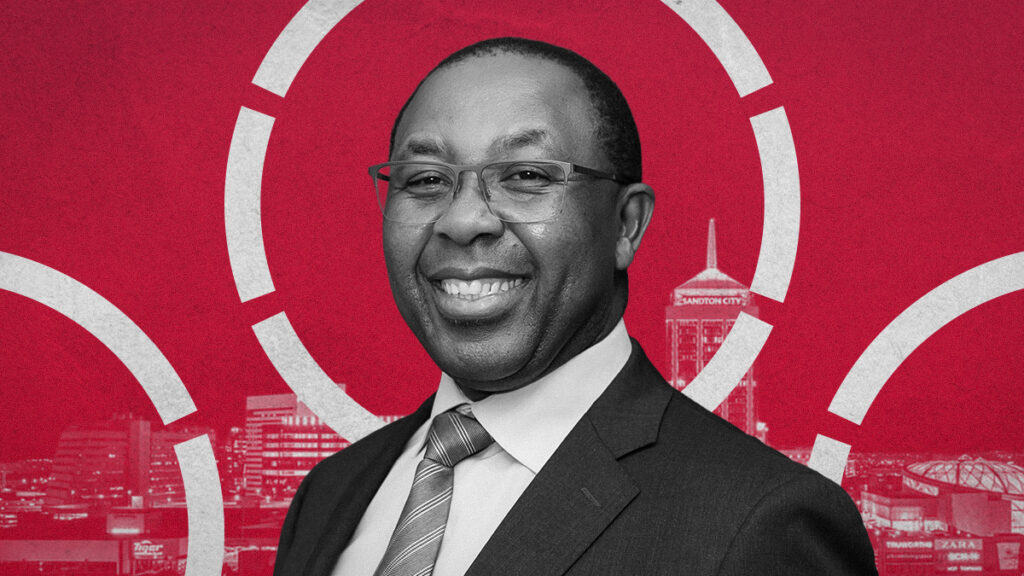
Absa is facing significant backlash from institutional investors over the pay package of its executives, specifically its new CEO, Kenny Fihla.
The Big Four bank has now met with shareholders to address their displeasure over the incredibly large amounts given to its leaders, with Fihla’s package of close to R150 million drawing most of the criticism.
Fihla took over as the group’s CEO in June 2025, having left his roles as Standard Bank Group Deputy CEO and Standard Bank South Africa CEO.
Fihla earned over R148 million for the 2025 financial year, which included R98 million in buyout awards, linked to unvested equity, which he forfeited when he left Standard Bank.
It comprised a R20.7 million cash-based buyout and a R77.7 million share-based buyout. His pro-rata fixed remuneration, which includes basic salary and medical aid, stood at R6.2 million.
He also earned R23.3 million for short-term incentives, which reflected his annual performance bonuses for the work he did after taking over.
He also received Long-Term Incentive (LTI) awards amounting to R20 million, provided he meets the group’s long-term targets.
While his total remuneration stood at R148 million, his single-figure remuneration, which does not include unvested long-term incentives, stood at R128 million.
Fihla’s tenure began strongly, with the group posting double-digit increases in key financial metrics.
The Group saw a 12.25% increase in headline earnings, rising to R24,762 million from R22,059 million in 2024.
Headline earnings per share (HEPS) jumped by 12.20% to 2,987.0 cents, while basic earnings per share also grew to 2,679.6 cents.
Shareholders are not happy
Despite improved financial performance since taking the helm, shareholders have expressed discontent with his pay package.
At the group’s AGM, over 43% of shareholders voted against implementing the group’s remuneration policy for its executives.
Given that the vote exceeded the 25% threshold for non-binding advisory votes, shareholders would be allowed to raise concerns and submit recommendations on the pay report.
Absa’s remuneration committee said the move was a necessary upfront investment to anchor a revised pan-African strategy.
Institutional investors are increasingly opposing large sign-on incentives that are not immediately aligned with performance. This is particularly present in South Africa, given the massive income inequality.
Absa has now held engagements with shareholders who represent around 12% of the group’s ordinary shares in issue.
Absa’s group Chairman, René van Wyk, and the Chairman of its group Remuneration Committee, Rose Keanly, spoke with shareholders who raised several concerns or raised questions on:
- The design of LTIP metrics, ranges and targets; and
- Clarifying the onboarding remuneration arrangements for the new CEO
Other matters discussed included seeking assurances that the group had processes in place to evaluate material operational risk events in remuneration decisions.
They also discussed the employee wage gap in a South African context, with the remuneration committee stating that it considers it.
The group said that these matters will be reported on in its next integrated report.
JSE-listed companies are set for more stringent reporting requirements on executive pay following sections 30A and 30B of the Companies Amendment Act, coming into effect this year.
The Companies Act was signed into law by President Cyril Ramaphosa in 2024, introducing new sections on executive remuneration at listed and state-owned companies.
The new laws will seek to determine by how much more executives are paid than the lowest-paid employees at a company, with penalties for remuneration committees.
Here is the consolidated table combining both sections from Screenshot 2026-06-24 at 14.41.12.png into a single, comprehensive view:
| Kenny Fihla Remuneration | 2025 Awarded Remuneration | 2025 Single-Figure Remuneration |
| Fixed remuneration | 6 285 789 | 6 285 789 |
| Cash short-term incentive | 12 150 000 | 12 150 000 |
| Deferred short-term incentive | 11 150 000 | 11 150 000 |
| Total short-term incentive | 23 300 000 | 23 300 000 |
| Face value of the awarded long-term incentive | 20 000 000 | — |
| Value of vested long-term incentive | — | — |
| Dividend equivalents | — | — |
| Total long-term incentives | — | — |
| Cash-based buyout award | 20 721 416 | 20 721 416 |
| Share-based buyout award | 77 733 872 | 77 733 872 |
| Total (excl. buyout awards) | — | 29 585 789 |
| Total remuneration (incl. buyout awards) | 148 041 077 | 128 041 077 |
With reporting from Bloomberg.










 Loading ...